

93 products
Sort by:
93 products
93 products


The sweeping second hand glides silently over the black dial — no tick, no distraction. LumiNova indexes ensure readability in the dark without illumination. Japanese quartz movement, anodized aluminum casing with brass accents. 130mm casing, 100mm dial, 65mm height.
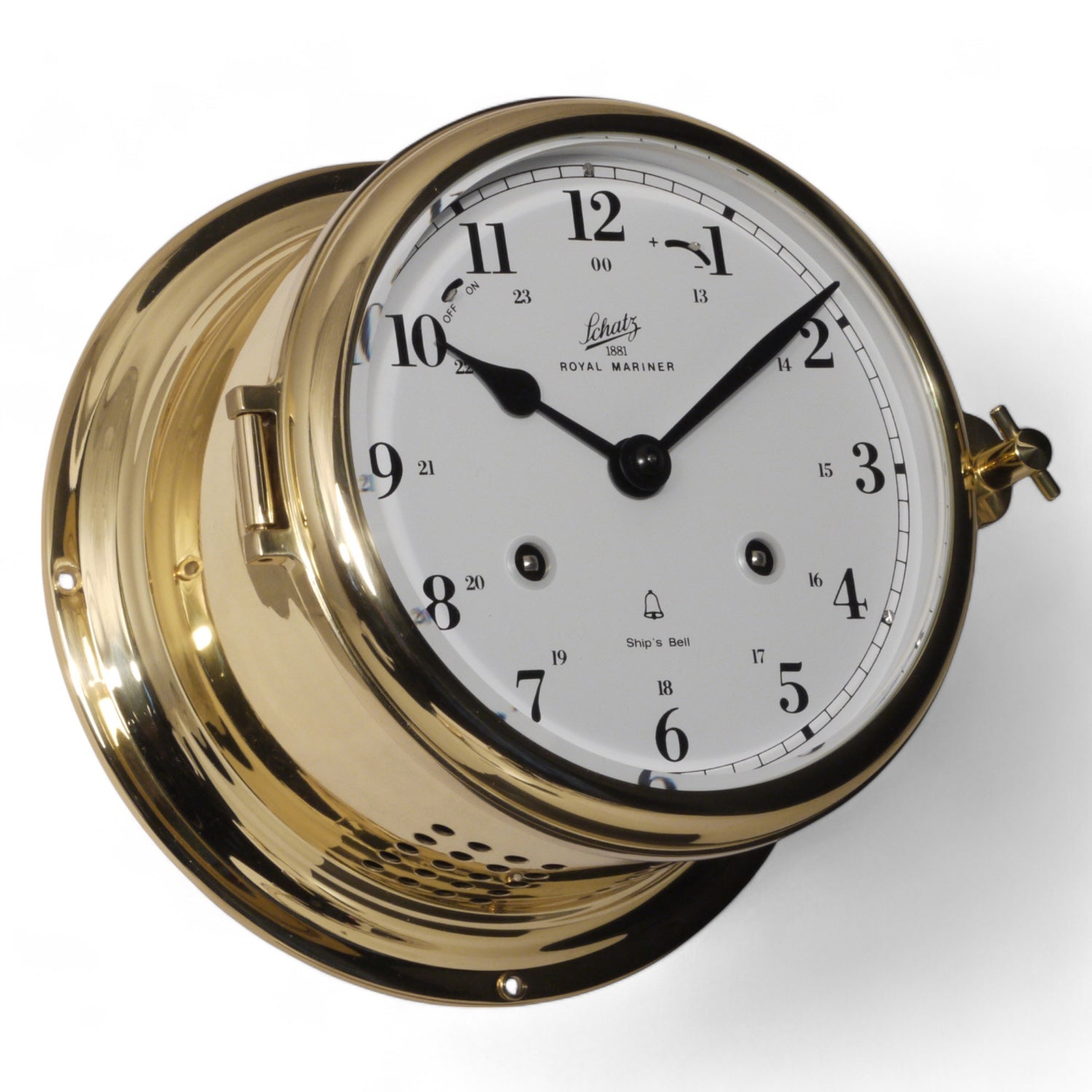

For the true nautical enthusiast, no winding required, for ultimate ease of use. The bell is not a decoration. Cast according to the principles of the bell makers' guild, from 0.8 mm brass discs, shaped by skilled hands, the sound proves it. Quartz movement, solid brass available in brass, matt brushed brass or chrome, with a dial in Arabic or Roman numerals. A clock you can hear and see.
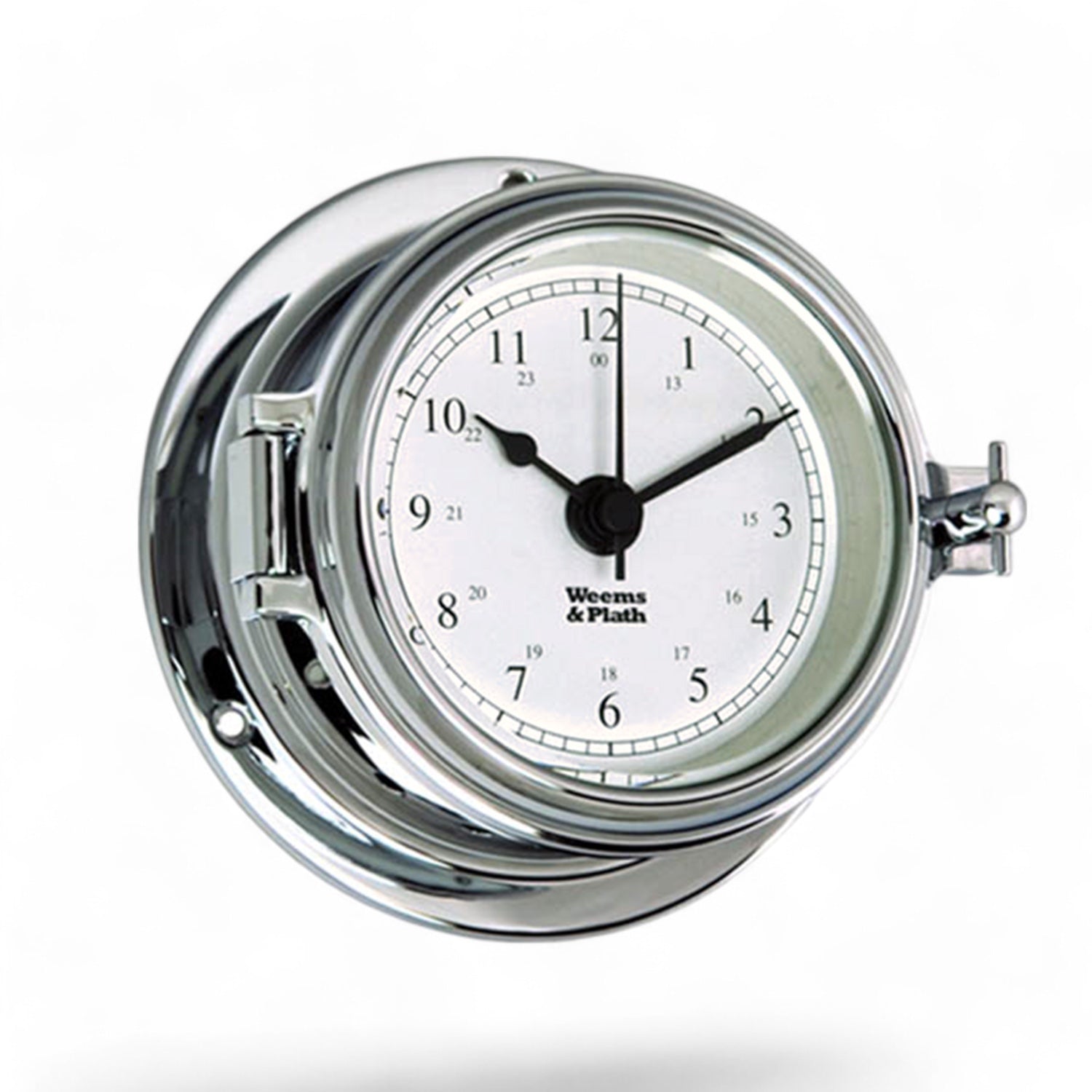

The Weems & Plath Endurance II Quartz Ship's Clock offers the perfect balance of elegance and functionality. With its classic porthole design, convenient front opening, and maintenance-free high-gloss brass finish, this clock is a nautical gem. The white dial with black Arabic numerals provides clear and accurate timekeeping. Available in three sizes (120 mm, 150 mm, and 180 mm), this clock is weatherproof and resistant to scratches and tarnishing, ensuring it will retain its beauty for years to come. The reliable quartz movement offers easy adjustment and battery changes thanks to the convenient front opening. Whether you're at sea or display it in your home, the Endurance II Ship's Clock is an iconic piece that honors maritime traditions with modern precision.


Those who live with water don't just watch the time, but also the tides. The Fischer 103TD Tide Clock helps you plan ahead by clearly and concisely displaying the high and low tides. No charts, no apps. Just a simple hand that tells you what the water will do. It features a convenient closure and a generously sized 165mm case.
This tide clock operates based on the average lunar cycle of 12 hours and 25 minutes. This makes it ideal for coastal areas where the tide plays a significant role in daily life. Whether you're sailing, fishing, or at home, you want to know when the tide is rising or receding. Or when it's time to go surfing.
It's also practical. Thanks to the clever bayonet lock on the back, you can change the battery quickly and without tools. Open, replace, and you're done. Just the way you want it.
Fischer manufactures this clock in Germany, with an eye for precision and durability. The generous 165 mm dial is protected by clear mineral glass, ensuring excellent readability. The polished or chrome-plated brass case gives the clock a classic nautical look that never gets old.
The 103TD is part of the Fischer 103 series and combines perfectly with the barometer, thermometer, hygrometer, and quartz clock from the same line. Together, they form a stylish wall-mounted set that brings tranquility, clarity, and a maritime feel to any cabin, dockside, or living room.


A good ship's clock should be reliable, easy to read, and above all, easy to use. The Fischer 103U Quartz ship's clock effortlessly meets all three requirements. This is a clock for those who appreciate quality and want to see the time clearly at a glance.
Thanks to the clever bayonet lock, you can open the watch with a single, smooth twist. No screwdrivers, no fiddling around. Changing the battery is quick and hassle-free. Just the way you want it on board, but just as convenient at home.
Fischer builds this clock in Germany, with the precision the brand has been known for decades. The reliable quartz movement ensures accurate timekeeping, day in and day out. The generous 165mm dial is protected by clear mineral glass, ensuring the time remains clearly legible, even in changing light.
The casing is made of polished or chrome-plated brass, giving the clock its timeless, nautical look. It's equally at home in a cabin or wheelhouse as it is in a living room, office, or conservatory with a maritime flair.
Want more than just the time? The 103U is part of the Fischer 103 series and pairs perfectly with the matching barometer, thermometer, hygrometer, or tide clock. Together, they create a harmonious wall set that exudes tranquility, clarity, and character.


The ship's bell gives this clock its voice, and the chiming of the bells marks the rhythm on board, as it always has. Choose from a Swiss mechanical movement with 8 days power reserve or a German quartz battery movement. Housing 185 mm in brass or polished stainless steel, dial 125 mm. Brass with black hands, chrome with black or blue hands.


The Barigo 601.5 marine clock is a unique piece from the exclusive Pentable Collection , where craftsmanship and design complement each other perfectly. This clock is designed for those with an eye for detail and an appreciation for timeless maritime style.
The black dial with white numerals offers a bright contrast, making the time easy to read even from a distance. Behind the minimalist design lies German precision : the reliable quartz movement guarantees accurate timekeeping, day after day.
The nickel-plated brass frame is lightweight, durable, and corrosion-resistant, making it ideal for use on board, at home, or in the office. Its compact design makes mounting easy, while the polished finish gives the clock a luxurious look that complements any interior.
Why choose the Barigo 601.5 marine clock?
- Unique design from the Pentable Collection: maritime, modern and exclusive.
- German precision: quartz mechanism for reliable timekeeping.
- Rustproof & durable: Nickel-plated brass, resistant to sea air and moisture.
- Compact & elegant: Ø 104 mm, easy to assemble.
- Perfect to combine: forms a harmonious whole with other Barigo instruments.
A stylish statement on its own, but also beautifully combined with other instruments from the Barigo Pentable series , such as the weather station. Style, precision and character at sea and on shore.


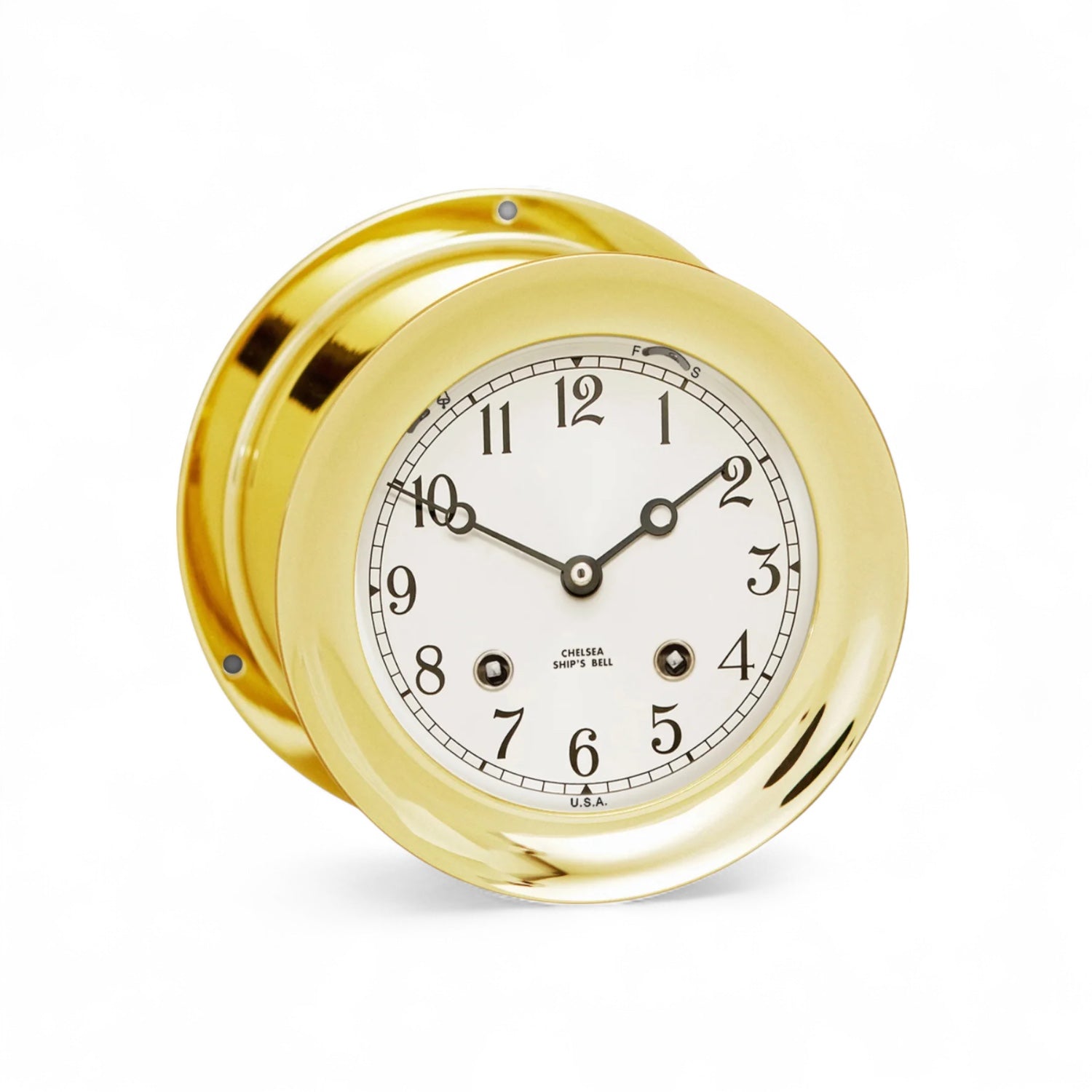

Chelsea Clock mechanical ship's clock – brass, ship's bell, luxury, 4.5" 6" 8.5"
From €3.690,00
If you're looking for luxury and maritime history in a single instrument, the Chelsea Clock Ship's Bell is the ultimate choice. This mechanical ship's bell is an icon among sea lovers and is entirely handcrafted in Boston. You can choose from three sizes: 4.5 inches (11.4 cm), 6 inches (15.2 cm), and 8.5 inches (21.6 cm).
What makes this clock special is its refined interior. Behind the hand-silvered dial lies a fully mechanical movement made of 290 brass parts , equipped with an 11-jewel movement . This not only ensures unprecedented precision but also makes the clock suitable for generations to come – it's literally an heirloom.
Every thirty minutes, you'll hear the classic Ship's Bell rhythm, a tradition used on board for centuries to mark the watch. With ascending strokes every half hour and eight strokes at the end of the watch (at 4, 8, and 12 o'clock), the bell produces a warm, full sound that immediately evokes a maritime atmosphere.
The case is crafted from solid polished brass and features a hinged bezel for easy winding and maintenance. Thanks to its high-quality finish, the clock fits seamlessly into both classic living rooms and modern interiors.
The Ship's Bell's appearance and durability make it an ideal wedding gift, anniversary gift, or a special acknowledgment . It can be combined with a wooden base for placement on a mantelpiece or desk. All Chelsea Clock instruments are made to order , ensuring you always receive a unique piece, produced especially for you. Please note special order terms and delivery times. Also available in nickel.
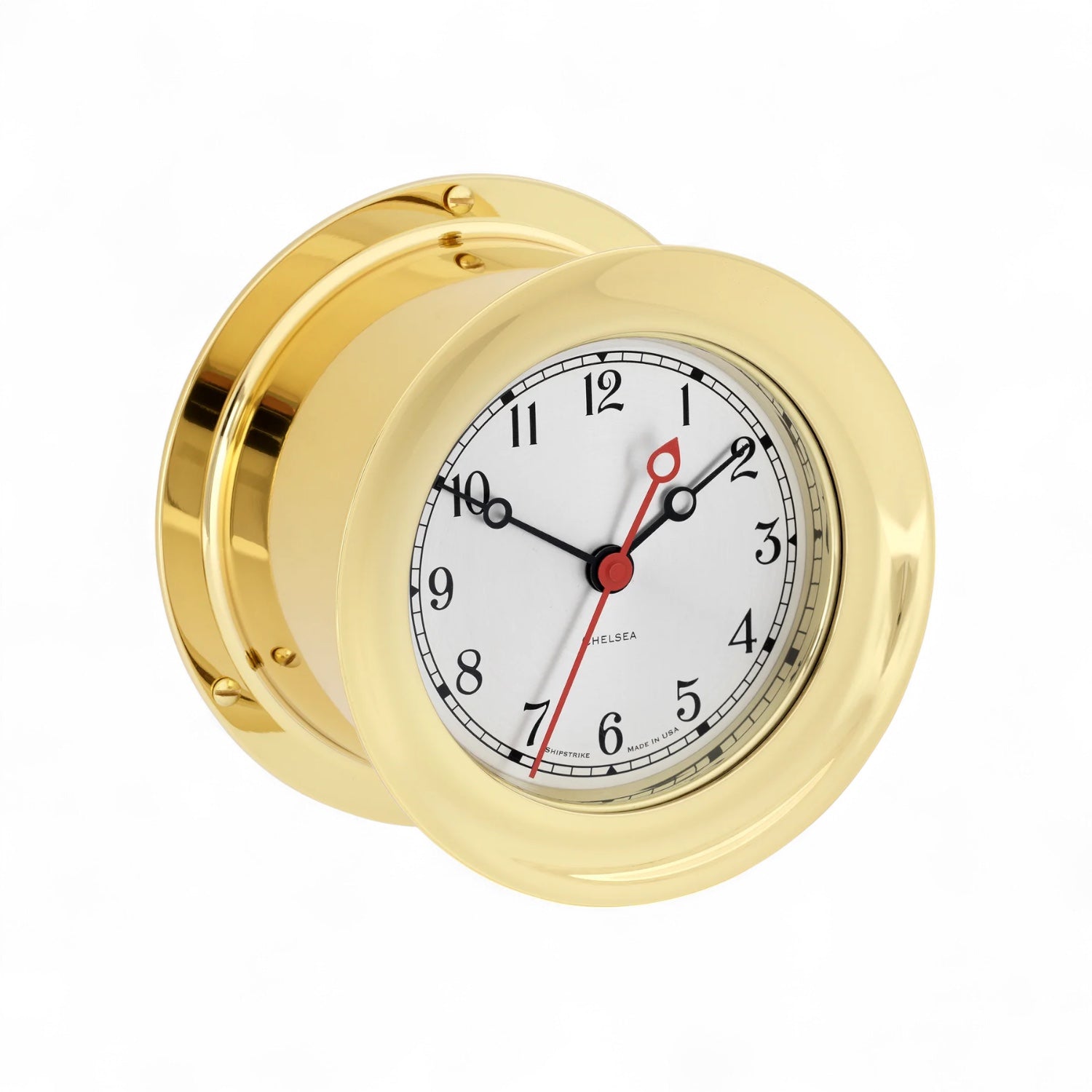

Chelsea Clock ship's clock with ship's bell 145 mm x 89 mm – 4 1/2 inch, quartz, solid brass
€1.499,00
The Chelsea Clock Quartz ship's clock with bell is crafted with the same precision as a luxury watch. This means you're buying more than just a clock, but a piece of craftsmanship that will last for generations. The solid polished brass feels solid, exudes class, and fits perfectly into nautical decor – both at home and on board.
The ship's bell function follows the classic Ship's Bell rhythm, giving you that instantly recognizable maritime atmosphere with every chime. Thanks to the German quartz movement, the clock runs accurately and requires no maintenance, ideal for reliable timekeeping on your boat or in your cabin. The aluminum dial with black Arabic numerals and a red second hand remains easy to read.
Great: the bezel is removable, making it easy to replace the battery yourself. The brass retains its shine with occasional polishing with a soft cloth. For even more personality, you can have the clock engraved or add a wooden base for placement on a desk or mantelpiece.
Chelsea Clock instruments are made to order – meaning you receive a unique piece, handcrafted since 1897.
Please take into account special order conditions and delivery time.


Barigo Viking Ship's Clock 155mm – Quartz movement, available in four variations
From €209,00
The Barigo Viking ship's clock is the largest classic clock from the renowned German manufacturer. With an impressive 155 x 35 mm, it makes a statement on board or at home. The 130 mm dial is clearly legible and available in various versions: Arabic numerals or a version with radio silence zones. The high-quality case, in brass or polished stainless steel, is subtly accentuated by a small circular detail at the center of the hands. The 12-hour and 24-hour time display combines large Arabic numerals (1-12) with smaller numbers (13-24) below.
For a complete nautical set, combine the clock with the matching Viking barometer. The silent quartz movement, also made in Germany, ensures accurate timekeeping without the annoying ticking—ideal for cabins, offices, or serene living spaces.
Made in Germany with over 80 years of craftsmanship, the Barigo Viking ship's clock is a robust and stylish choice for lovers of nautical design and top quality.
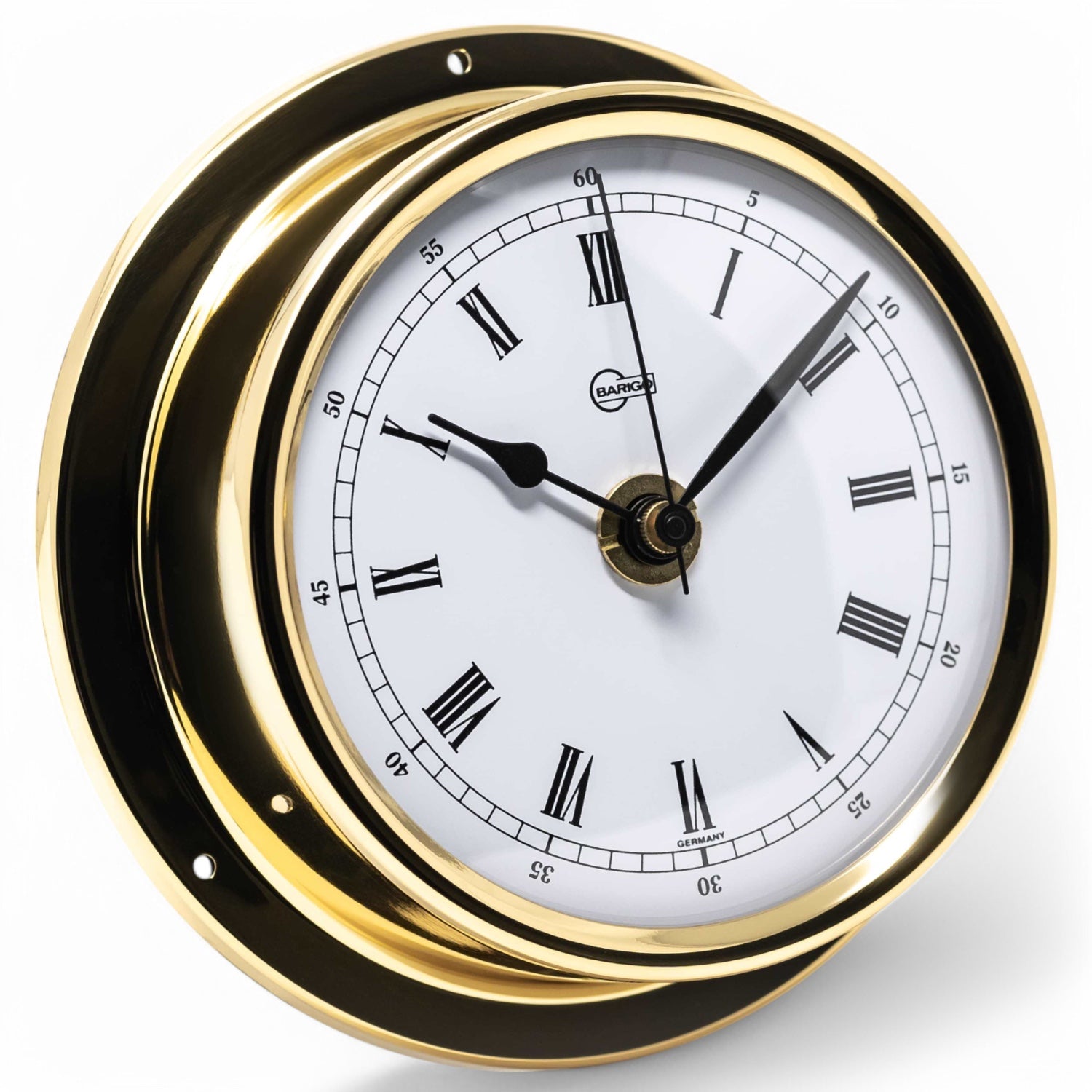

The Regatta is one of our best-selling ship's clocks, and that surprises no one who has held it in their hands. Silent quartz movement, robust brass or chrome casing, three dial options, and that timeless 125 x 40 mm format that is as at home on board as it is in the living room. An excellent choice for both on board and at home.


The Tempo is silent, reliable, and timeless. It is one of the most compact ship clocks. Quartz movement without ticking, casing 110 mm, white dial 85 mm. Available in polished brass or stainless steel, with Roman numerals, Arabic numerals, or a radio silence dial. Wall mounting via screw opening at the back. More than 80 years of German craftsmanship in a clock that always looks good.
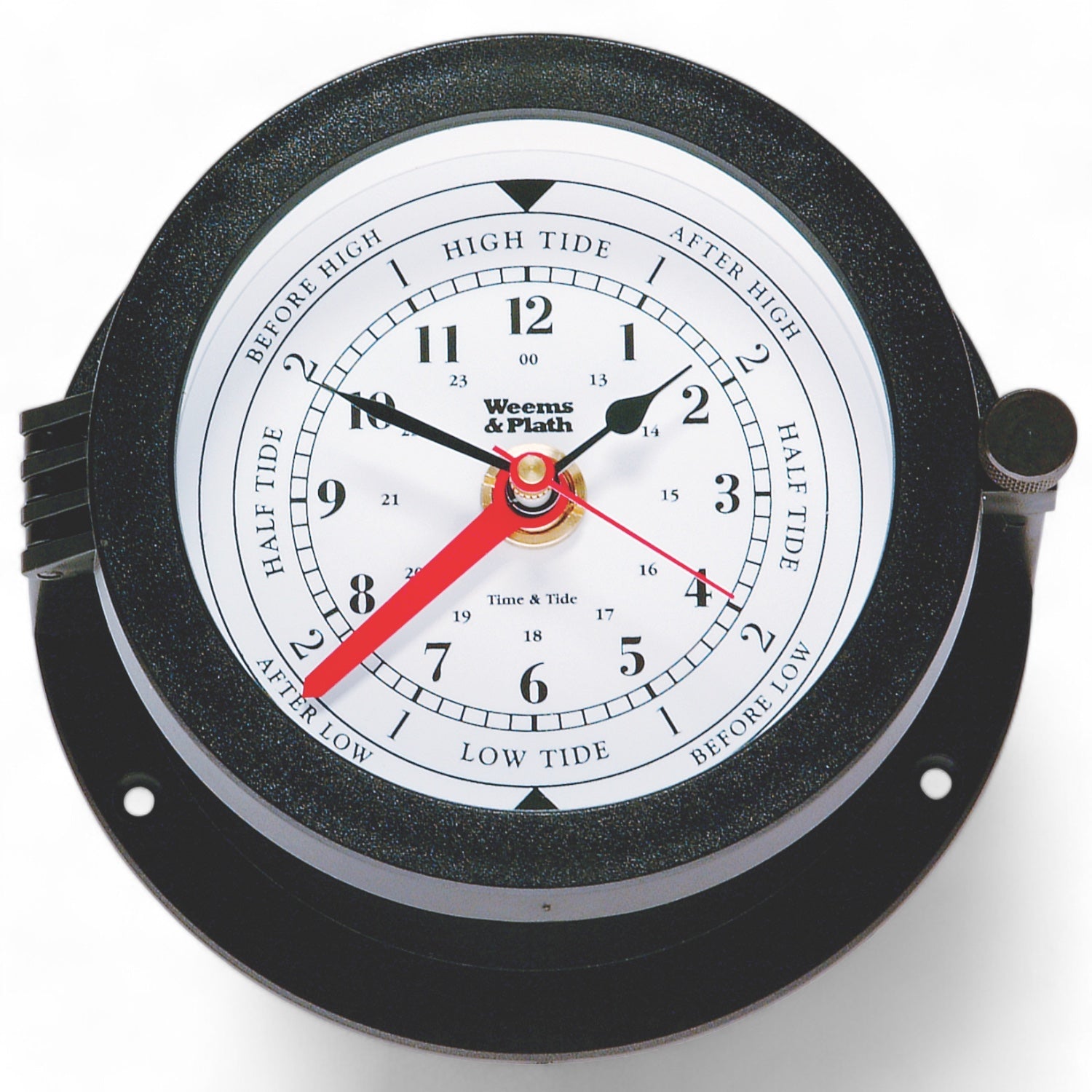
This low-maintenance Weems & Plath Bluewater tide clock keeps track of the ocean's time with precision and style. The red tide indicator provides quick insight into the tide's position, ideal for boaters. Calibration can be easily adjusted for other tidal areas, such as the Pacific Ocean or the Gulf of Mexico, or elsewhere. The corrosion-resistant, splashproof housing made of high-quality black resin is designed for durability. With a modern, timeless black case and white dial, it's easy to read. The matte finish prevents glare, and the O-ring seal protects against moisture. Mounting hardware and clear instructions are included. Reliable, low-maintenance, and designed for those who always want to stay on course with the sea. An excellent balance between quality and price. The ideal tide clock, wherever your course lies.
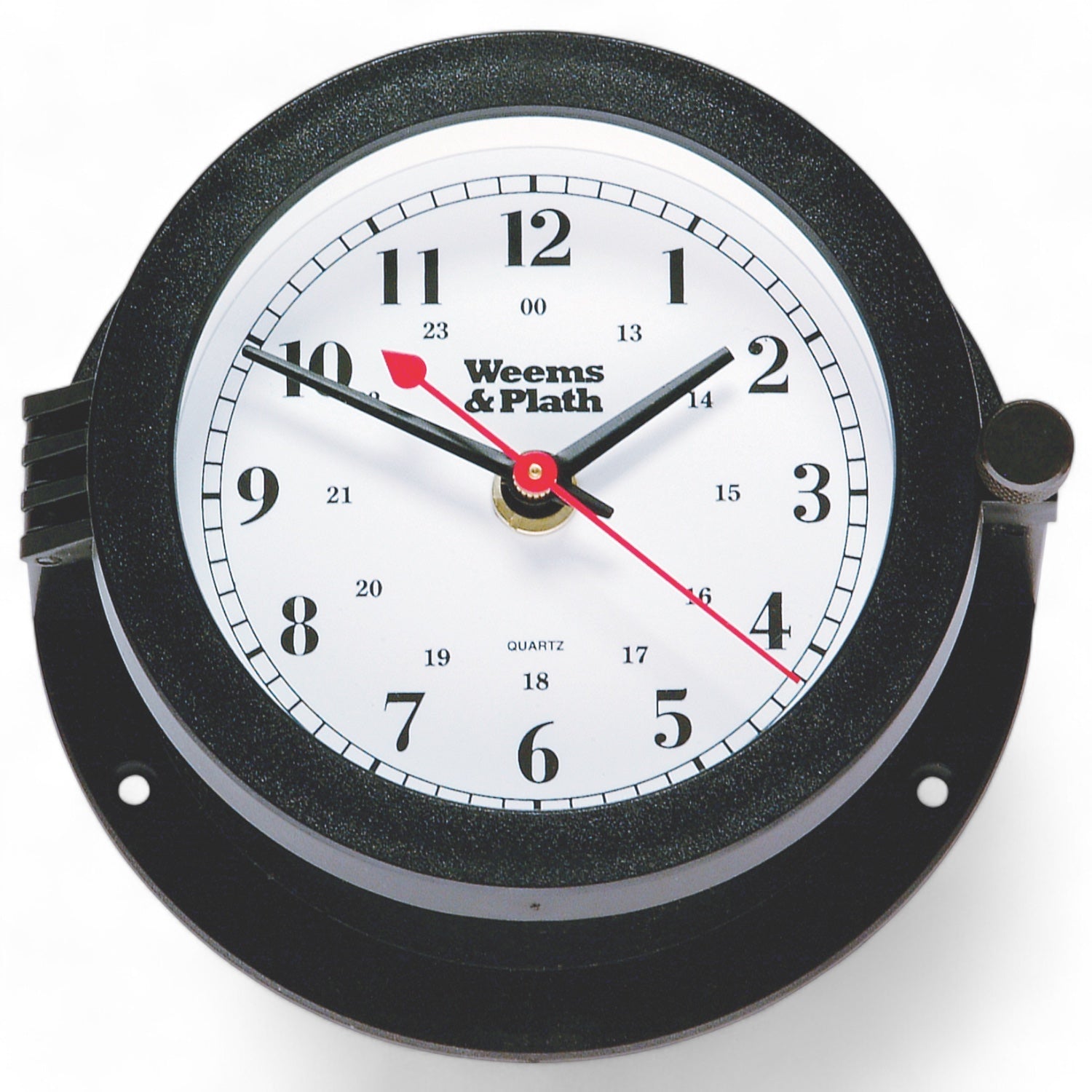
Bluewater quartz ship clock 140 x 73 mm - low-maintenance, splash-proof, reliable
€99,95
This low-maintenance Weems & Plath Bluewater black ship's clock features a splashproof, corrosion-resistant case made of high-quality black styrene, perfect for marine environments. The scratch-resistant glass and glare-resistant matte finish make it ideal for use on open water. Measuring 140 mm in diameter and 73 mm tall, it fits effortlessly into any interior or deck. The clock features a hinged O-ring with a brass retaining tab, allowing you to easily set the time and change the battery. A secure battery clip provides added peace of mind at sea. Mounting hardware, clear instructions, and a limited lifetime Weems & Plath warranty are included. The Bluewater quartz clock is not only practical but also offers the assurance of maritime perfection for the shipping industry and for anyone who cares about the sea. It offers excellent value for money. In short, a perfect modern ship's clock wherever you sail.


Anniversary ship's bell with ship's bell 178 x 89 mm - brass, Roman numerals, traditional sound
From €1.049,00
Looking for a luxurious ship's clock that combines style and tradition? The Weems & Plath Anniversary™ features an eight-bell system that chimes every half hour, bringing to life the classic atmosphere of the sea. Specially designed for boaters and lovers of timeless luxury, this ship's clock features a convenient hinged design, making it easy to wind and operate. The solid brass design, with a 133mm dial and a total diameter of 178mm, exudes strength and durability.
Choose the mechanical model with a German Hermle 11-jewel movement, accurate to +/- 2 minutes per week and completely battery-free. Prefer convenience? Then choose the quartz version with a ship's bell, ideal if you don't want to wind the clock every week.
Available with classic Roman numerals and a polished brass casing. Whether you're on board or at home, the Anniversary™ brings maritime perfection to your interior.
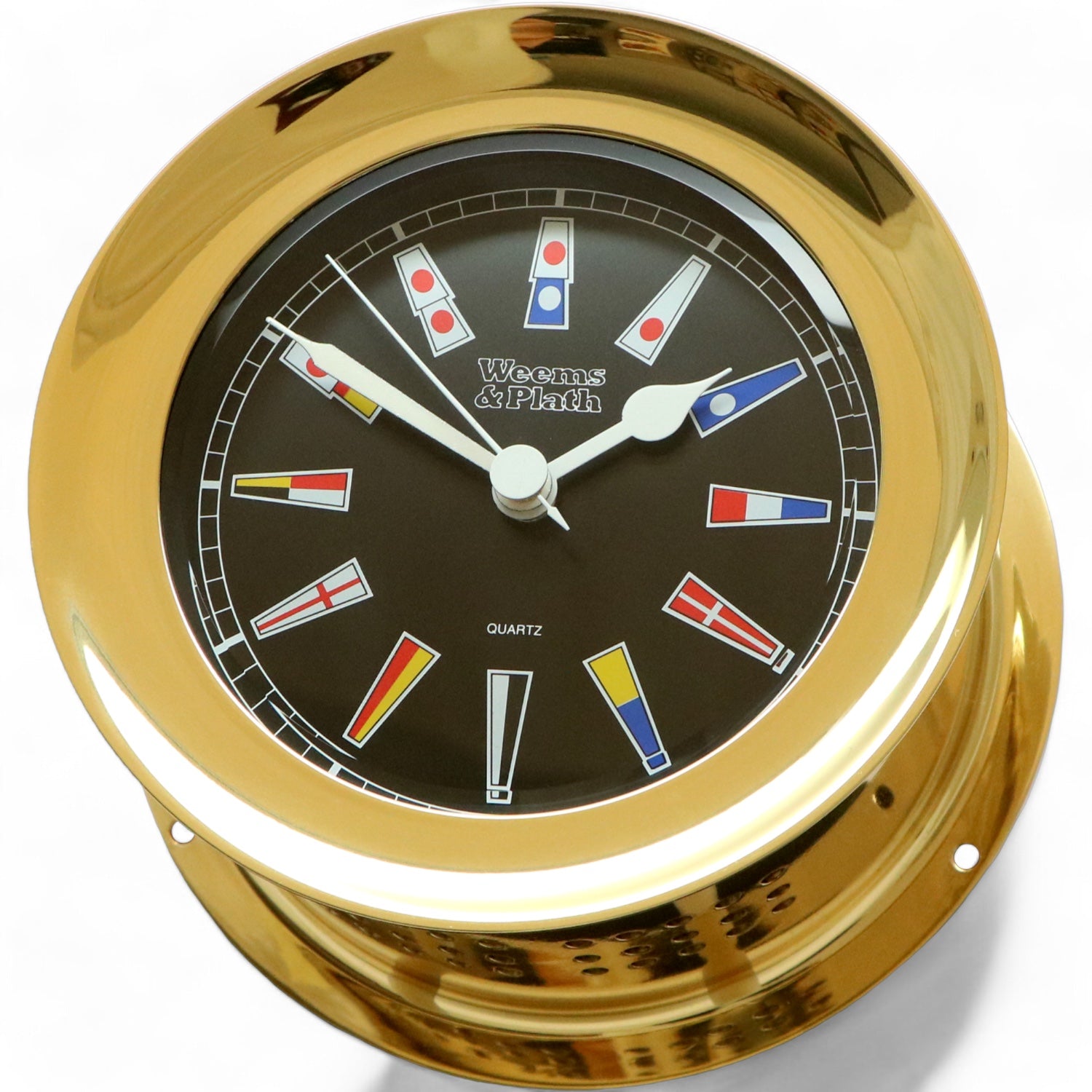

Atlantis Premiere ship's clock 140 x 73 mm - black dial, traditional design, easy access
From €429,00
The Atlantis Premiere quartz ship's clock by Weems & Plath features an elegant black dial. This creates a beautiful contrast with the solid forged brass case, which has been hand-polished and lacquered. Choose from a version with gold numerals and Arabic scale or a black dial with signal flags. The clock's traditional look is enhanced by the screw bezel, which provides easy access for adjustments. This high-quality clock is battery-powered and features a precision quartz movement for reliable timekeeping. Whether you're a sailor or simply appreciate maritime accents in your interior, this clock stands out with its shape and black dial. Mounting hardware is included, so it's ready to use right out of the box. It combines perfectly with the Atlantis Premiere barometer for a complete and impressive maritime set. Modern precision in a stylish brass or chrome case.
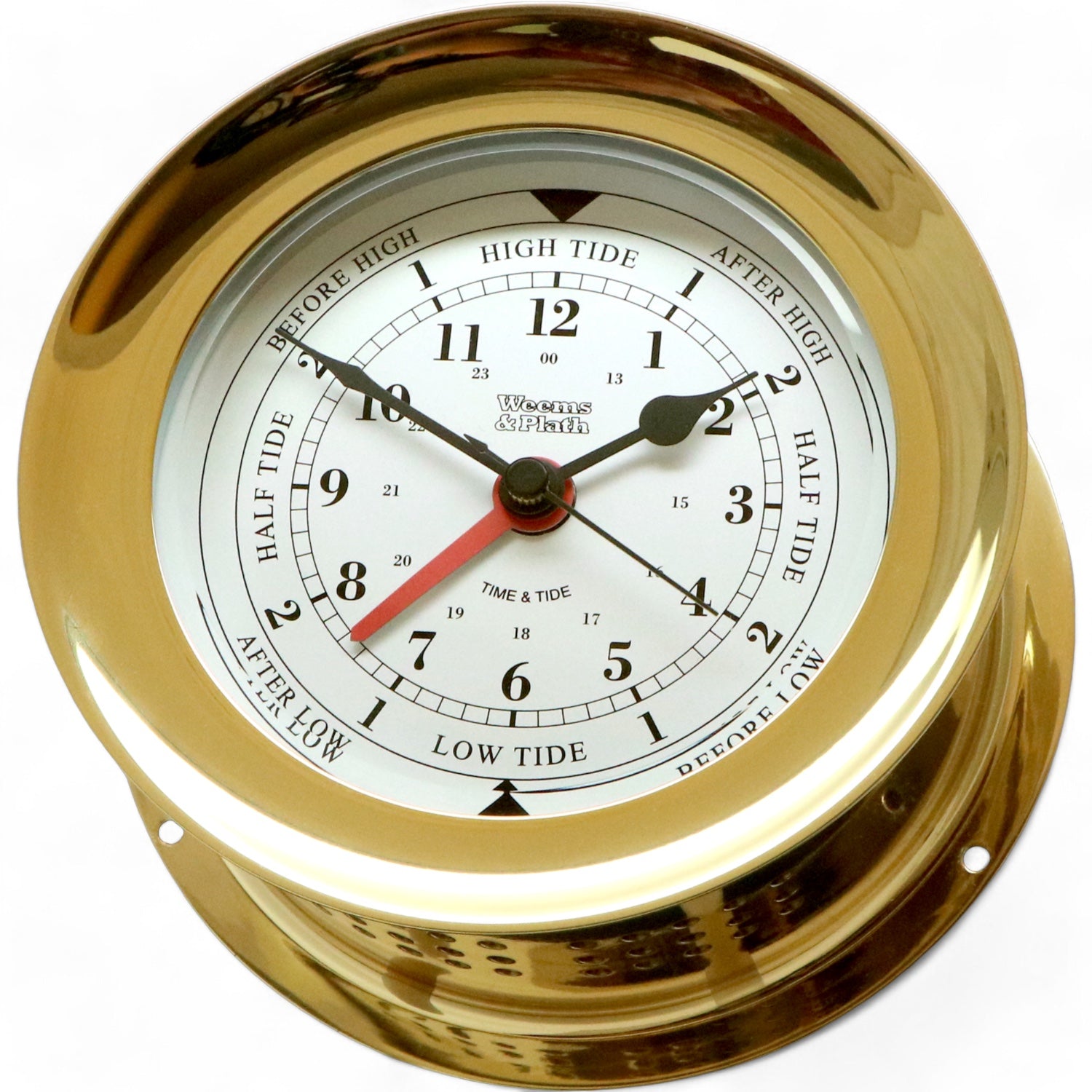

With the Atlantis tide clock from Weems & Plath, every water sports enthusiast can take to the sea in style. This instrument combines time and tide in a single elegant clock, crafted from solid forged brass, hand-polished, and finished with a durable lacquer finish. The red hand shows the tide position, such as high tide, low tide, or half tide, while the black hands on the white dial indicate the current time. Ideal for use at sea, thanks to the precise quartz movement and easy-to-open screw-in bezel for adjustments.
The tide and time indicator is calibrated to the Atlantic lunar cycle, but it also works on other seas and oceans, though it will need to be reset more frequently. This stylish design with a solid brass casing is battery-powered and includes instructions and mounting hardware. An optional mahogany base is available. A maritime masterpiece that combines craftsmanship and practicality. Available in brass or chrome-plated brass with a white dial, both with Arabic scales. This clock embodies both functionality and refinement, perfect for your boat or coastal décor.


Atlantis ship's clock with ship's bell 140 x 73 mm - traditional 8-bell luxury design
From €719,00
This Atlantis ship's clock with bell by Weems & Plath is a maritime eye-catcher with class. Bring the timeless charm of the sea into your home. This beautiful instrument, with its classic eight-bell system chiming every half hour, revives the rich tradition of ship's clocks. Ideal for on board, in your home office, or living room, this clock is a stylish blend of functionality and refinement. The case is crafted from solid forged brass, hand-polished, and finished with a flawless lacquer finish. The screw-on bezel provides easy access to the German quartz movement and a convenient damper switch. The precise movement operates on either a quartz or mechanical movement, and the clock comes with instructions and mounting hardware for hassle-free installation. A quartz movement is battery-powered for accurate time, while a mechanical movement with gears, with weekly key winding, offers traditional craftsmanship. All clocks feature an Arabic scale. Whether you mount it on the wall or display it on an optional mahogany base, the Atlantis ship's clock is an iconic and reliable piece of craftsmanship for any water sports enthusiast. Available in quartz or mechanical versions.
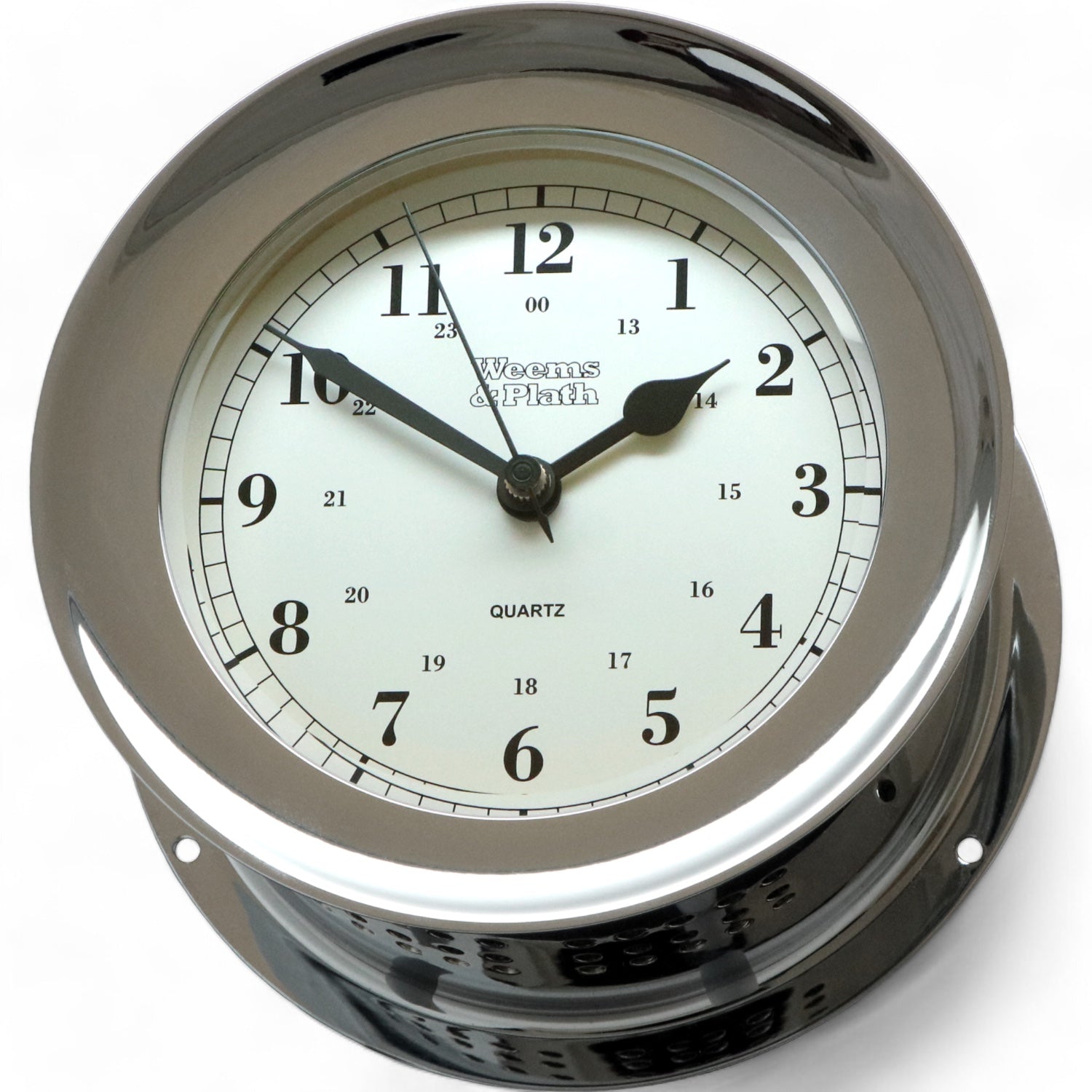

Atlantis ship's clock 140 x 73 mm - stylish maritime design with screw ring opening
From €419,00
The Weems & Plath Atlantis ship's clock is crafted from solid brass, with bright black markings on a white dial, exuding maritime style suitable for any nautical interior. The battery-powered quartz movement delivers unparalleled accuracy, while the screw-down bezel design on the front allows for easy maintenance. Featuring a stylish 102mm white dial and a polished lacquered finish, this clock perfectly complements the sea and your passion for water sports. Each instrument is meticulously hand-assembled in the USA and comes with instructions, mounting hardware, and a (limited) lifetime warranty. For those looking to refine their nautical style, an optional mahogany base is available. Available in brass or chrome-plated brass, both with Arabic numerals, the Atlantis quartz ship's clock is a must-have for those who love the sea and expect nothing less than perfection.
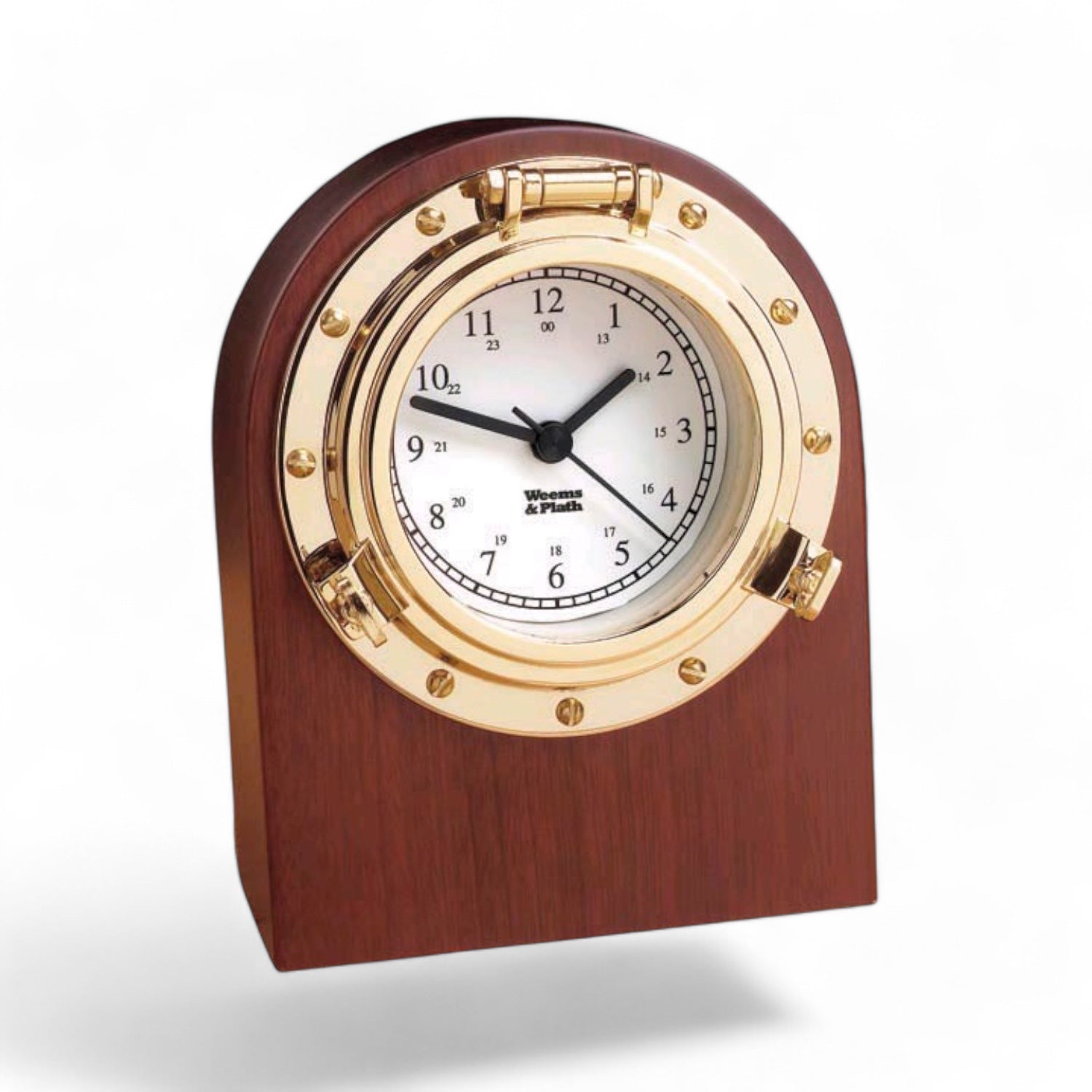

The Weems &Plath Porthole desk clock (132 x 109 x 38 mm) is the perfect gift for yourself or a loved one. With a solid mahogany finish and a polished brass bezel, this desk clock combines style and functionality. The maintenance-free brass stays shiny forever, while the scratch-resistant base makes the clock durable for daily use.
This refined maritime desk clock is designed to shine in any space, whether at home or in the office. Add an engraved brass plaque for a personal touch – ask about the options and additional costs – ideal for a birthday, promotion, or other special occasion.
The Porthole Desk Clock is a nautical accessory that leaves a lasting impression. A beautiful, subtle timepiece for any ocean lover.
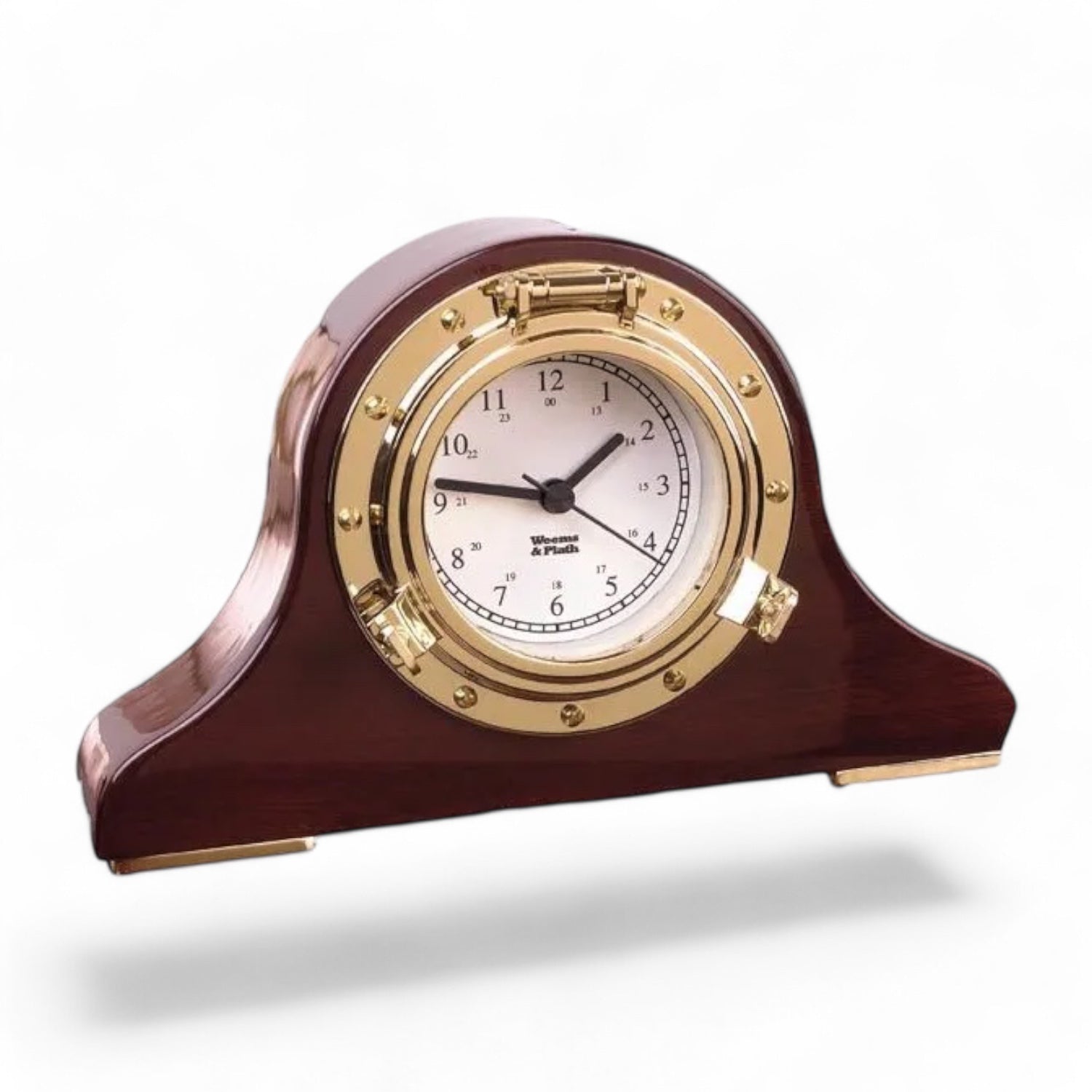

The Nautical Tambour clock from Weems & Plath is a sophisticated eye-catcher for any desk. Measuring 198 x 117 x 43 mm, this desk-style clock makes a statement of class. The scratch-resistant base ensures durability. Weighing 680 grams, this desk model falls within an attractive price range. This desk clock combines a traditional design with a practical opening, making it an easy fit for a stylish classic or nautical setting. The high-quality quartz movement is housed in a beautiful North American hardwood case with a gloss piano lacquer finish. The brass feet give the clock a refined look, while the brass finish remains lustrous, without tarnishing or maintenance.
Make it extra special by adding an engraved brass plaque. Perfect as a gift for any occasion, from a promotion to a birthday greeting. The Nautical Tambour Clock is more than just a clock; it's a lasting reminder of special moments.
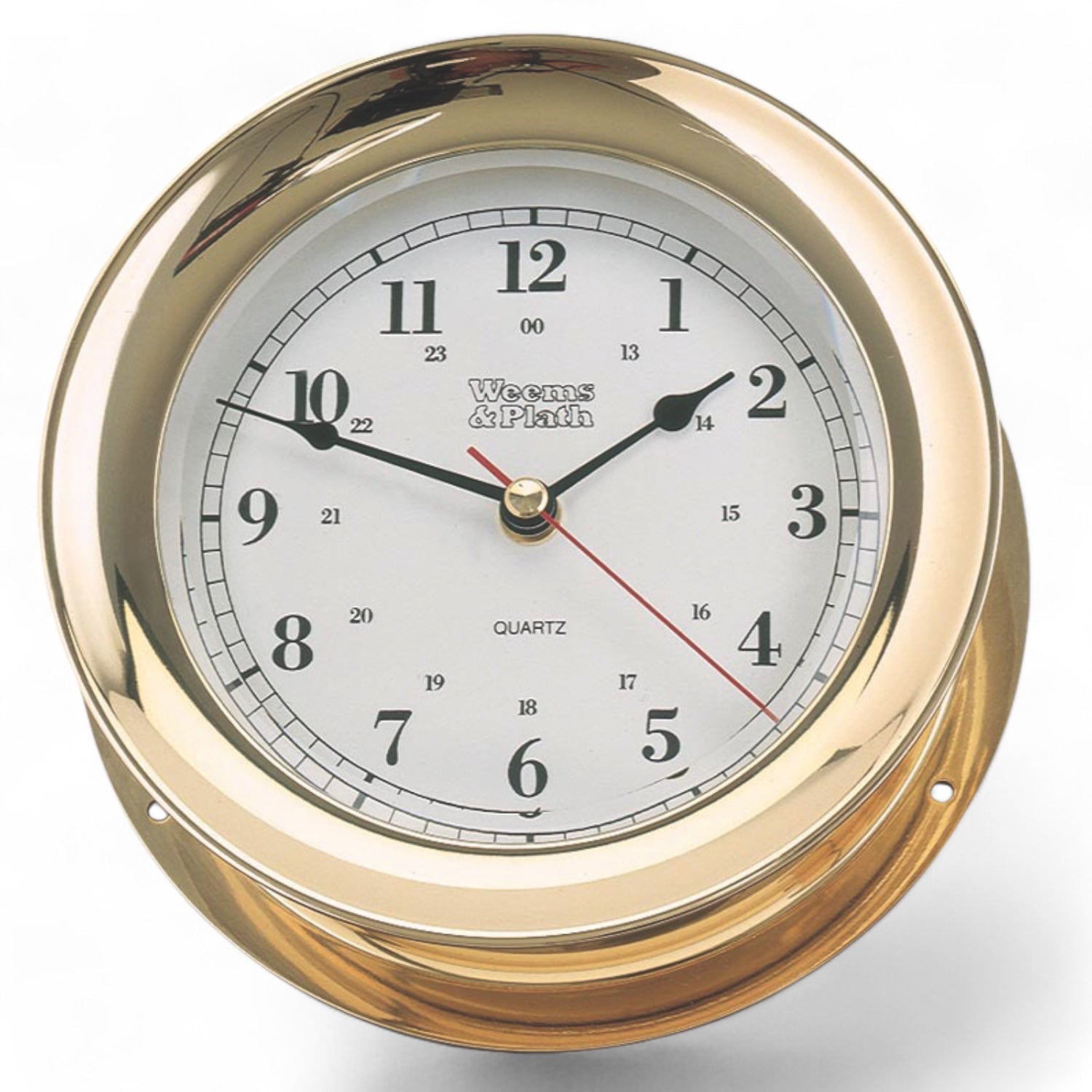

Weems & Plath Admiral ship's clock 191 x 67 mm - timeless class, slim profile, brass
€499,00
The Admiral quartz ship's clock by Weems & Plath is an icon of classic luxury and precision. Featuring a slim profile and a large, clear 152mm dial in white with black markers and Arabic numerals, it features a reliable quartz movement for accuracy. Crafted from solid, forged brass, meticulously polished, and finished with a durable lacquer, this clock exudes timeless elegance. The screw-down front design simplifies maintenance and provides direct access to the mechanism, including full instructions and mounting hardware.
At 191 x 67 mm, the Admiral quartz clock is a striking piece that fits perfectly into both classic and modern interiors. Combine it with the matching Admiral barometer for an impressive maritime ensemble. This ship's clock is not only a functional tool but also a refined statement for those who appreciate precision and maritime style.
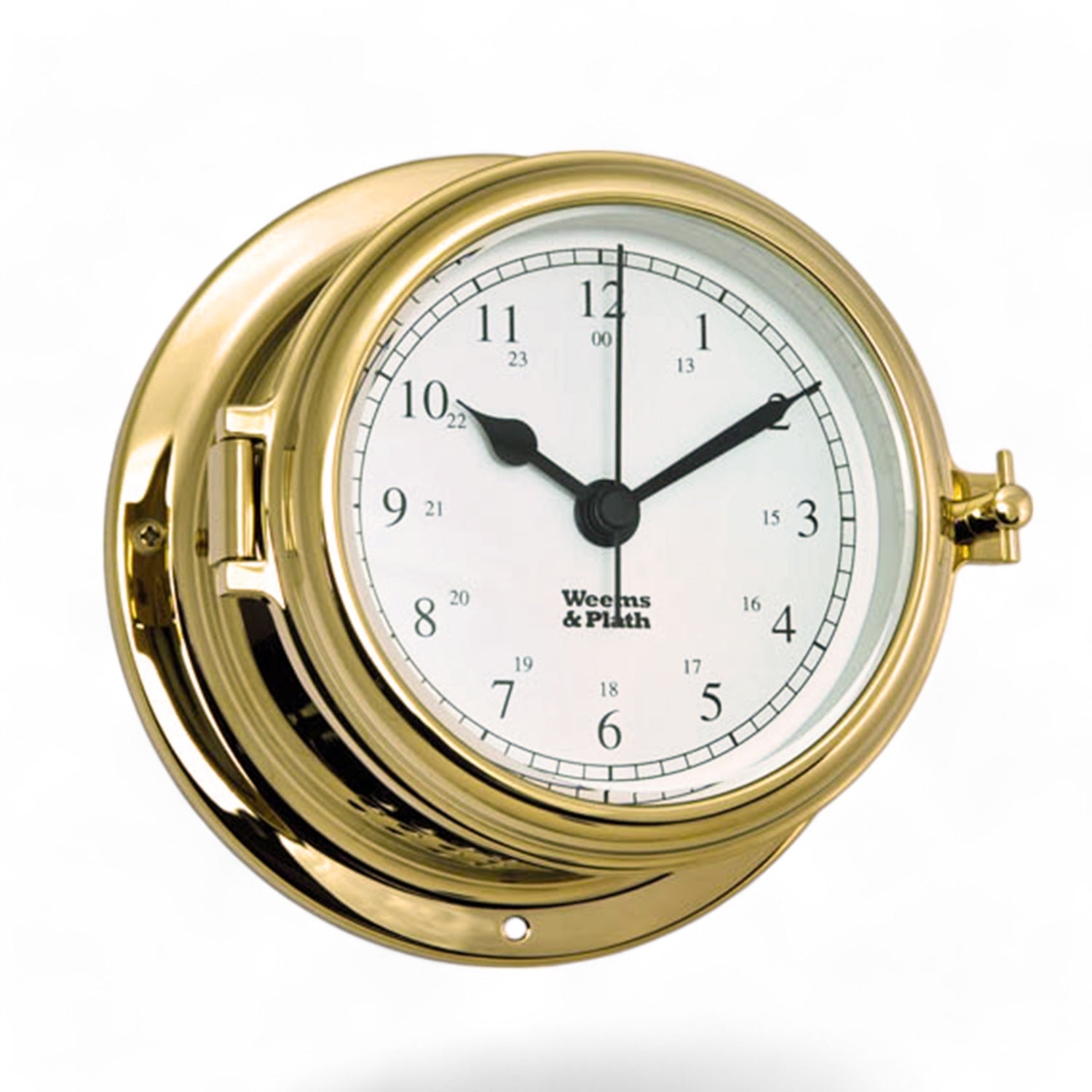

Endurance II ship's clock with ship's bell - quartz, with porthole opening 152 x 79 mm
€229,95
The Weems & Plath Endurance II quartz ship's clock with bell offers the perfect combination of elegance and functionality. The classic porthole design with an authentic ship's bell allows you to tell the time without looking. Made of high-gloss, maintenance-free brass, this clock will shine for years to come and is resistant to scratches and weathering. The clear dial with black Arabic numerals ensures accurate and easy-to-read timekeeping. The quartz movement guarantees precision, while the front cover easily opens for setting the time or changing the battery. Available in chrome-plated brass or brass finishes and in the Endurance II 115 (150 mm) version, this clock is suitable for both onboard and at home. Add an iconic nautical element to your space with the Endurance II, in brass or chrome, a timeless symbol of maritime tradition.
Looking for matching maritime collections?
Ship clocks that brave the ocean
Ship's clocks: from a showpiece on board to an eye-catcher at home. A ship's clock is one of those objects that transforms a room. On the bulkhead of a cabin, it naturally belongs; above a mantelpiece at home, it says something about who lives there. We carry them in brass, chrome-plated brass, and stainless steel, materials that can withstand salty air and get better with age instead of wearing out.
Mechanical or quartz? A mechanical movement is wound every eight days. For many people, that is precisely the charm: it is an action, not an appliance, and a good mechanical movement lasts for generations. Quartz runs on a battery, is more accurate, and asks nothing of you. Both are good choices; the difference lies in what you want from a clock.
What is a ship's bell clock? On board, time is traditionally indicated by bells: one strike every half hour, up to eight bells at the end of the watch. A ship's bell clock still does this. Beautiful if you love tradition, but keep in mind that it also strikes at night, which is usually not a good idea for a bedroom. Some models therefore have a night setting.
Which size? Ship's clocks are measured by dial diameter, usually in inches. Three to four inches is compact and fits well in a cabin. Four and a half to six inches can be read from a distance and has more presence on a wall at home. Measure your available space before you choose; a six-inch clock is larger than it looks in a photo.
Tide clocks do something different: they do not follow time but the tide, showing at a glance whether it is becoming high or low tide. Practical if you sail in tidal areas, and a great conversation starter if you don't. From classic porthole models to sleek, modern versions, there is always one that fits.
If you need help, call or email us. And check out parts & service for batteries, keys, and mounting rings, also for older clocks. Combine with a barometer or a complete weather station—as a set on the wall, they do more than individually.
Frequently asked questions
Ten tips for choosing your perfect ship's clock
Want to keep time on board in style? Follow these handy tips for finding the ideal ship's clock, suited to your needs and space.
1. Location is key.
Measure the space where the clock will go, and check if there's room for extra gadgets like a barometer or weather station.
2. Pay attention to the diameter.
Clock sizes range from 72 mm to 270 mm – choose the size that fits your space.
3. Size of the dial.
A larger dial makes the clock easier to read, so choose a size that suits you. This also depends on the available space in your cabin or living room. And consider carefully whether you want to hang a matching nautical instrument next to it.
4. Functionality.
Do you just want the time, or also extras like tides, a silent clock, or one with a ship's bell?
5. Choose your scale.
Arabic or Roman numerals, or a unique dial like the Corum flags from the Wempe Regatta series.
6. Quartz or mechanical movement?
Quartz is convenient with a battery, while mechanical clocks are hand-wound – a classic for craftsmanship!
7. Your style.
Porthole, closed clock, or a sporty limited edition? White or black dial? Case color? Choose what best complements your boat or maritime style. It's a durable choice, so it should be worth the investment.
8. Material and weight.
Brass, stainless steel, aluminum, or even carbon fiber – the material not only determines the look but also the weight.
A ship's clock is an essential timekeeping instrument on board, not only for keeping track of time but also for navigation and tides. It helps you calculate arrival times and manage watch schedules on board. Additionally, a ship's clock is a stylish part of your vessel, clearly visible from different angles. Usually made of brass, chrome-plated brass, or stainless steel, these materials are resistant to corrosion and the damp conditions at sea.
Marine clocks are specially designed for the maritime environment, making them robust and resistant to sea conditions, such as shocks. They feature a nautical design, such as a classic ship's style or a mechanical winding system. In addition, marine clocks offer functions such as tide or dual time zones, which are usually not found in ordinary clocks. Ordinary clocks are more often designed for use in the home or office and are less resistant to the harsh conditions at sea. The main differences therefore lie in the materials, design, and functionality.
Some ship clocks come with screws so that the clock can be hung directly in the pre-drilled holes. Other brands offer a convenient hanging system with a wall plate: first attach the wall mount with screws, and then simply hang the ship clock over it. This system makes adjusting the time, such as for time zones, tides, or daylight saving time, much easier.
There are different types of movements, two of which we offer at Studio Maritime. A mechanical movement, which works on a winding system. Typical for classic ship clocks and traditional clocks. Requires manual winding, usually every 7-8 days. And a quartz movement, which requires batteries, is very accurate and requires little maintenance.
A ship's bell clock is a traditional ship's clock with a ship's bell. The bells of this ship's clock follow the traditional schedule of ship's watches, which last four hours and are divided into eight
half-hour increments. Each half-hour is indicated by one additional bell, increasing from one bell
after the first half-hour to eight bells after four hours, thus ending the watch. In this way,
crew members can tell from the number of bells how far their watch has progressed
without having to look at a clock, as four bells, for example,
means two hours after the start of a watch. A ship's bell clock is available with a mechanical (with winding key) or quartz movement (battery-powered).
A tide clock follows the lunar cycle and shows the time of high or low tide. The hand at the top indicates high tide. The
hand at the bottom indicates low tide. The hand moves continuously, so you can see
whether the water is rising or falling.
The unique radio room ship's clock, with its iconic green and red silent sectors, takes you back to the era of early maritime radio and telegraphy communication. The clock has coloured sectors indicating when Morse code (red sectors) or radio telegraphy (green sectors) is active. It was used to synchronize communication times so that radio operators knew when to listen or transmit. Today, the ship's clock with silent sectors, also known as a radio room clock, is a valuable collector's item for enthusiasts of maritime history. A unique tribute to early maritime technology, earning it a valuable place in your collection.
Follow us on Instagram
@studio_maritime


