

37 products
Sort by:
37 products
37 products
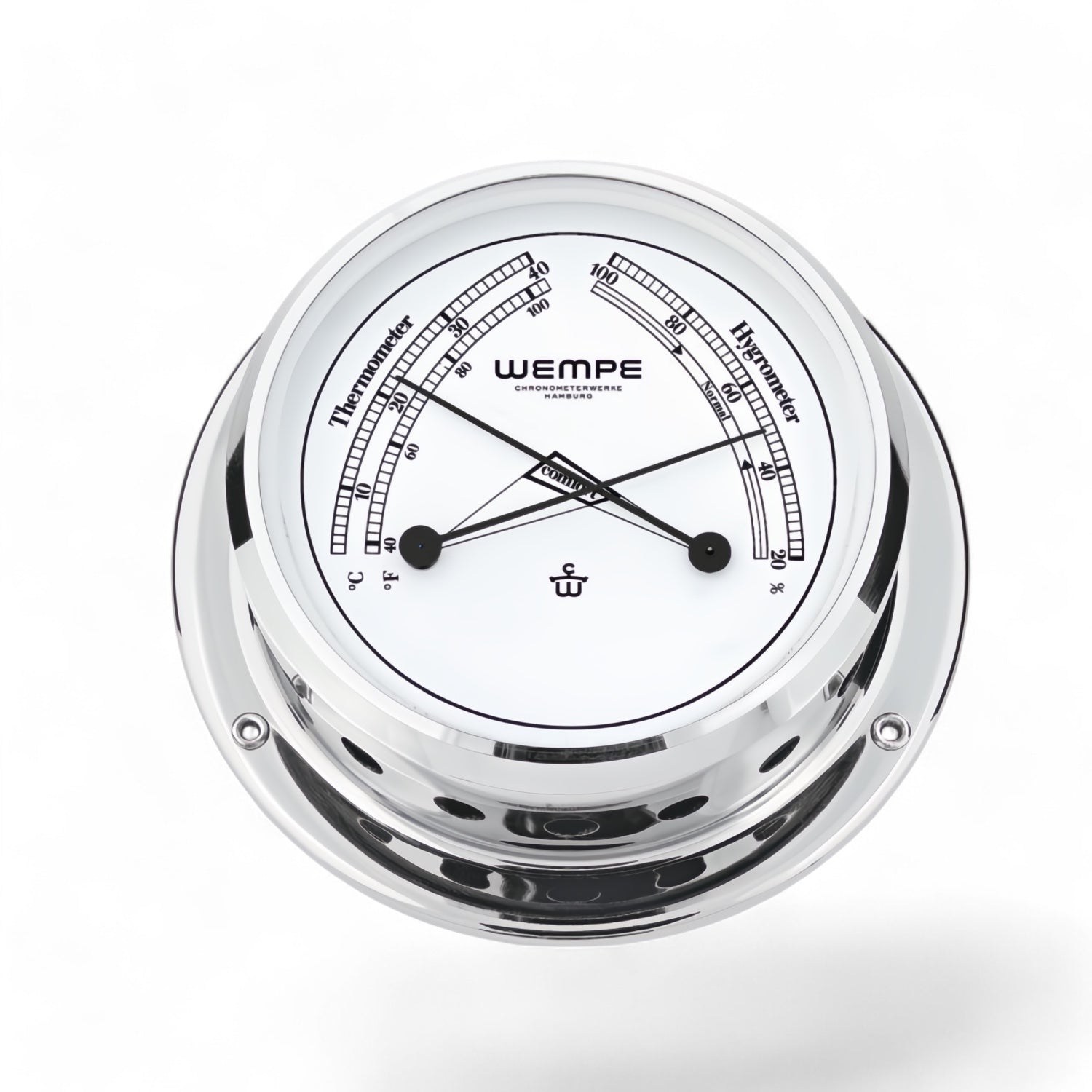

The Wempe comfort meter from the Skiff series is a high-quality, accurate, and stylish instrument. A thermometer and hygrometer in one, it measures both temperature and relative humidity. Monitoring these factors is essential on board for a healthy and comfortable climate. Both measurements are clearly displayed in degrees Celsius/Fahrenheit (temperature) and % (humidity) on an easy-to-read 80mm white dial. Available in a clear lacquered, high-gloss polished version or with a high-gloss chrome-plated brass case. For a complete maritime experience, you can also opt for a set with the matching ship's clock and barometer from the same series.

This low-maintenance Weems & Plath Bluewater thermometer is the ideal choice for accurate temperature measurements for marine and boating enthusiasts, in both Fahrenheit and Celsius. With markings every 2 degrees, from -10°C to 55°C, it is preset in a controlled environment for reliable performance. Its splashproof, corrosion-resistant black resin housing and scratch-resistant glass make it perfect for marine conditions. The matte, glare-resistant finish and O-ring seal enhance ease of use. With a modern, timeless black housing and white dial, it is easy to read. A hinged bezel with a brass locking tab makes it easy to adjust when needed. Includes mounting instructions and the Weems & Plath Limited Lifetime Warranty. A practical, stylish addition for anyone who values precision. Quality that remains affordable. A modern thermometer that sails with you, wherever you go.
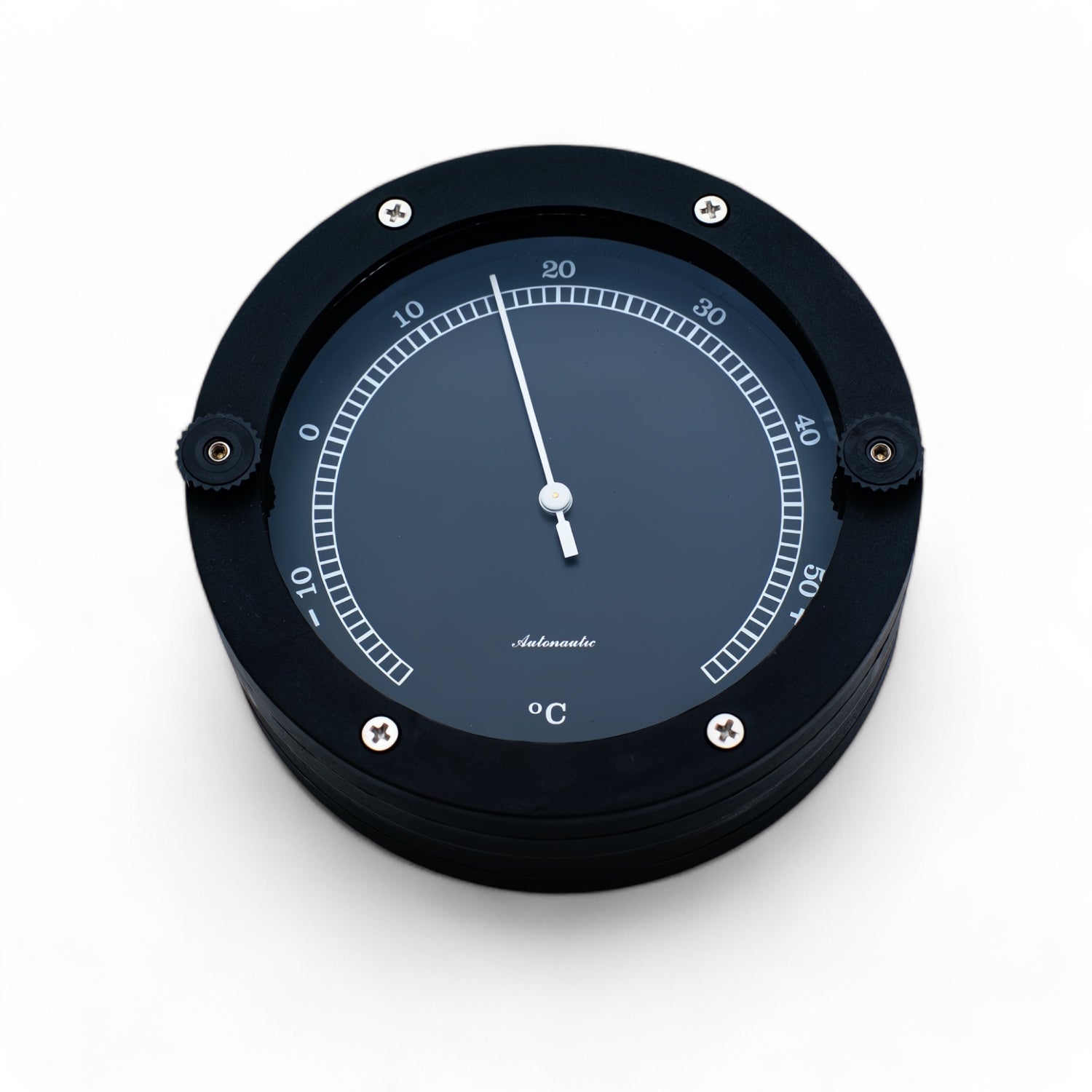

Autonautic Baltic 110 thermometer - black, lightweight, outdoor (110 x 40 mm)
€110,26
The Autonautic Baltic 110 is the ultimate indoor and outdoor thermometer that's lightweight and reliable. This outdoor thermometer is designed for both racing sailors and adventurers. Compact and versatile, with a 110mm base, 100mm dial, and 40mm height, it's a practical choice that performs time and time again, regardless of the conditions. It combines precision with a durable design, perfect for both indoor and outdoor use. Made of sturdy polyamide, it's designed to withstand extreme marine conditions. With a timeless, classic design and weighing just 165kg, this thermometer is easy to install and ideal for any nautical setting. It's lightweight for racing. Stay on top of the temperature at all times and experience an instrument that's not only functional but also adds style to your surroundings.
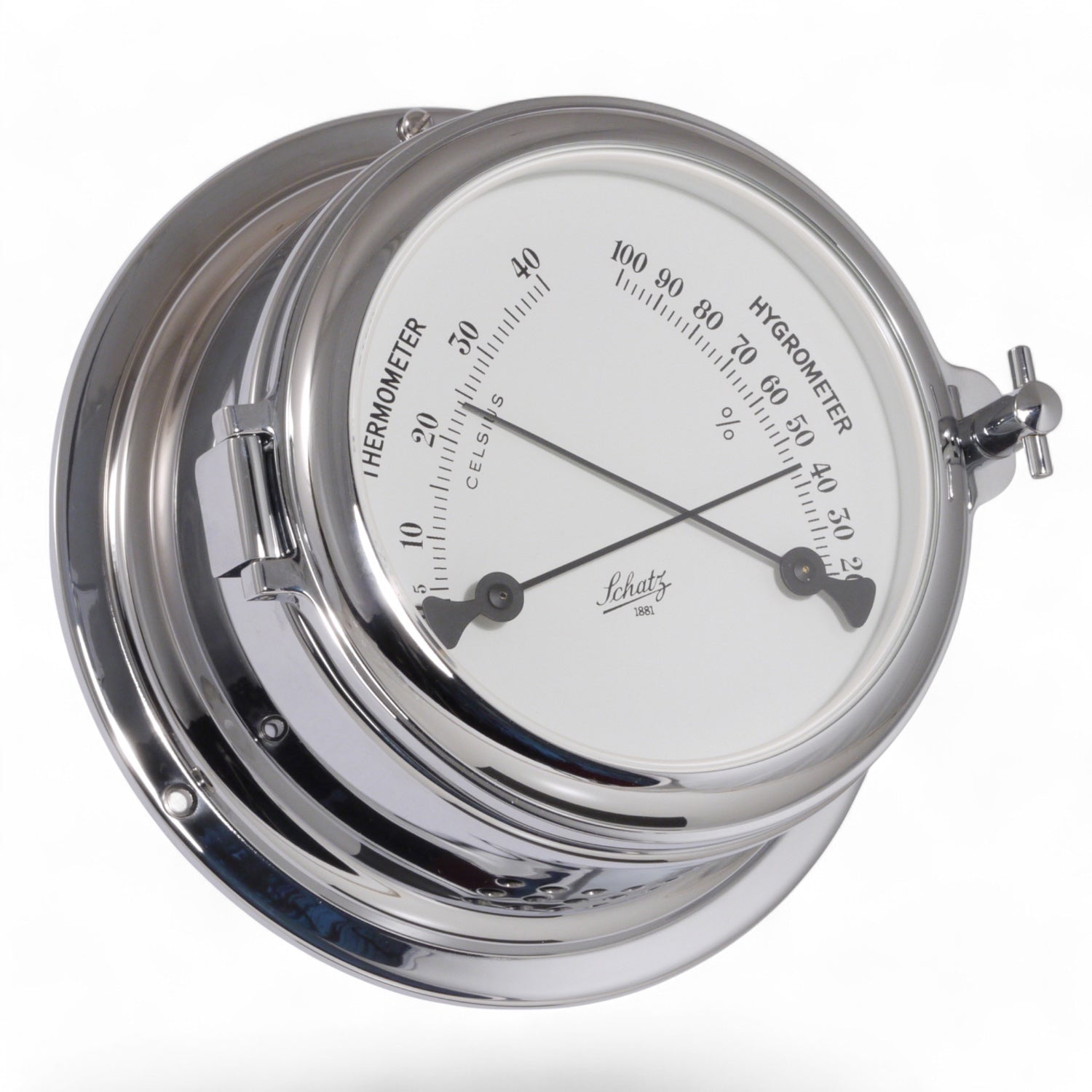

Compact, mechanical and direct reading. The Midi comfort meter measures temperature in Celsius and relative humidity without battery or connection. Solid brass casing, in brass or chrome-plated brass. Set via the push-button closure at the front. Fits in any cabin, even where space is scarce. 155 x 70 mm


Autonautic Indic 175 comfort meter - professional, large format (175 x 40 mm)
From €215,49
Reliable measurements and a stylish appearance for every maritime enthusiast. This comfort meter combines a thermometer and hygrometer with a comfort zone indicator for optimal climate information. The Autonautic Indic comfort meter is an essential instrument for those who need or value accurate humidity and temperature measurements. With a generous 175 mm diameter case, a 40 mm height, and a 150 mm dial, this versatile instrument is suitable for any environment. Choose from an elegant chrome or gold-plated finish to seamlessly complement your interior or marine equipment. Choose from a chrome-plated brass or gold-plated case.
Ideal for use at home, on a boat, in a camper, or in a vacation home. With over 50 years of craftsmanship, manufactured in Spain by a renowned family business, this comfort meter guarantees precision and quality. Combine it with other instruments from the Autonautic Pacific series for a perfectly coordinated, professional package.
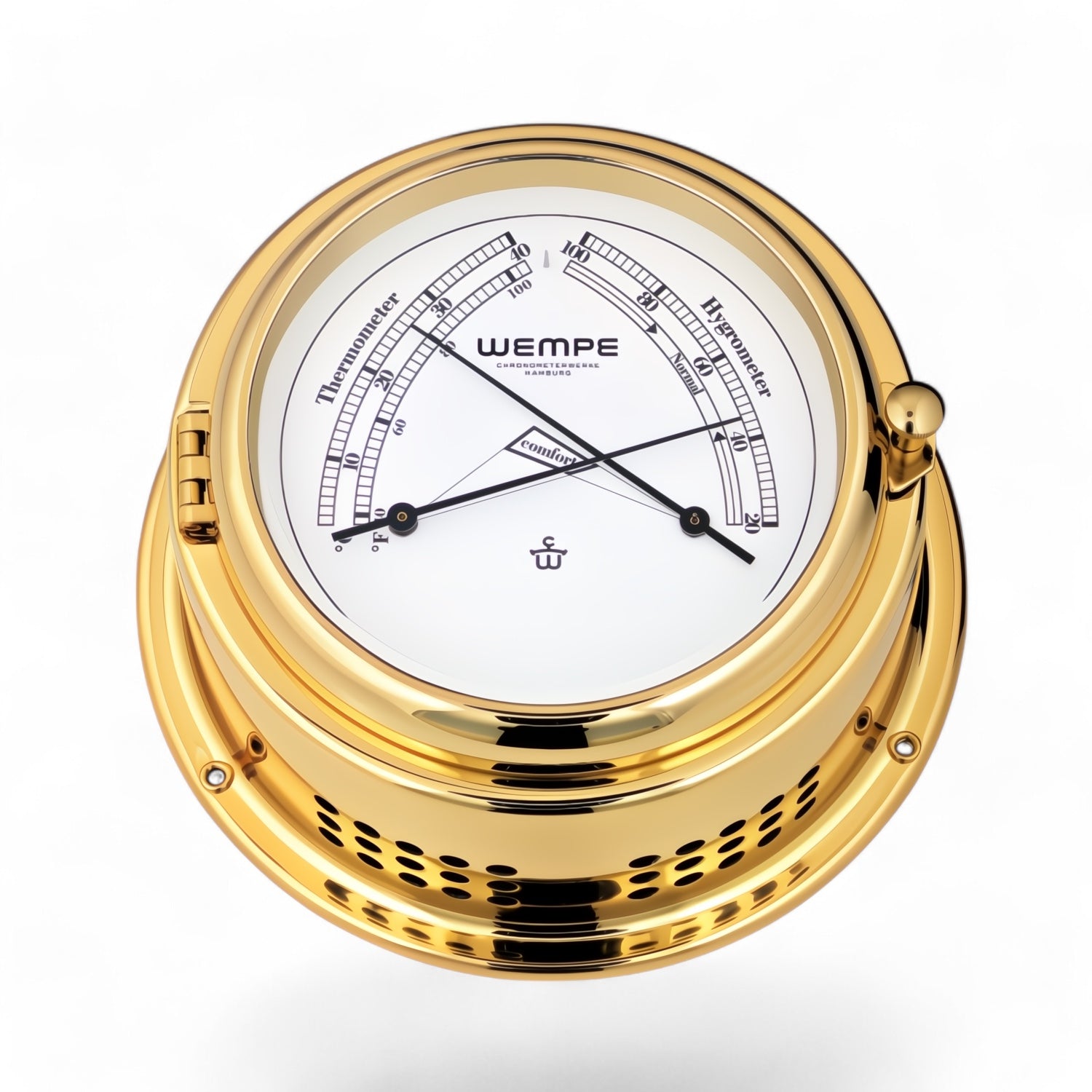

With the Wempe Bremen II comfort meter, you're not just bringing an instrument on board; this is a true guardian of comfort. The thermometer and hygrometer in one provide accurate measurements of temperature and humidity, ensuring your environment always remains optimal. And the comfort zone indicates your ideal climate. This precision comes in a luxurious package: a stylish casing of colorless lacquered or chrome-plated brass, featuring a high-gloss finish that makes any space shine.
The comfort meter is easy to read and adjust, offering an elegant combination of functionality and beauty. With an impressive 100 mm dial in a 150 mm casing, this instrument becomes a timeless ornament on board or at home.

De A130TH2 combineert een thermometer en een hygrometer op een wijzerplaat van royaal formaat. De blauwe wijzer toont de temperatuur, de rode de relatieve luchtvochtigheid, zodat je vanaf afstand ziet of het binnenklimaat comfortabel blijft of dat ventileren nodig is. Werkt zonder stroom, achter mineraalglas in een spiegelglans gepolijste behuizing van roestvrij staal.


De A104TH combineert een thermometer en een hygrometer op één licht ivoren wijzerplaat. De blauwe wijzer toont de temperatuur, de rode de relatieve luchtvochtigheid, zodat je ziet of het binnenklimaat comfortabel blijft of dat condens op de loer ligt. Werkt zonder stroom, in een spiegelglans gepolijste behuizing van roestvrij staal.

Temperature and relative humidity on one 140 mm dial, encased in brass. The large thermo-hygrometer for those who take indoor climate seriously: mould-free cushions start with knowing what the air is doing. Measures temperatures from -25°C to +45°C and relative humidity from 10% to 90%. The combined analogue dial provides a quick overview of temperature and humidity for a comfortable indoor climate on board or at home.


Thermo-hygrometer in the 4-inch line: temperature and relative humidity combined on 130 mm, in matte chrome-plated brass. Indoor climate on board is not a luxury concept; it's the difference between a dry cabin and a damp night. Measures temperatures from -25°C to +45°C and relative humidity from 10% to 90%. The combined analogue dial provides an at-a-glance overview of temperature and humidity for a comfortable indoor climate on board or at home.


Two measurements in one 120 mm housing: temperature and relative humidity, directly readable without power. In a boat or camper, this is the instrument that predicts condensation before your mattresses feel it. Available in brass and matte chrome-plated brass, matching the rest of the 3-inch series. Measures temperatures from -25°C to +45°C and relative humidity from 10% to 90%. The combined analog dial provides an at-a-glance insight into temperature and humidity for a comfortable indoor climate on board or at home.


The Barigo Viking barometer is the largest classic barometer instrument from the renowned German Barigo factory. With a housing of 155 mm and a height of 35 mm this is a is a stately instrument that immediately commands attention. The 130 mm dial offers a clear scale, while an elegant open curve in the center reveals the refined aneroid mechanism. Available in polished stainless steel or brass.
Thanks to the clever hanging system, a hook on the back, you can easily hang the barometer and remove it just as easily for calibration. The durable housing , available in brass or chrome-plated stainless steel , combines robustness with timeless elegance.
Made in Germany with over 80 years of craftsmanship, the Barigo Viking barometer is an indispensable instrument for any nautical enthusiast, perfect for on board or as a stylish addition to the home.


The Cap Horizon Racing thermo-hygrometer combines temperature and humidity measurement in one compact nautical instrument. The dark dial with fine lines, clear scale, and blue accents gives this model a distinctive, technical look that immediately stands out in the wheelhouse, office, or marine interior. The dial is also distinguished by a fine matte black-dark grey line structure with a subtle carbon look, giving this weather station a more technical and modern character.
The casing is made of brushed stainless steel and has a diameter of 110 mm with a height of 32 mm. The instrument uses a mechanical thermo-hygrometer system and displays both temperature and relative humidity in a clear, easy-to-read layout. The high-contrast scale and clear comfort zone provide quick insight into the indoor climate.
What truly sets this Racing version apart is the character of its execution. While the foundation is familiar, the Cap Horizon dial combined with the black face gives this instrument more excitement, more presence, and a modern maritime signature. This is quiet precision with visible design.
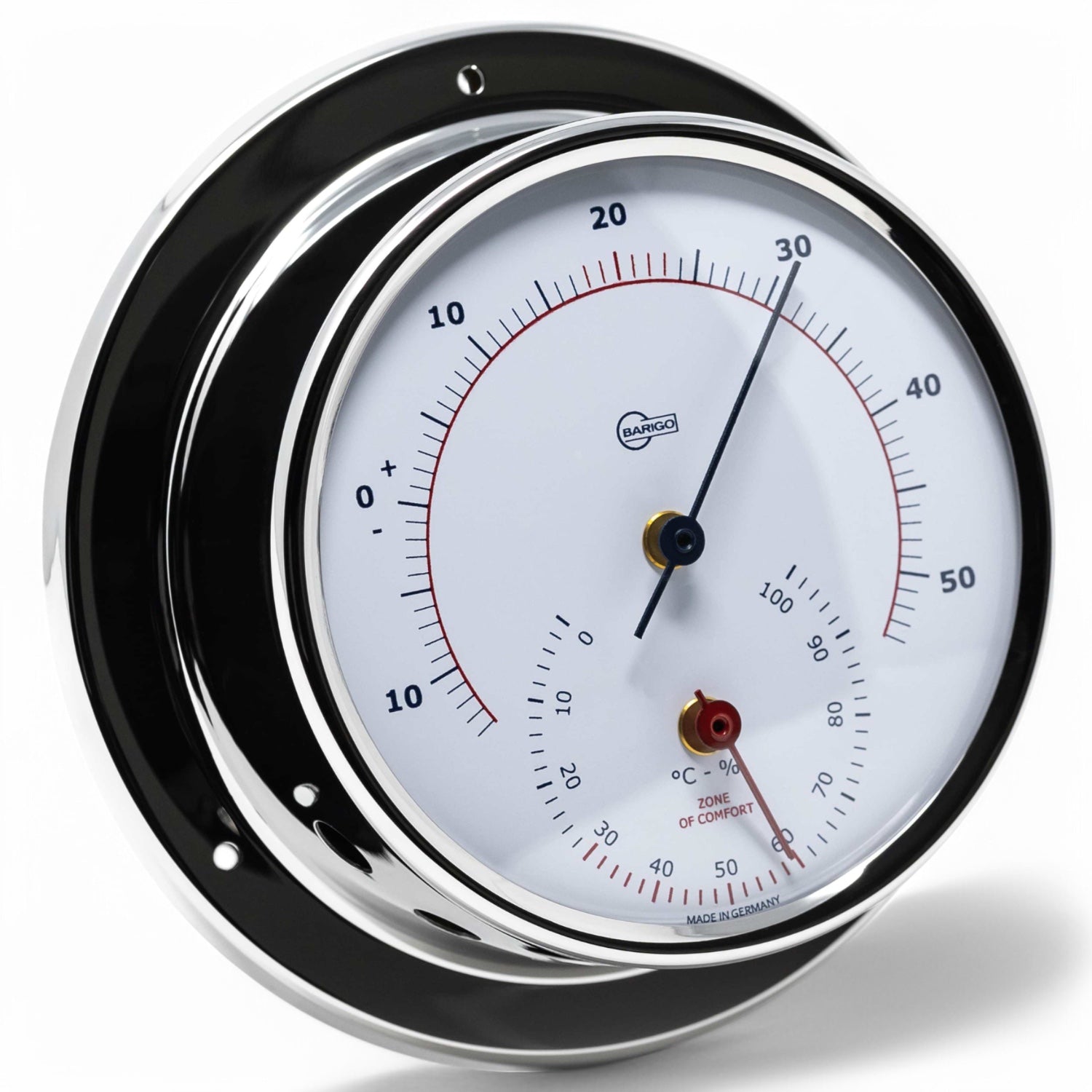

The Barigo Sky Thermo-Hygrometer is a classic and precise instrument for monitoring temperature and humidity. It's beautifully lightweight and made of polished stainless steel. This new design features two elegant circles: the upper one displays the temperature in degrees Celsius, while the lower one accurately displays the humidity.
With a clear scale on the 85 mm dial, reading the (indoor) climate is a breeze. The sturdy 110 mm x 32 mm case and light weight of 105 grams make this instrument both compact and robust.
Manufactured in Germany by Barigo , this thermohygrometer guarantees precision and reliability. Ideal for onboard, at home, or in the office. The SkyThermo-Hygrometer helps you effortlessly maintain a pleasant indoor climate. Choose timeless design, German quality, and optimal comfort.


Two hands, one glance, and you know the indoor climate. The Star measures temperature and humidity on one white dial with a comfort zone, mechanically and without a battery. This new version has an opening on the front for easy calibration. Casing 110 x 45 mm, dial Ø 85 mm, 290 g. In polished stainless steel or brass.


Silver-white dial, polished stainless steel rim. The white Orion has the same yacht aesthetic as its black brother, but in a lighter tone. Humidity in % is displayed at the top, and temperature in °C at the bottom. Accuracy ± 5% r.h. and ± 1 K. Ø 102 mm, 35 mm deep. Fits directly next to the Orion clock and barometer.


Black dial, polished stainless steel bezel, sleek black centre band—the Orion has the look of a modern yacht, not a classic ship's instrument. Humidity in % is displayed at the top, temperature in °C at the bottom. Accuracy ± 5% r.h. and ± 1 K. Ø 102 mm, 35 mm deep. Fits directly next to the Orion clock and barometer.


Comfort on board often comes down to small things: a dry cabin, no clammy cushions, a pleasant temperature. The VION A100TH lets you see the situation at a glance, combining a thermometer and hygrometer in one sleek instrument.
After that first check, you mainly want to know this:
· 2-in-1 overview: temperature + humidity in one clear dial
· Recognizable VION design: red and blue hands, two-tone dial and the drop symbol
· Solid material: mirror-gloss 18/10 stainless steel (AISI 304L) with PMMA (acrylic glass) front
· Easy to install: quick-lock mounting for quick and neat installation
Accuracy
· Thermometer: ±1°C (10–30°C) / ±2°C (-20–60°C)
· Hygrometer: ±10% deviation
Made in Denmark by Delite and designed to last for years: a comfort meter that not only looks good, but above all helps you keep the indoor climate on board smart and simple.


Some days the cabin feels perfectly fine… until your pillows suddenly feel clammy or the air feels dry. The VION A080TH thermo/hygrometer Ø97 mm is your little comfort check: it displays both temperature and humidity in a single instrument, so you immediately know whether you need to ventilate, heat, or simply leave it alone.
The A80 series is fresh and distinctive, with blue and red hands , a two-tone dial , and the subtle teardrop symbol . The case is made of polished 18/10 stainless steel (AISI 304L) and the front is PMMA (acrylic glass) : sleek, clear, and built to last. The quick-lock mounting makes it easy to install, so it hangs neatly in place quickly.
In terms of measurements you are good:
-
Thermometer: ±1°C (10–30°C) and ±2°C (-20–60°C)
-
Hygrometer: ±10% deviation
Made in Denmark by Delite and designed for years of use: compact, refined and smart — exactly what you want on board (or in your holiday home).


Air that's too dry is bad for woodwork, furniture, and your comfort. Excessively humid weather causes condensation, mold, and a clammy feeling. Especially on board or in a vacation home, you don't want to guess; you want to know what the humidity is doing.
This 103H hygrometer is a synthetic hair hygrometer in a 165 mm polished brass or chrome-plated brass housing. Behind the mineral glass, you can read the humidity from 0 to 100% relative humidity , with a fine 1% scale. With an accuracy of ±3% RH (20–100%) + 1 scale division, you can monitor the indoor climate precisely.
The hygrometer is designed for indoor use : perfect for the cabin, wheelhouse, saloon, living room, or office. Its classic nautical design makes it a perfect fit for any maritime interior. Combine it with the matching 103PM barometer, 103PMU clock, 103PMT thermometer, and 103PMTD tide clock for a complete and stylish instrument panel.
This way, you can see at a glance whether it is better to ventilate, heat, or dehumidify – and you protect both yourself and your interior against a poor indoor climate.
See the collections below for air pressure and changes in weather conditions.
The comfort meter is your best friend for comfort on board.
Detect moisture before it's too late.
On board, the humidity level is constantly changing due to seawater vapor, rain, cooking, showering, and condensation against cold bulkheads. A comfort meter combines a thermometer and a hygrometer with a clear comfort zone indicator, so you can see at a glance whether the indoor climate is still optimal.
The numbers that matter. Pleasant and healthy is roughly between 40 and 60 percent relative humidity. Below 40, the air becomes dry, causing tickly coughs and static electricity. Above 60, the problems begin: condensation on cold surfaces, clammy cushions, and in the case of prolonged exposure, mold in cupboards, behind paneling, and in mattresses. That 60 percent limit is the number to remember.
Why a boat is extra vulnerable. The hull is cold, the space is small, and you cook and shower in the same area where you sleep. A single person releases almost half a liter of moisture into the air overnight. Without ventilation, this adds up quickly, and it isn't visible until it's too late; you usually only discover mold behind paneling once you smell it.
What to do about it. If you see the value creeping above 60, ventilate: open hatches, keep ventilation grilles clear, or use a dehumidifier if the boat is sitting idle for a long time. Winter storage is the time when this pays off the most; that is precisely when the boat is closed up and moisture can seize its opportunity.
We carry comfort meters in brass, chrome-plated brass, and stainless steel, in classic round porthole styles or more modern designs. If you are looking for a separate thermometer or hygrometer for a specific measurement, we have those too.
It works just as well at home. In an old house on the coast, a basement, or a north-facing bedroom, exactly the same limits apply.
Frequently asked questions
A comfort meter combines a thermometer and hygrometer in one device. This makes the instrument suitable for accurately monitoring both temperature and humidity, ideal for on board and at home to prevent moisture damage and maintain a comfortable indoor climate.
A hygrometer measures the relative humidity of the ambient air, such as that in a room or in a boat cabin. This is the humidity of the atmospheric air at that specific location. The measured values can differ significantly from the humidity of the outdoor air. Unlike barometric pressure, which remains the same both indoors and outdoors, indoor relative humidity can vary considerably depending on the conditions. A good humidity level is between 50% and 60%.
A thermo-hygrometer can be purchased separately or as one combined instrument. It measures temperature and humidity individually and provides precise readings. You can determine for yourself whether the combination of temperature and humidity is comfortable.
A comfort meter measures the same data but combines it to provide a direct visual indication of the comfort level. You can read this in the comfort zone on the instrument, where you can see, for example, if it's too dry, too humid, too warm, or just comfortable. Comfort meters are user-friendly and provide immediate insight, while thermo-hygrometers focus on providing separate measurement data.
At Studio Maritime, you can buy both separate instruments and combined comfort meters. In doubt? Ask us for advice.
Both instruments are useful: a thermometer monitors the temperature, while a hygrometer helps to monitor the humidity. For limited space, a comfort meter (a combination of a thermometer and hygrometer) is a practical solution.
Our thermometers are not only durable, but also made to perform under maritime conditions. Hang them inside your home or cabin for optimal operation – this way you measure the indoor temperature, which is important for the preservation of equipment, interior, and the well-being of the crew.
Most thermometers in our nautical range work with a bimetal mechanism, where metals expand or contract with temperature changes, allowing them to accurately measure the temperature. And because they are of high quality, they are not only functional, but also a stylish accent for your home, camper, or holiday home.
A hygrometer measures humidity, which is essential for preventing moisture problems, for instance on a boat where cushions and electronics are susceptible to mold and corrosion. In the home, a
hygrometer also helps keep humidity under control for a healthier
climate.
To ensure accurate measurements, it is important to recalibrate the hygrometer regularly, especially if the instrument has been exposed to very dry air for an extended period. We recommend performing this adjustment every 3 to 4 months. This will keep the hygrometer reliable and precise in displaying the relative humidity.
A hygrometer is easy to calibrate by wrapping the
instrument in a plastic bag with a damp sponge for half an hour. Immediately after removing the instrument from the bag, it should read approximately 98%. Immediately dry the casing with a dry, lint-free cloth.
Humidity refers to the percentage of water vapor present in the air at a given moment. A healthy (relative) humidity is between 40% and 60%, meaning that the air consists of 40% to 60% water vapor. The ideal humidity level on a boat and in a house is around 50%.
On a boat, the ideal humidity level is also around 50%, but it can vary depending on the conditions. Due to the constant presence of water and fluctuating weather conditions, humidity on board can change rapidly. It is important to find a balance between 40% and 60% to maintain both comfort and a healthy indoor climate, and to prevent problems such as mold or condensation.
Follow us on Instagram
@studio_maritime


