
Your view of the world: binoculars for sea, land, and adventure
Binoculars have two numbers: 7x50 means seven times magnification and a lens diameter of fifty millimeters. This has been the standard on board for decades, and for good reason.
More magnification is actually worse on the water. A ship is always moving, and that movement is amplified with the magnification. With ten times magnification, the image dances so violently that you can no longer see anything clearly; at seven times, it remains manageable. This is one of the few places where more truly is less.
The fifty millimeters is for the light. A large lens captures more light, and you notice this at dusk and at night: precisely the moments when you need to be able to distinguish a buoy or an oncoming vessel. Divide the lens diameter by the magnification and you get the exit pupil; with 7x50, this is more than seven millimeters, approximately what a human eye opens to in the dark. Hence the combination.
>Waterproof and floating. Marine binoculars are filled with nitrogen so they don't fog up with temperature changes, and the better models float if you drop them overboard. That happens more often than you think.
Compass and rangefinding. Many marine binoculars have a built-in bearing compass with which you can directly read a bearing of an object, and a reticle in the image to estimate distance based on a known height. Handy for navigating by sight and for judging whether an oncoming vessel is getting closer.
Ashore. For hiking, birdwatching, or mountain climbing, lighter binoculars with higher magnification are often more pleasant, as you stand still and weight counts more than brightness. Also check out compasses or water sports watches.
5 products
Sort by:
5 products
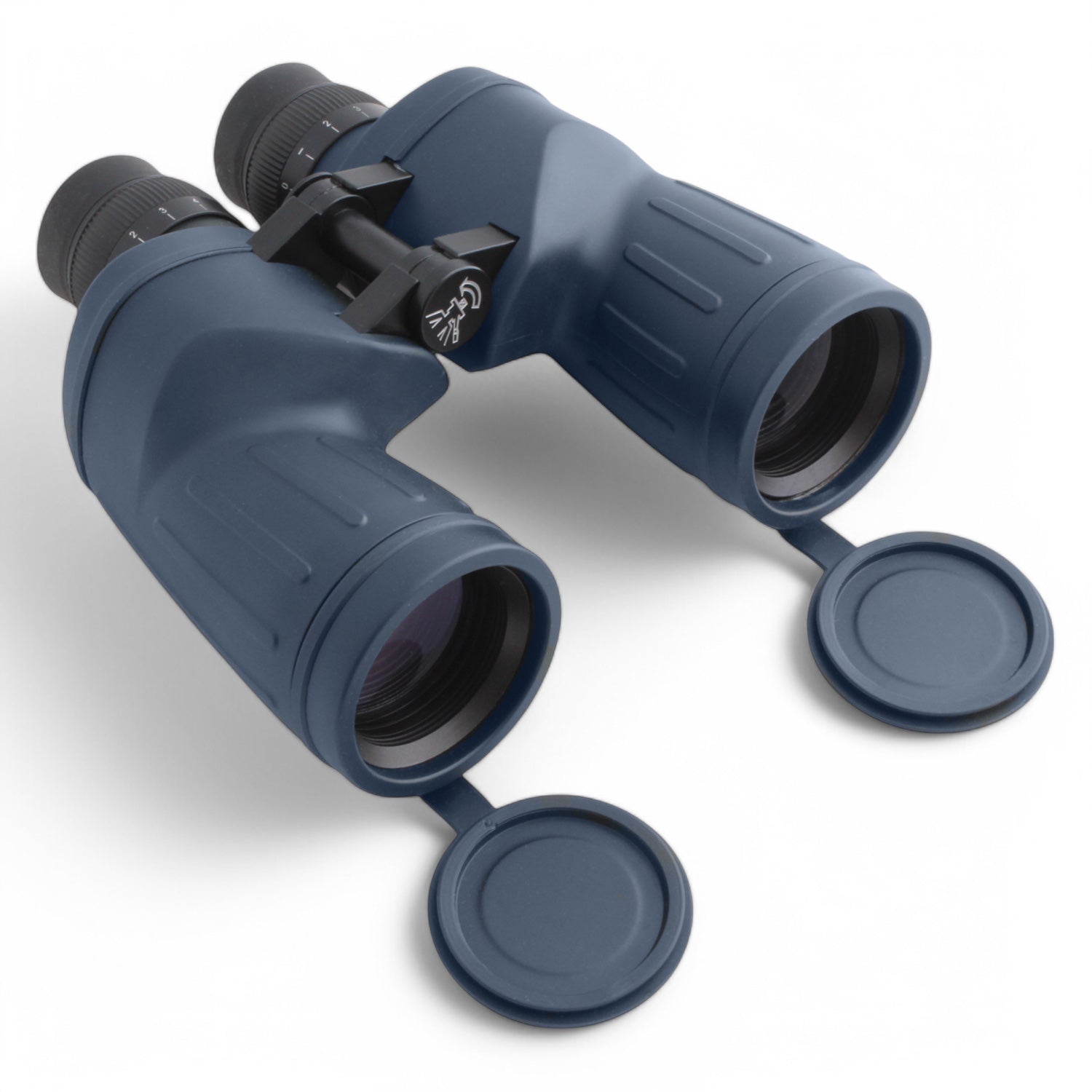

For those who want to see clearly, anytime, anywhere. The Weems & Plath PRO 7x50 binoculars are no ordinary binoculars; they're a rugged instrument for professionals and adventurers on the water. Built to exceed military standards, these binoculars provide razor-sharp images from sunrise to sunset. Thanks to the flat field lenses, you'll enjoy crystal-clear edges, and even with glasses, the view remains optimal. The sturdy rubber housing ensures a solid grip, while the water and shock resistance make them perfect for any rough condition. With the Weems PRO 7x50, you'll easily chart your course, no matter how rough the water. These PRO binoculars come with l deluxe storage bag, padded neck strap and lens hoods.
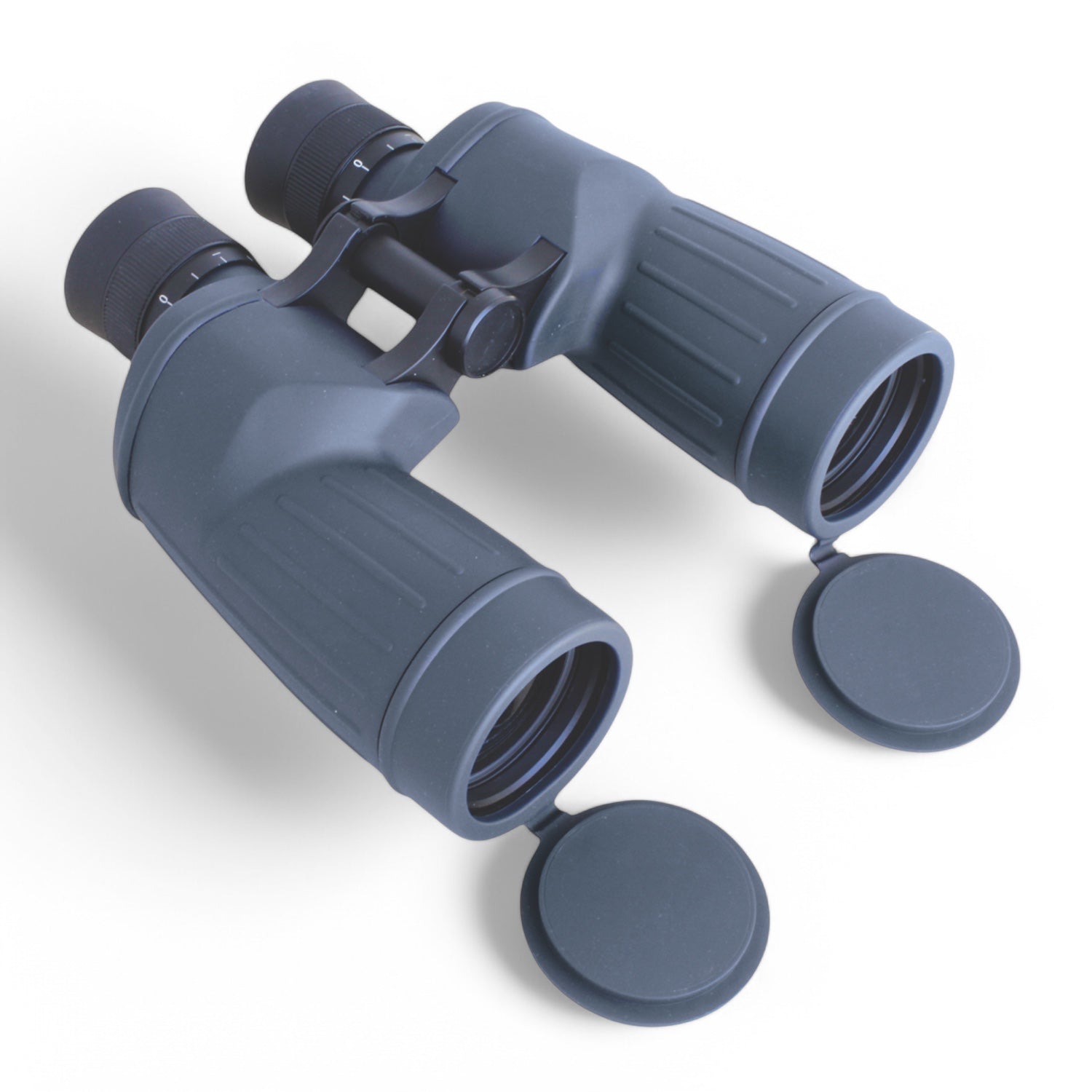

Weems & Plath Classic Binoculars 7x50 - razor sharp, waterproof, shockproof
€470,00
Focus in even the toughest conditions. From foggy mornings at sea to dim harbors, the Weems Classic 7x50 delivers unparalleled clarity and precision. Built to exceed military specifications, these binoculars offer razor-sharp resolution and superb low-light performance. The combination of BAK-4 Porro prisms and a fully multi-coated optical system ensures crystal-clear images without loss of light. The rugged, waterproof magnesium housing and argon-filled lenses keep you focused, no matter the weather.
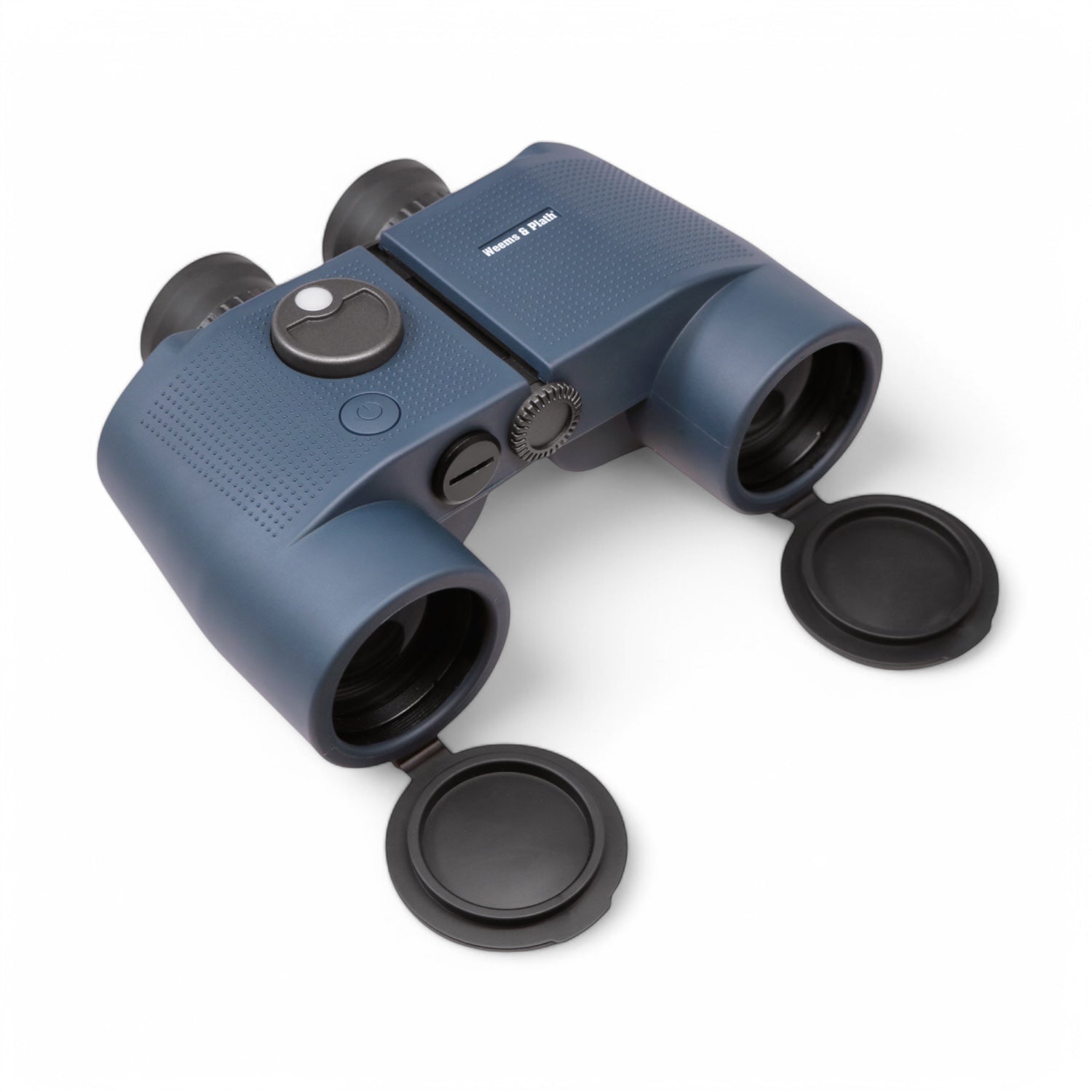

Always a clear view, wherever you are. For the water sports enthusiast who wants to see clearly in all conditions. The Weems & Plath WAYFINDER 7x50 offers crystal-clear vision, both day and night. These binoculars are designed for easy adjustment, even for each individual eye, thanks to the twist-up eyecups. Prevent fogging, even in wet conditions, thanks to the argon filling. At 1 kilo, you'll feel like you're holding something, and with the waterproof and floating housing, it's ideal for use at sea or in rainy weather.
Navigate easily in low light. The illuminated compass rose and rangefinder make navigation effortless, even in the dark. These waterproof binoculars give you perfect visibility in any situation. Included with the binoculars are a soft black storage case, a padded neck strap, a lens cloth, 2 x LR44 batteries, and lens protectors.
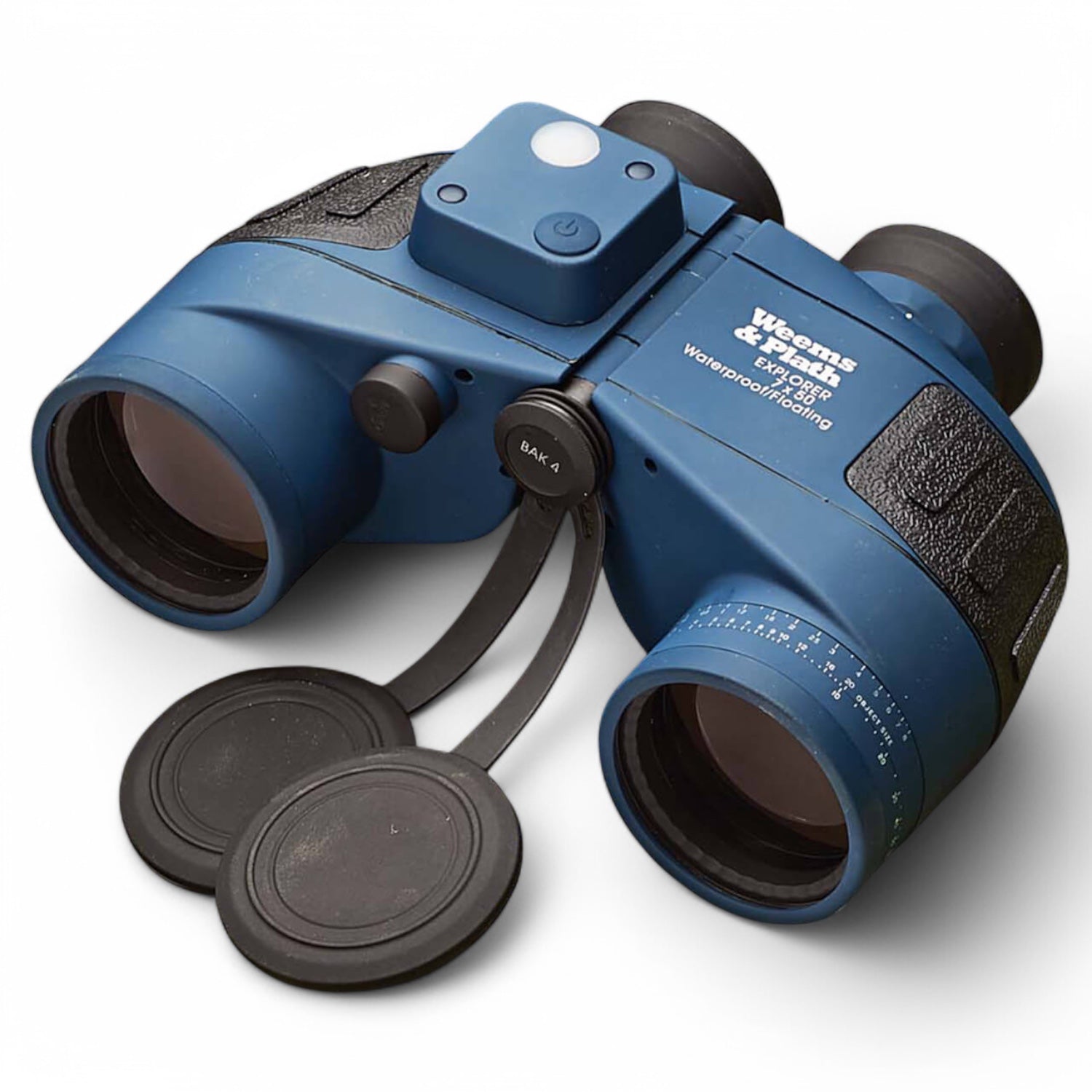

The Weems Classic 7x50 Binoculars are the perfect choice for serious water sports enthusiasts who refuse to compromise on quality. These rugged binoculars go beyond standard optical performance and exceed military specifications for durability and clarity. With 7x magnification and a 50mm objective lens, they deliver razor-sharp images, even in low light, thanks to their BAK-4 prisms and fully multi-coated lenses .
What truly sets these binoculars apart is the illuminated compass rose and rangefinder , allowing you to effortlessly chart your course, even in the dark. The argon gas in the lenses prevents condensation, ensuring clear vision at all times, even in wet conditions. Furthermore, these binoculars are waterproof and floatable – ideal for use at sea or in rainy weather.
Unlike other binoculars, the Weems Classic 7x50 offers not only excellent optical performance but also ultimate ease of use thanks to individual eyepiece focusing and foldable eyecups for comfort, even for glasses wearers. The polycarbonate housing is lightweight, shock-resistant, and has a rubber grip for added protection and durability.
In short, the Weems Classic 7x50 offers an unparalleled combination of optical clarity , navigational ease , and robust performance not found in standard binoculars. Perfect for the true adventurer on the water.
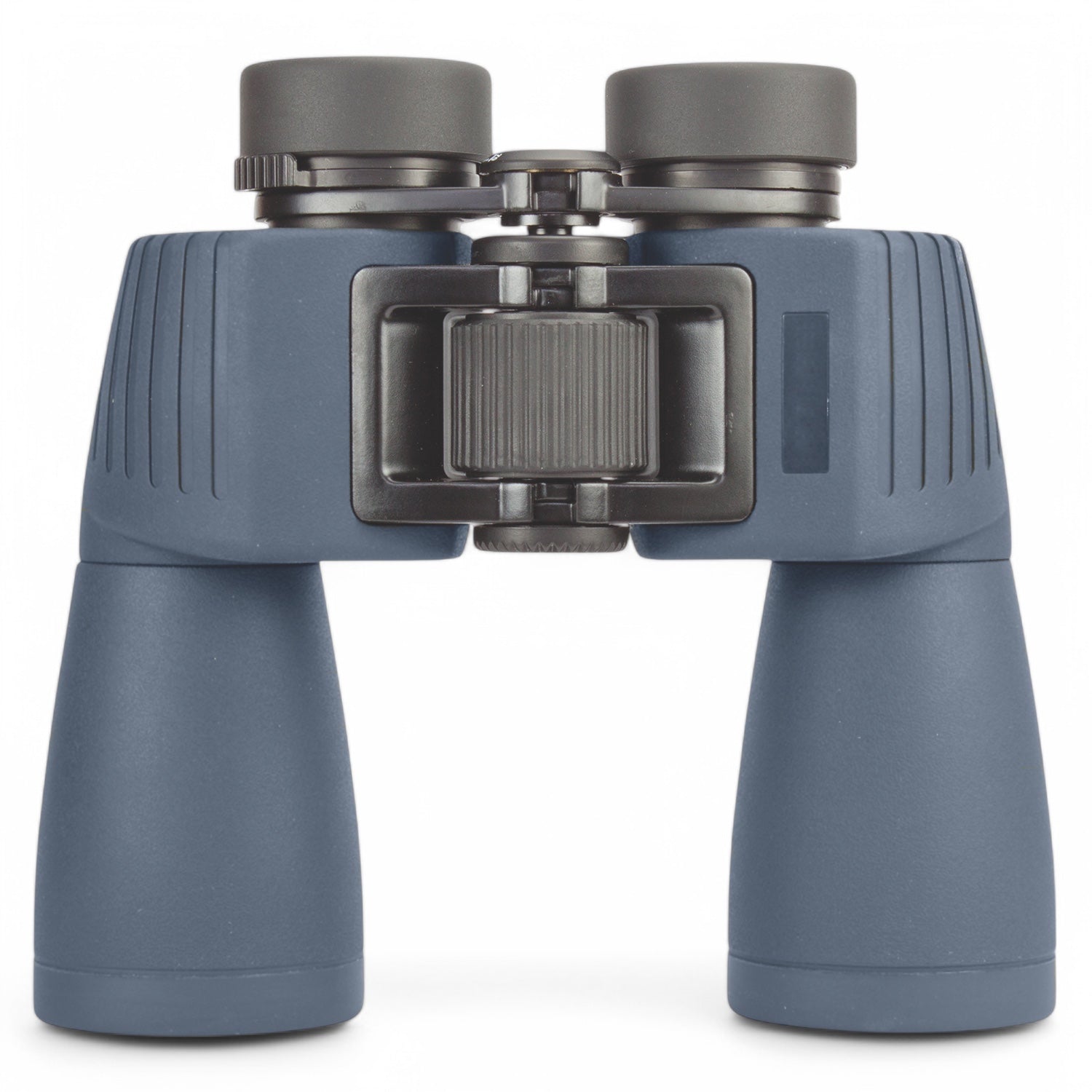
Stay on course with the Weems Sport 7x50 binoculars. Lightweight, waterproof, and built for adventure, these binoculars are ideal for sailing, birdwatching, and other outdoor activities. The center focus system makes focusing quick and easy, while the aluminum housing withstands rugged conditions. The argon gas filling prevents fogging, so you always have a clear view, even in wet conditions. The Weems Sport 7x50 offers excellent value as the most compact binoculars in our range. Includes a soft black carrying case, padded neck strap, and lens protectors.
These lightweight, waterproof binoculars are your trusty first mate, ready for any adventure. Thanks to the center focus system, you can focus in seconds, whether you see a ship on the horizon or a dolphin right off your bow. The robust aluminum housing withstands wind and weather, while the special filling prevents fogging for consistently clear vision. Ready to set sail? These binoculars will last for years.


Also check out these eye-catchers


Frequently asked questions
1. Watersports or Marine Binoculars
These binoculars are specially designed for use on the water. They are often waterproof, shock-resistant, and feature a built-in compass or stabilization function. Thanks to high light transmission, they offer a clear image even in low light conditions. Ideal for sailors, fishermen, and watersports enthusiasts who need reliable optics in varying weather conditions.
2. Outdoor Binoculars
Lighter and more versatile than marine models, designed for outdoor enthusiasts. Perfect for hiking, camping, and nature observation. They are robust, compact, and easy to carry, with a balance between magnification and field of view for all-round use. Often slightly less water-resistant than marine binoculars, but still sturdy and reliable.
3. Steiner Binoculars
Steiner is a premium brand known for its German quality and military precision. Their binoculars are durable, extremely sharp, and designed for both marine and adventurous applications. Depending on the model, they offer advanced coatings, nitrogen filling (against condensation), and special grip technology. Suitable for professionals and demanding users who expect top performance.
The magnification depends on your needs: for marine applications, 7x or 8x magnification is ideal as it provides a more stable image on moving water. For adventurous activities such as spotting birds or animals at sea, 10x magnification or higher is suitable for more detail at greater distances.
For maritime use, we recommend waterproof and shockproof marine binoculars. They are specifically designed to withstand the elements and often offer additional features such as a built-in compass or stabilization to improve your vision during unpredictable weather, fog, or rough days at sea.
For maritime use, 7x50 is often recommended due to its stable image reproduction and good light output in low visibility conditions.
Yes, waterproof binoculars prevent fogging and are resistant to seawater and humid conditions.
Follow us on Instagram
@studio_maritime


