

40 products
Sort by:
40 products
40 products
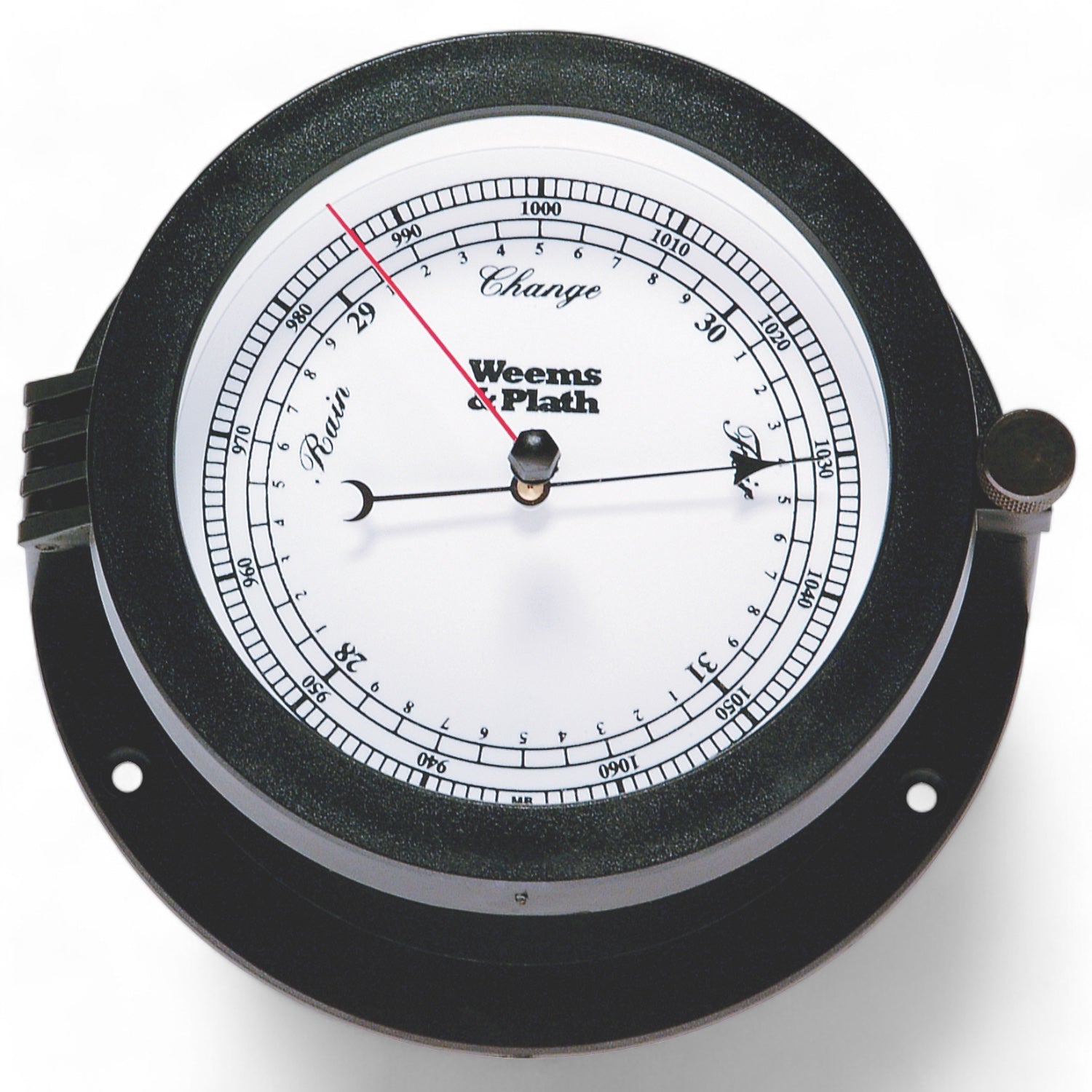
This low-maintenance Weems & Plath Bluewater barometer is perfect for anyone who takes the sea and the weather seriously. Featuring a fully adjustable, temperature-compensated aneroid mechanism and clear inch and millibar scales, it measures accurately up to 1,500 feet above sea level. Its splashproof, corrosion-resistant, high-quality black resin housing makes it ideal for marine environments. With a modern, timeless black housing and white dial, it's easy to read. The scratch-resistant glass and glare-resistant matte finish ensure durability and optimal ease of use. An O-ring seal makes the barometer extra resistant to moisture. Includes mounting hardware, clear instructions, and Weems & Plath's limited lifetime warranty. Practical and stylish, for anyone who wants to understand the weather and the sea. Excellent value for money. In short, a perfect modern barometer for every skipper.

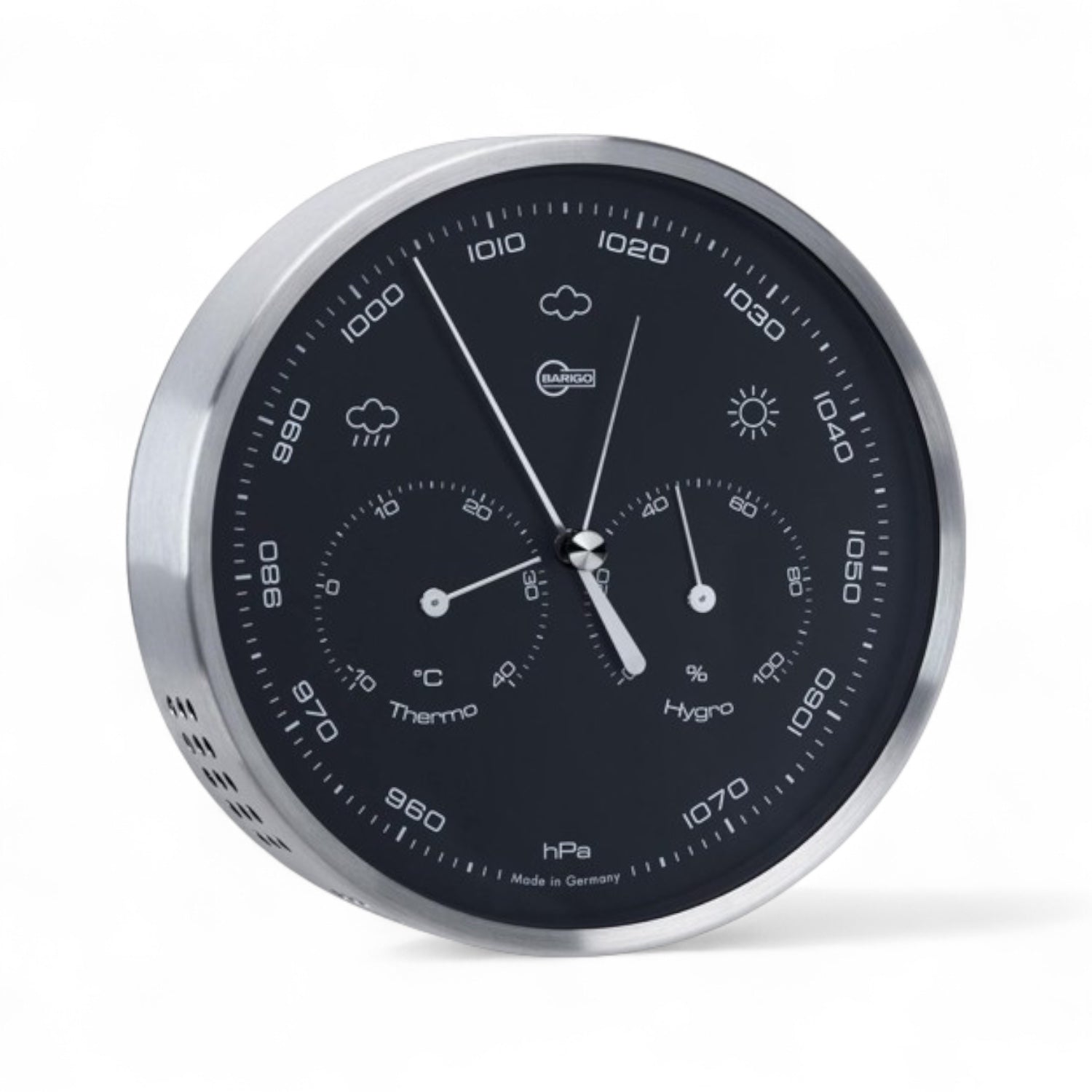
For those who appreciate functionality with a nautical look, the Barigo 350MBL weather station is an excellent choice. With its stylish design, crafted from brushed stainless steel and fitted with polished mineral glass, this instrument offers a timeless addition for on board or at home. This high-quality weather station combines a barometer, thermometer, and hygrometer into one elegant unit. The black dial with clear white hands and numerals ensures optimal readability, while the solid German engineering guarantees precision. Striking in this design are the sleek housing and the matching silver-colored hands. A classic yet modern-designed instrument that fits perfectly within the maritime lifestyle. For the coastal resident or passionate sailor looking for a weather station that radiates class. A unique item for a unique boat. This instrument is equipped with a screw opening on the back, allowing the weather station to be easily mounted on the wall.
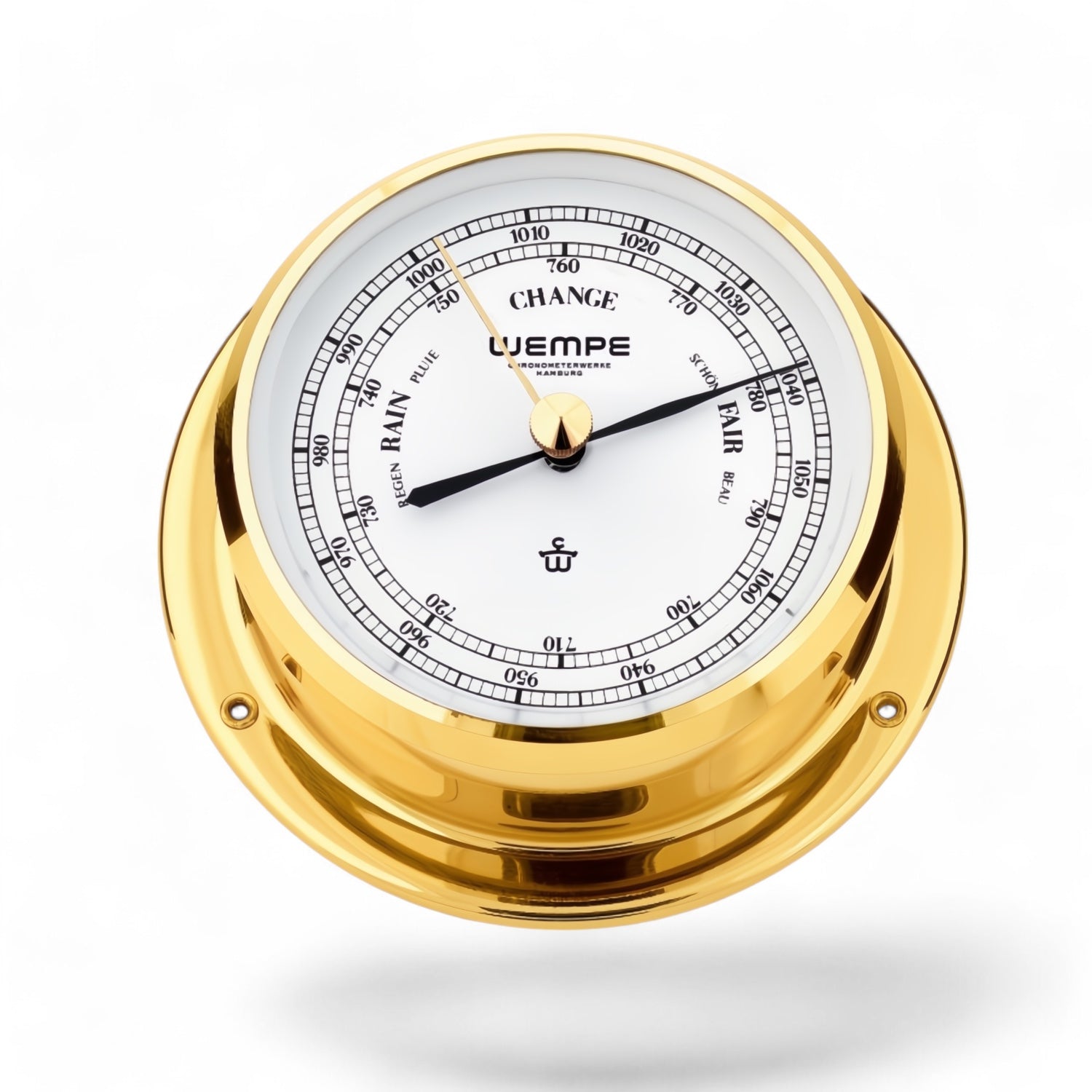

The Wempe Skiff barometer provides accurate atmospheric pressure readings, displayed via black indices on an 80 mm white dial. This mechanical barometer has an accurate measurement range and a minimal temperature error, even with sudden temperature changes of +/- 10°C. Do you want to predict the weather? Then this classic, timeless weather forecaster is always a good choice. This barometer specifically measures air pressure, which is crucial for predicting changes in the weather, such as storms or changes in weather conditions. The polished and lacquered brass casing provides a stylish appearance, while the front-mounted push-button mechanism makes maintenance simple. An ideal mix of high-quality design and ease of use for years of enjoyment. The Wempe Skiff series stands for quality.


Deep black dial, hPa scale from 960–1070, polished stainless steel bezel with black center band — the Orion has the look of a modern yacht, not a classic marine instrument. The knob in the center sets a marker hand, allowing you to track the trend compared to earlier. Ø 102 mm, 35 mm deep, mechanical and without power.
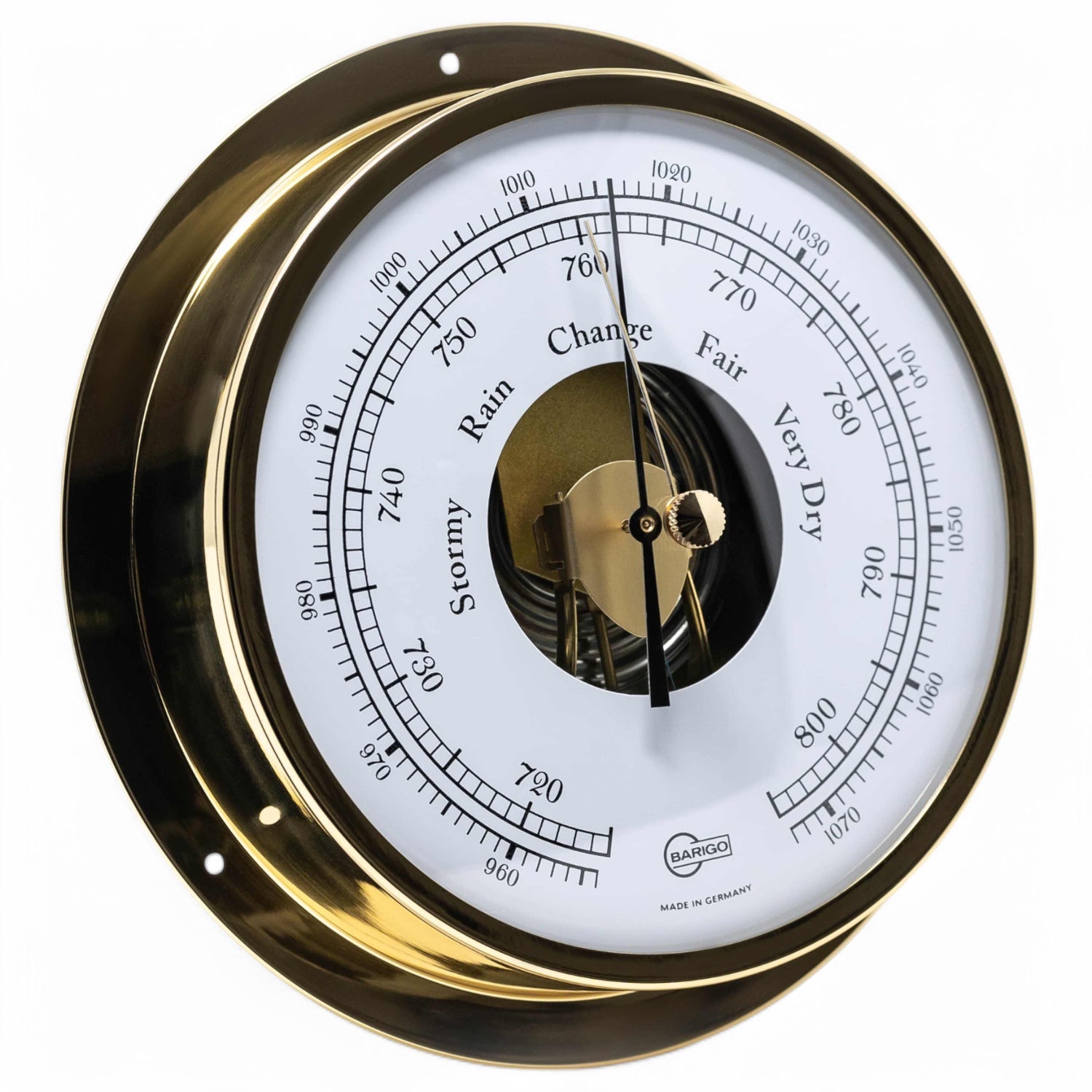

The open cut-out in the centre reveals the aneroid mechanism, which is rarely seen in this size. Casing 155 mm, dial 130 mm, white with black hPa scale. The hook on the back makes it easy to hang and remove for calibration. Available in polished stainless steel or brass.


A high-sensitive aneroid mechanism, handcrafted and clearly visible through the open dial. This is the Royal. You set it using the push-button clasp on the front, without tools. 180 × 100 mm, available in solid brass, matte brass or chrome-plated brass. The classic aneroid barometer with an open dial has been supplemented with the Schatz Royal barometer Hi Sensitive variant with an Hg scale for even better precision measurement. The classic variant is available on request.
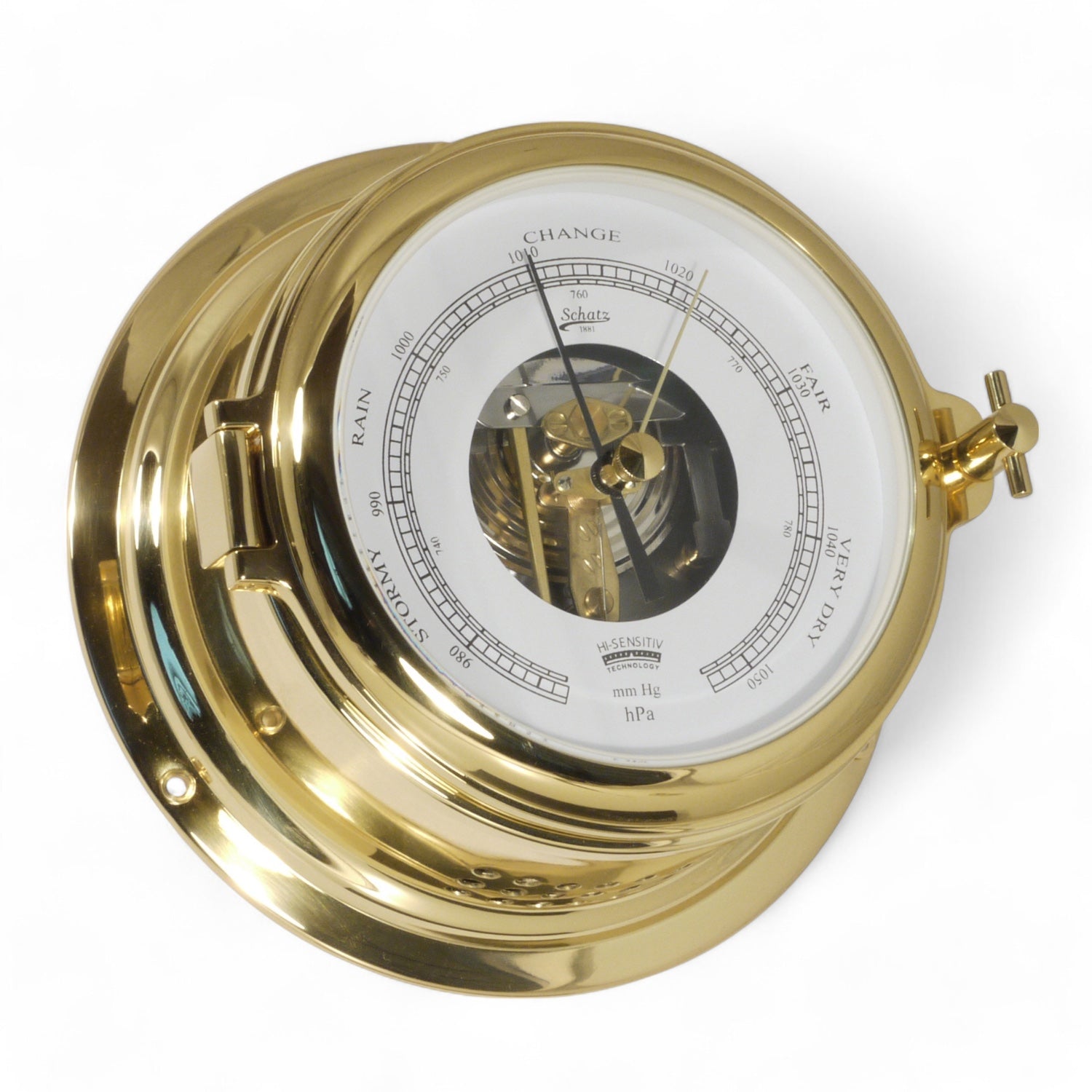

>The Schatz hi-sensitive barometer builds on the classic aneroid design: familiar style, more sensitive internal mechanism, allowing you to see a weather change just a little sooner. On the traditional open dial, measurements are in >hPa and mmHg; its hi-sensitive successor adds inHg. Handmade in Denmark, powered by a German aneroid mechanism. The Midi barometer measures air pressure without any power supply, features a clear white dial, and can be adjusted via the porthole opening on the front. Available with a brass or chrome-plated brass casing. Optionally available with an integrated thermometer for a more complete picture.


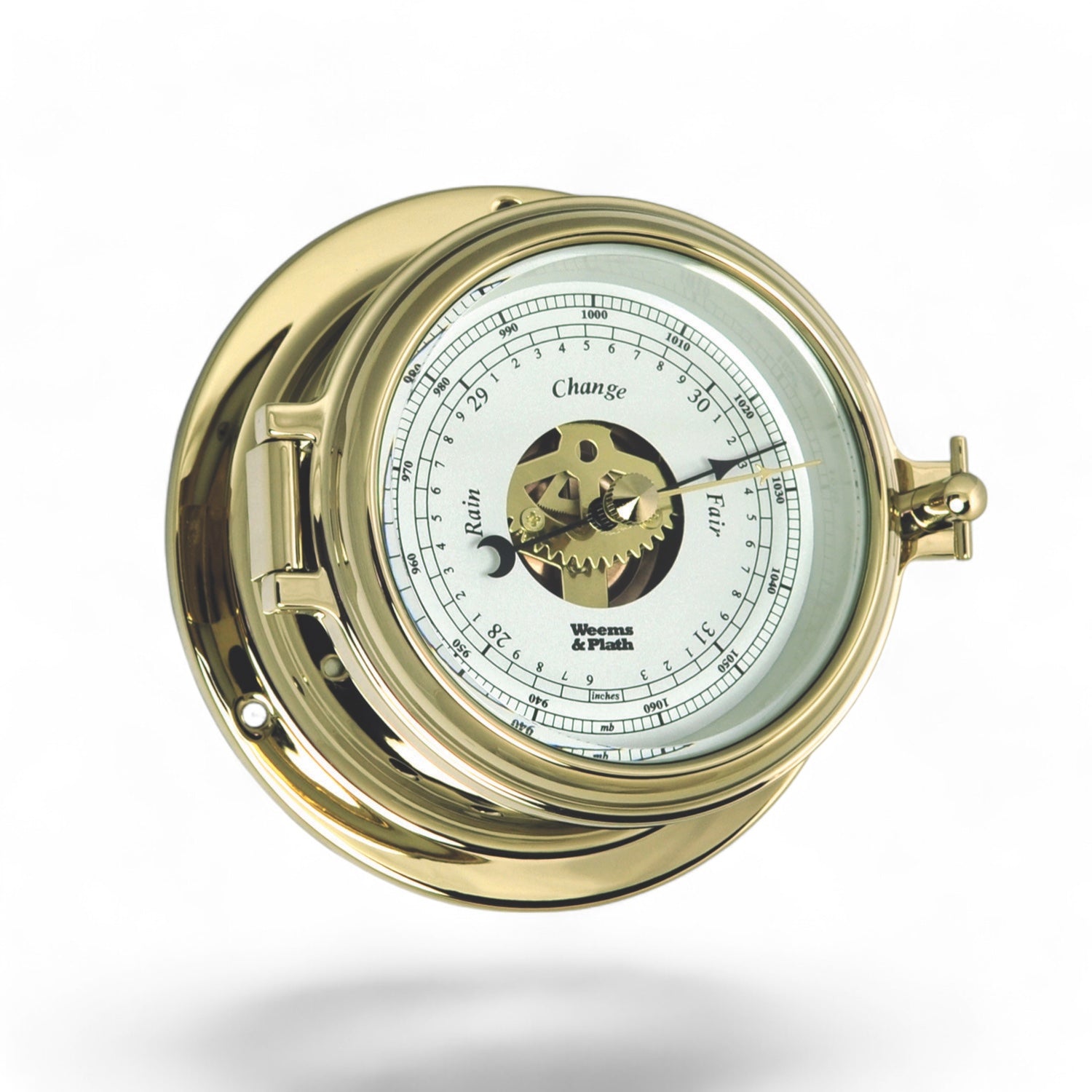

Bring the sea to your wall with the elegant Endurance II barometer. Featuring a distinctive open face and patented technology, the barometer measures barometric pressure with pinpoint accuracy. A fully adjustable aneroid system translates atmospheric changes into reliable information, even at altitudes of up to 3,500 feet. It exudes maritime charm with its robust porthole design and polished, maintenance-free finish. It's the perfect weather forecaster, whether you're at sea or at home. A maintenance-free, ultra-hard coating makes it scratch-resistant and weatherproof. The timeless porthole housing makes adjusting the barometer a breeze. Available in a choice of chrome-plated brass or brass finishes, the Endurance II is available in 105 (120 mm case), 115 (150 mm case), and 135 (180 mm case).
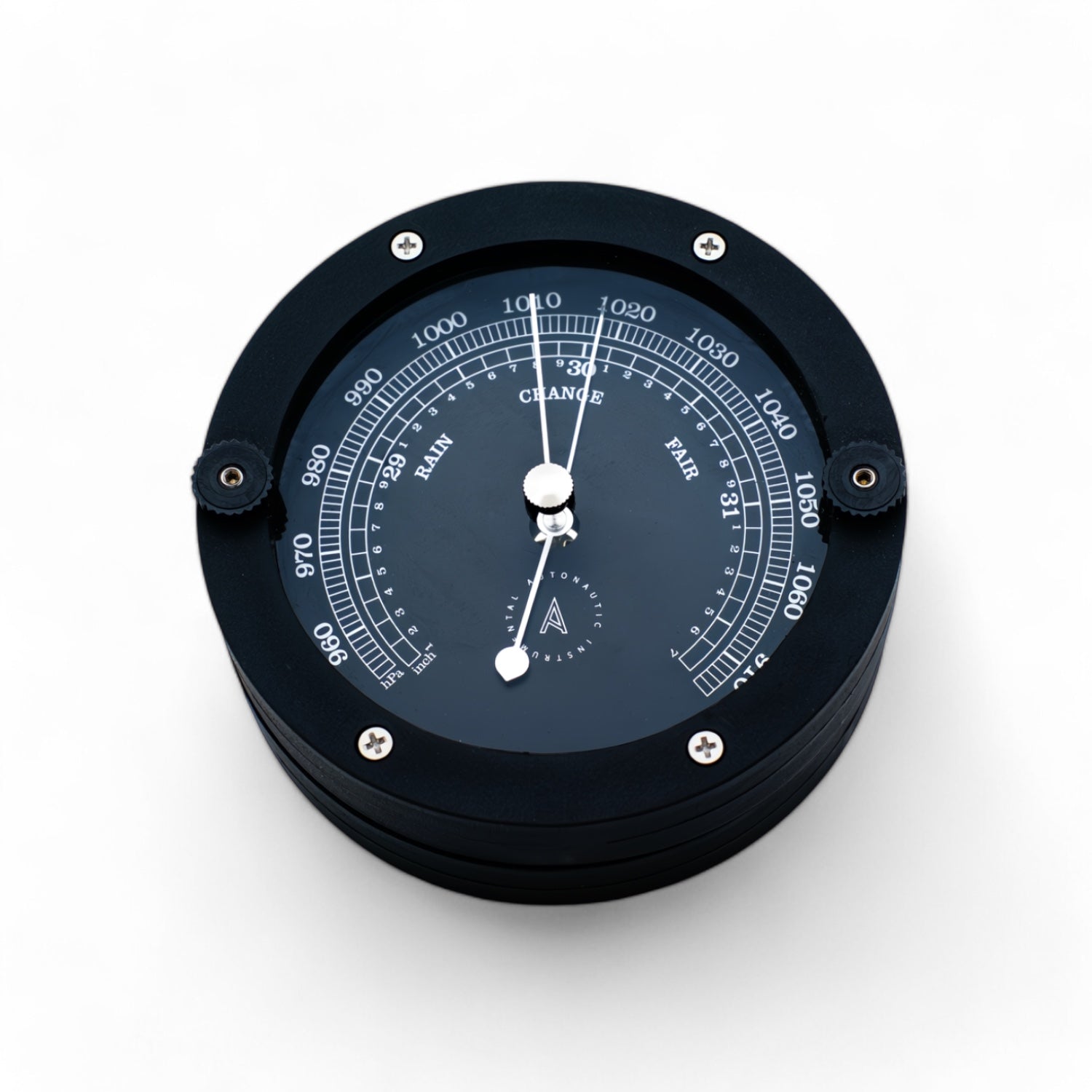

Autonautic Baltic 110 barometer - black, lightweight, outdoor (110 x 40 mm)
$135.00
The Autonautic Baltic 110 Outdoor Barometer combines accuracy, versatility, and a sleek design in one compact instrument. This barometer is a nautical instrument that can withstand harsh weather conditions or intensive use, with a functional and rugged appearance. Are you looking for a reliable and lightweight barometer that performs effortlessly under the most challenging conditions? With a diameter of 110 mm and a weight of only 165 grams, this barometer is ideal for those who want top performance without extra weight. With its durable polyamide housing, it is designed to withstand the elements both indoors and outdoors, from racing yachts to relaxing leisure boats. The clear, readable black dial with white numerals, housed in a modern black housing, provides essential atmospheric pressure information for safe navigation and accurate weather forecasting. And the words "Rain Change" and "Fair" indicate the weather conditions. This barometer is a modern addition to your home, but it is also designed to withstand maritime conditions such as exposure to salt water, shock, and vibration.
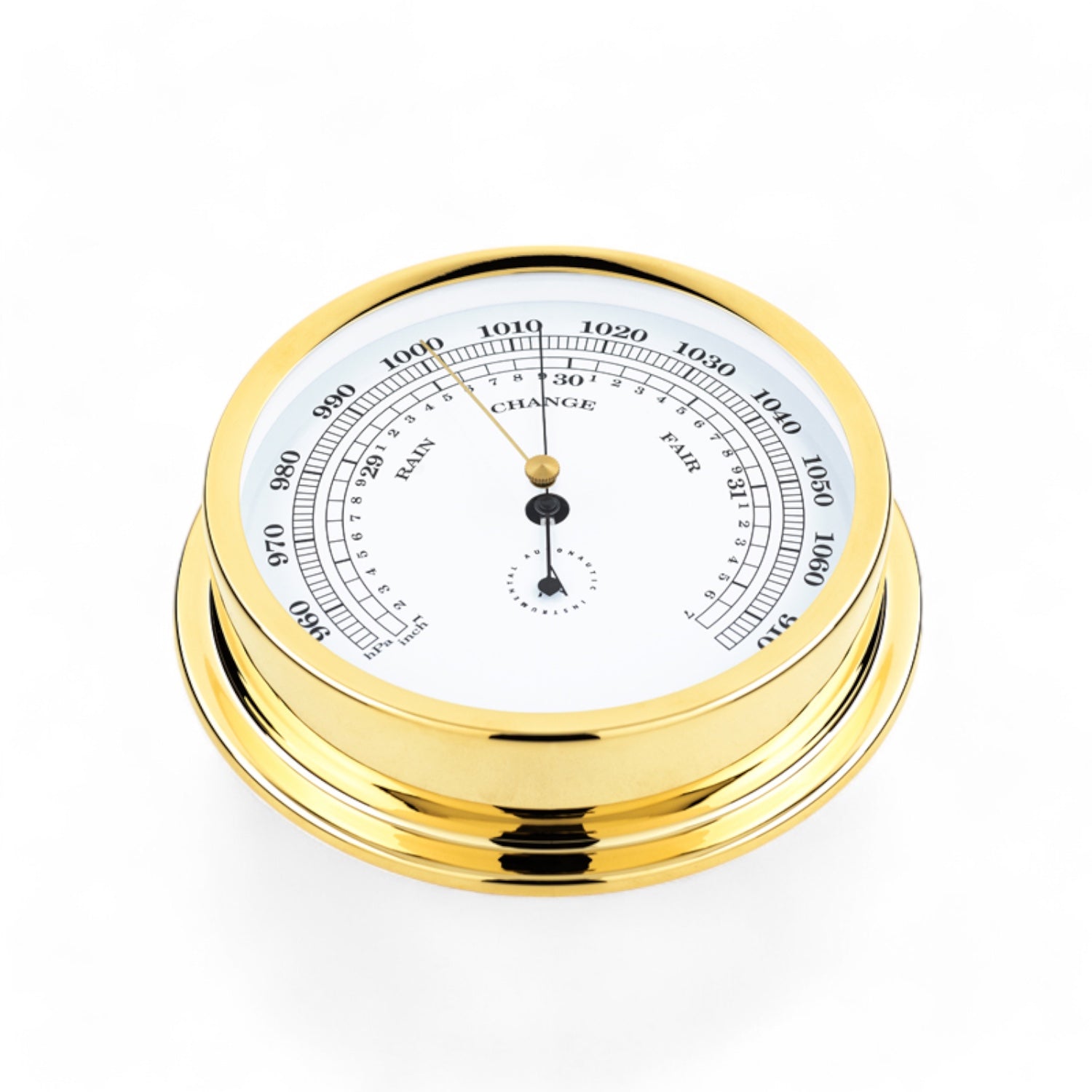

Autonautic Indic 175 barometer - professional, large format (175 x 40 mm)
From $251.00
Timeless class: Autonautic Indic Barometer ø175 mm for accurate air pressure measurements. Enhance your interior, yacht, or office with the refined aneroid barometer from the Autonautic Indic series. This high-quality instrument combines precision and style with a generous 175 mm diameter and a sleek dial with black numerals on a white background. The scratch-resistant mineral glass and Easy-Fix mounting bracket make this barometer not only practical but also durable and easy to install. Available in a luxurious gold-plated (18-karat) or chrome finish. Ideal for pleasure boats, commercial vessels, or as an elegant centerpiece at home. A perfect blend of timeless aesthetics and reliable measurements.
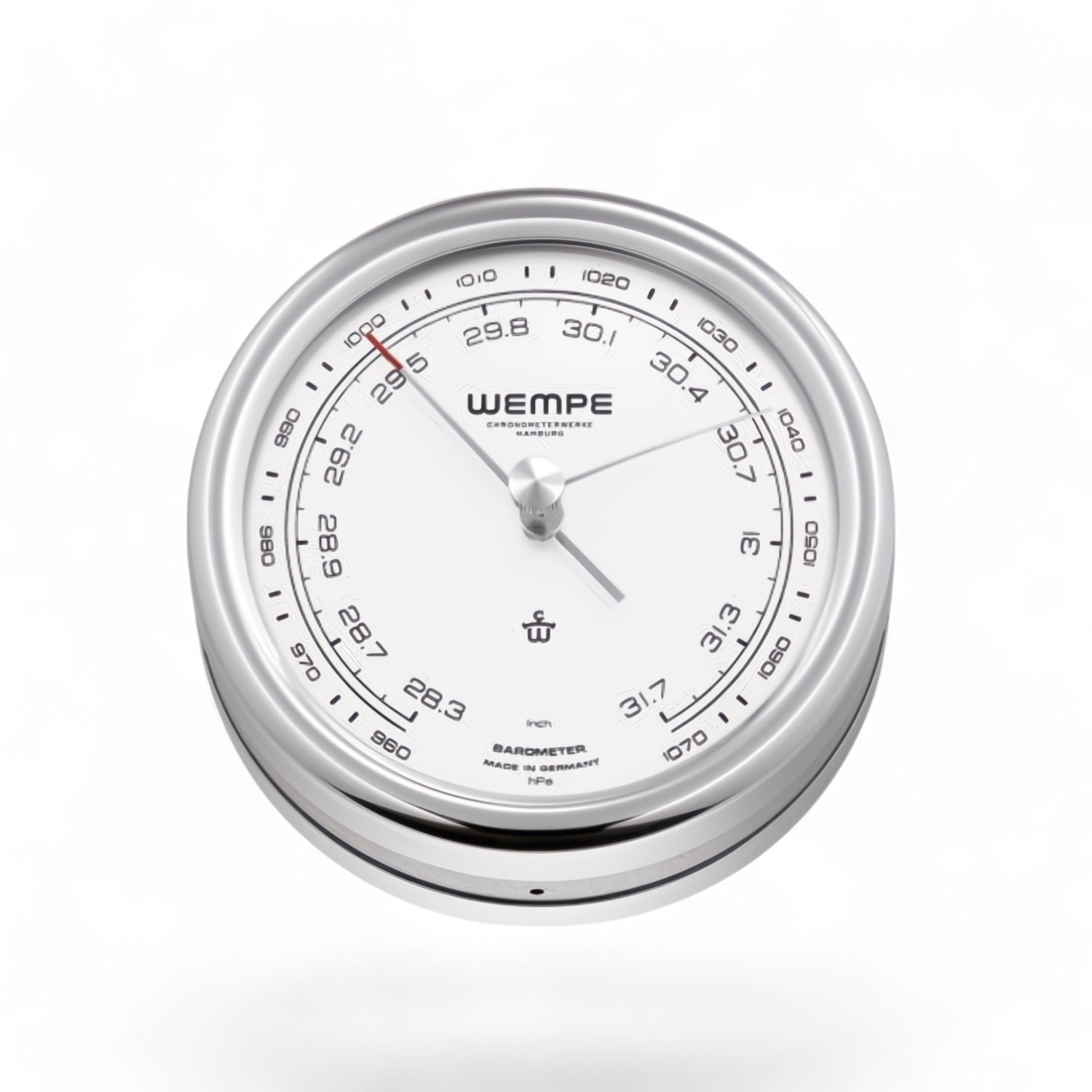

The barometer from the Wempe Pilot Series, available with a black or white dial, is ideal for a modern maritime environment. With a precise aneroid mechanism, this barometer measures air pressure in hPa and provides detailed insight into changing weather conditions. Choose between the stainless steel white version (Pilot V) or the black dial with a stainless steel bezel (Pilot III), depending on your preference.
Equipped with LumiNova indices and a high-quality stainless steel housing, this instrument is a stylish addition to both sailboats and luxury yachts. Thanks to its flexible mounting options—hanging or standing—and expandability with a matching comfort meter and ship's clock, the Wempe Pilot Series offers a perfect balance of functionality and style. It's called the Pilot Series for a reason: a nod to aviation and ready for take-off. The reliable choice for every passionate sailor.
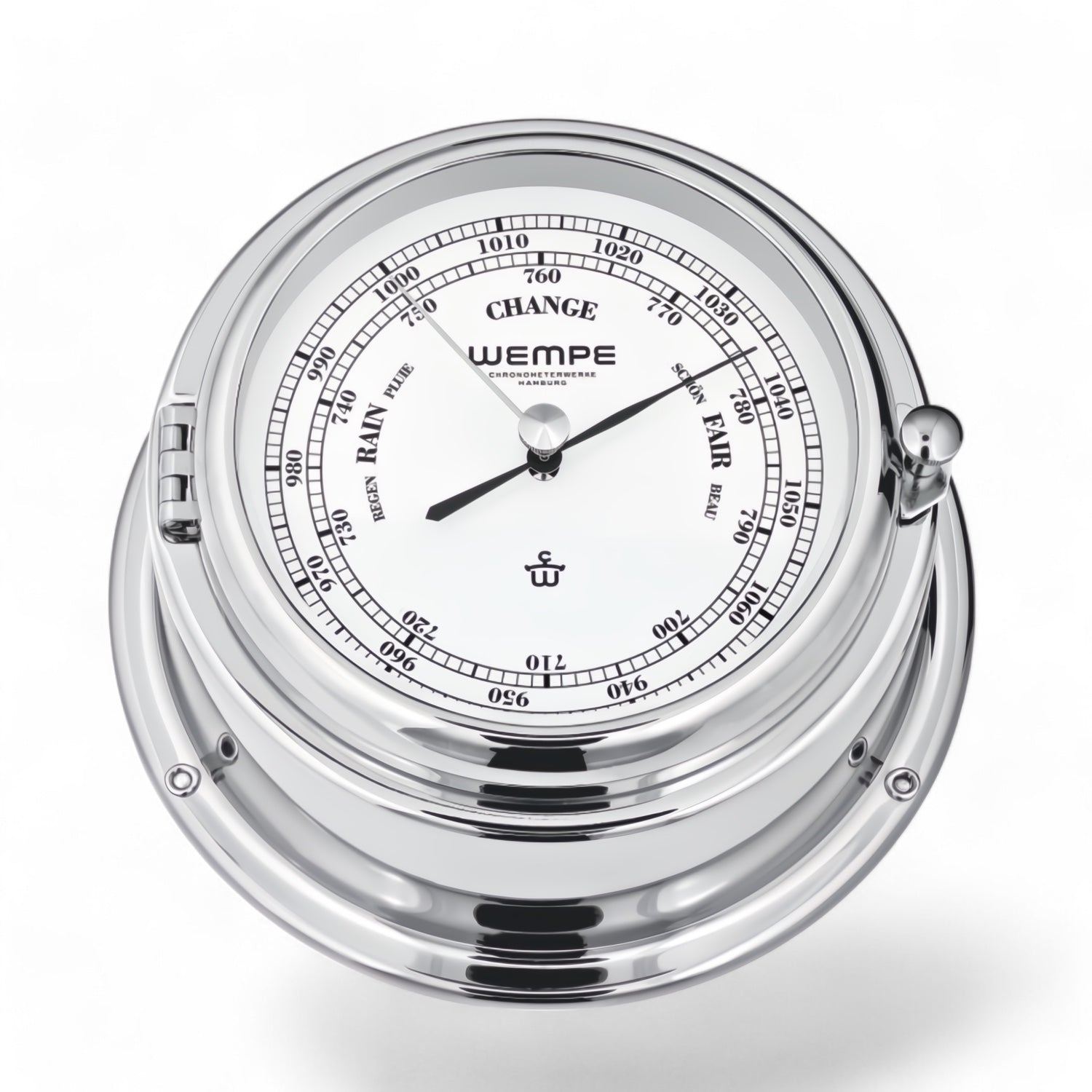

The Wempe Bremen II barometer is more than just an instrument; it's a nautical work of art for true connoisseurs of precision and elegance. With a pure white dial and black indices, you can read the atmospheric pressure at a glance, displayed in both hPa and mmHg. Thanks to the practical front opening, you can easily adjust settings without removing the instrument from the wall – perfect for any setting, from the cabin to the office.
With a solid brass casing, available in high-gloss lacquer or chrome plating, this barometer exudes solidity and craftsmanship. For over 20 years, the Bremen II barometer has been a crown jewel in the Wempe collection, beloved for its accuracy and indestructible beauty. For those who accept nothing less than perfection in atmospheric measurements, this barometer offers a statement of quality and style.

De A130B is een aneroïde barometer van 150 mm met een Hi-Sensitive-mechanisme dat de wijzeruitslag 1,5 keer vergroot. Daardoor zie je een beginnende drukverandering eerder, en door het formaat ook vanaf de andere kant van de ruimte. De behuizing is spiegelglans gepolijst 18/10 roestvrij staal; het instrument werkt zonder stroom.

De A104B is een aneroïde barometer met een open wijzerplaat, waardoor je het mechaniek ziet werken terwijl je de luchtdruk afleest. Het Hi-Sensitive-mechanisme vergroot de wijzeruitslag 1,5 keer, zodat een beginnende drukverandering eerder zichtbaar wordt. De licht ivoren wijzerplaat zit in een spiegelglans gepolijste behuizing van 18/10 roestvrij staal en werkt zonder stroom.

De A103B is een aneroïde barometer met een Hi-Sensitive-mechanisme: de wijzer slaat 1,5 keer verder uit dan bij een gewone barometer, zodat kleine drukveranderingen eerder zichtbaar worden. De fluorescerende, tweekleurig bedrukte wijzerplaat zit in een titaniumkleurige behuizing en blijft ook bij weinig licht leesbaar. Werkt zonder stroom en wordt geleverd met een quick-lock montagering.

The barometer in the large 220 mm format: aneroid measurement, brass housing, a scale that can be read from meters away. The natural companion to the 6-inch ship's clock: together they fill a wall the way a bridge is supposed to look. Measures air pressure from 930 to 1070 hPa (700–800 mmHg) with classic weather indications: Stormy, Rain, Change, Fair and Very Dry. Due to its large size, the porthole has two openings, which gives it its charm.

Plastimo 4 inch barometer combines a 130mm (5.12 inch) matte chrome-plated brass casing with an accurate aneroid mechanism. Without batteries or maintenance, it continuously measures changes in atmospheric pressure, allowing you to anticipate weather changes in time.

combines a generous 140 mm (5.51 inch) brass casing with a precise aneroid mechanism. Requiring no batteries or liquids, it continuously measures changes in atmospheric pressure, while the larger dial provides excellent readability. Perfect for combining with the 4.5-inch ship's clock and thermo-hygrometer.


A good captain not only looks ahead but also at the air pressure. This compact Plastimo barometer combines accurate measurements with a stylish maritime look. The matte chrome finish gives the instrument a modern and calm appearance, while the classic design fits perfectly in a wheelhouse, cabin, office, or interior with a nautical atmosphere.
The barometer works with a highly sensitive aneroid mechanism, measuring changes in atmospheric pressure without using liquids. Ideal for anyone who wants to detect weather changes early, both on the water and at home. Thanks to the clear white dial with black markings, the air pressure is easy to read.
The sturdy chrome-plated brass casing feels solid and is designed for long-term use in marine conditions. Compact in size, yet strikingly stylish on a wall, dashboard, or in a wheelhouse. A beautiful nautical instrument for enthusiasts of water sports, classic ship instruments, and timeless maritime design.


The Cap Horizon Racing barometer has a distinctly more technical and modern look than the classic marine barometer. The black dial is distinguished by a fine matte black-dark grey diagonal structure with a subtle carbon look, combined with a white scale and blue markings. This gives the instrument more depth, more contrast, and more presence on the wall. As a result, it fits not only well on board, but also in an office, hospitality setting, or a sleek maritime interior.
The casing is made of brushed stainless steel and measures 110 mm in diameter, with an 85 mm dial and a height of 32 mm. The barometer is intended for indoor use and measures air pressure with an accuracy of approximately ± 2 hPa. The dual scale and clear reference hand make changes in air pressure clear and practically readable.
What distinguishes this Racing version is the combination of the carbon-look dial, technical lines, and pronounced blue accents. This gives this instrument its own signature, without becoming restless. A compact barometer with a modern maritime look and quiet precision.
Matching instruments? Take a look at these collections
Barometers, weather forecasters in beautiful casings
Barometers: seeing the shift coming.
A barometer measures air pressure, and air pressure changes before the weather does. That is the whole reason the instrument is on board: it gives you a head start on what is coming. It is not the reading that counts, but the movement. This is the most common mistake. Whether the needle is at 1015 or 1020 says little in itself; it is about which way it is moving and how fast. That is why every barometer has a second hand that you set by hand: you place it at the current reading, and a few hours later you see the difference at a glance. A rapid drop means wind and worsening weather are on the way; a slow rise means it is clearing up and will remain calm. A sharp drop in a short time is the signal to revise your plans.
Setting it up upon purchase. A new barometer must be adjusted to your height above sea level. On board, this makes little difference, but on a wall in a house on a terp or higher area, it certainly does. You do this once with an adjustment screw on the back, after which it will be accurate for years. We explain how.
Aneroid barometers, which we supply, work with a vacuum metal box that expands and contracts. No mercury, no liquid, and therefore insensitive to movement. Exactly what you want on board. We carry them in brass, chrome-plated brass, and stainless steel, from Autonautic Instrumental, Wempe, Schatz, Barigo, Fischer, Weems & Plath, and Plastimo. Classic round in porthole style or more modern in shape, in sizes that fit a cabin bulkhead or a wall at home. As a set. A barometer next to a ship's clock is the classic combination, and many brands supply them on a joint wooden board. If you want to know more than just the air pressure, take a look at weatherstations, where temperature and humidity are added. A barometer is also one of the few instruments that lends itself as a gift: for a first boat, a move to the coast, or simply for yourself.
Frequently asked questions
A barometer measures atmospheric pressure. Rising pressure usually indicates better weather, while falling pressure often predicts bad weather. It is an essential instrument for any seafarer or outdoor enthusiast who wants to be prepared for changing weather conditions.
Thus, a barometer can predict weather changes by measuring fluctuations in atmospheric pressure. This pressure, also known as the weight of the air around us, provides valuable insights into upcoming weather conditions.
A barometer typically predicts weather changes 12 to 24 hours in advance. The instrument is not intended to show current weather conditions, but to provide insight into what weather changes are to be expected.
Observe the current air pressure and compare it with previous readings. Rapid changes indicate short-term weather changes, while
slow changes suggest long-term weather changes.
Hang the barometer in a location out of direct sunlight and not above a heat source. Ideal locations are a prominent spot in the house, on the boat or in a holiday home, where you can easily see it. On the boat, for example, in a set next to the ship's clock and other instruments, such as a thermometer or hygrometer. It is often recommended to place the barometer at eye level, both in the cabin and depending on your boat type, as this is both functional and aesthetically pleasing.
A barograph measures and records air pressure; a barometer measures air pressure. Unlike a barometer, which indicates current air pressure, a barograph records weather changes on paper, allowing you to always review and follow patterns.
To calibrate your barometer, check the local atmospheric pressure (for example, via a weather app). Then use the screw on the back of the barometer to manually set the pointer to the current atmospheric pressure. On most barometers, the screw is located on the back, except for porthole instruments or certain models that open from the front. For these models, you open the front or use the snap fastener to set the atmospheric pressure to the correct value. The pressure is often displayed in hPa (hectopascals) or mmHg (millimeters of mercury), which is equivalent to millibars.
An aneroid or double aneroid barometer requires minimal maintenance, and these are the types of mechanisms we offer at Studio Maritime. The most important thing is to keep the glass clean and to place the barometer in a safe spot to prevent damage. With this simple care, your barometer will remain a reliable and stylish instrument for years to come.
Follow us on Instagram
@studio_maritime


