

Chronometers, the ultimate must-have in timekeeping
Chronometers: the instrument that changed seafaring. A chronometer is more than a ship's clock. It is an instrument designed to measure time with extreme accuracy under all conditions, including vibrations, humidity, and temperature fluctuations, precisely the conditions in which an ordinary timepiece would deviate.
Why it mattered so much. For centuries, mariners could determine their latitude but not their longitude. For that, you need to know the time at home while measuring local time at sea, and no timepiece could maintain that on a pitching ship. This problem cost ships and lives until the first seaworthy chronometers were built in the eighteenth century. Every second of deviation is approximately half a kilometer at the equator. That's how precisely it listened.
Characteristic is the classic casing, often in mahogany or mahogany-finished wood. This protects the mechanism from shocks and moisture, and with the traditional gimbal suspension system in some models, it keeps the timepiece level no matter how the ship lies. And in any case, as protection for the ship's clock. That's why a chronometer always remains balanced; it's built-in, not by chance.
Today, a chronometer is valued not only for its nautical function but also for its appearance. On board in the chartroom, or at home on a cabinet as a maritime object radiating craftsmanship, history, and precision. Not an ordinary clock, but a time instrument with character, for those who value accuracy and maritime tradition.
Also view ship's clocks for daily use on board, or barometers as a second instrument on the wall.
6 products
Sort by:
6 products


A marine chronometer has traditionally been the most trusted instrument on board, the clock on which navigators staked their lives. Fischer brings that tradition indoors: a quartz movement in a mahogany-coloured wooden case with a glass viewing window, 160 mm wide and built to stand out. The authentic design directly references the ship's chronometers of great navigation, but requires no mechanical maintenance. Mahogany, glass and brass materials: they give a quartz movement the weight it deserves. In beautiful packaging.


Autonautic professional quartz gimbal chronometer in luxury box 192 x 192 x 185 mm
$1,921.00
Professional quartz gimbaled chronometer. A classic professional marine quartz chronometer, equipped with both Roman and Arabic numerals, stylishly housed in a varnished wood and brass case. While not technically a traditional chronometer—a clock with a constant margin of error—this chronometer features a top-quality quartz movement, manufactured by the renowned German manufacturer UTS Co. This movement has the highest rating in its category and is also used in the prestigious Junghans quartz clocks.
Crafted from fine beechwood with a mahogany finish, the case features 18-karat gold-plated accents on all metal parts. The robust brass casing houses a 5mm-thick crystal bezel with beautifully beveled edges. Featuring a 12-hour dial with Roman numerals and a seconds hand, this clock offers an impressive combination of tradition and modern technology. Accuracy guaranteed: less than 1 second error per day.


Autonautic classic marine chronometer in elegant box 200 x 200 x 85 mm
$563.00
This elegant gold-plated brass clock rests on a sloping base for optimal visibility, with a top that can be left open or closed thanks to the clear panel in the lid. The classic professional marine quartz chronometer, with Roman numerals, is housed in a lacquered wood and brass case. While technically not a traditional chronometer—which maintains a constant margin of error—the high-quality quartz movement achieves the highest rating a quartz mechanism can receive.
The case is crafted from beechwood with a mahogany finish, combined with 18-karat gold-plated brass for a luxurious appearance. The watch is encased in a solid brass bezel and features a stylish Roman numeral dial with a seconds hand. With an impressive accuracy of less than 1 second per day, this marine chronometer is a perfect example of craftsmanship and precision.
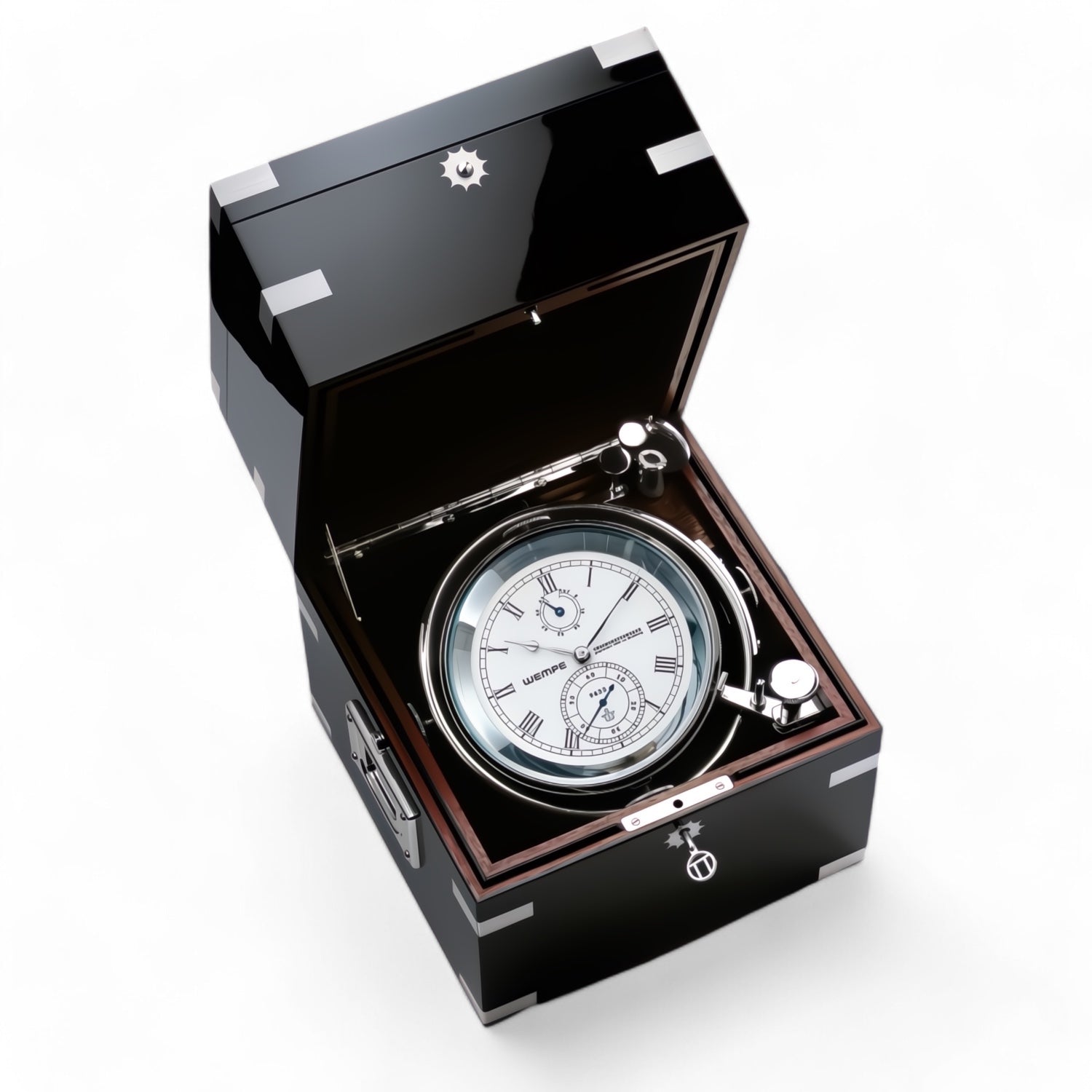

The Wempe unified chronometer is a masterpiece of craftsmanship and precision, an investment in timeless quality and refined engineering. For over 75 years, this mechanical instrument has been handcrafted to the highest standards of WEMPE, proudly bearing the "Made by Wempe" label. With dimensions of 200 x 200 x 210 mm, the entire piece exudes classic elegance. The case is made of wood with a piano lacquer finish, while the polished brass gimbal suspension ensures stability and balance on any water.
The unique design, where the movement rests on only three pillars, makes this chronometer not only a technical marvel but also a true work of art. The white dial with brass details and the transparent plexiglass casing offer a full view of the calibre 5 movement, which provides an impressive power reserve of 56 hours.
A "power reserve of 56 hours" means that the movement, after being fully wound, can run continuously and accurately for a period of 56 hours before it needs to be wound again. The Calibre 5 movement is a specific mechanical movement design by WEMPE, representing the unique configuration and high-quality components of this internal mechanism.
This exclusive, mechanical masterpiece combines the tradition of maritime timekeeping with a modern, refined aesthetic, making it a unique addition to any high-end nautical setting. It is a collector's item, a work of art, with a price tag that reflects this value. For that, you receive a work of art from jeweler Wempe. These chronometers are exclusively available upon request.
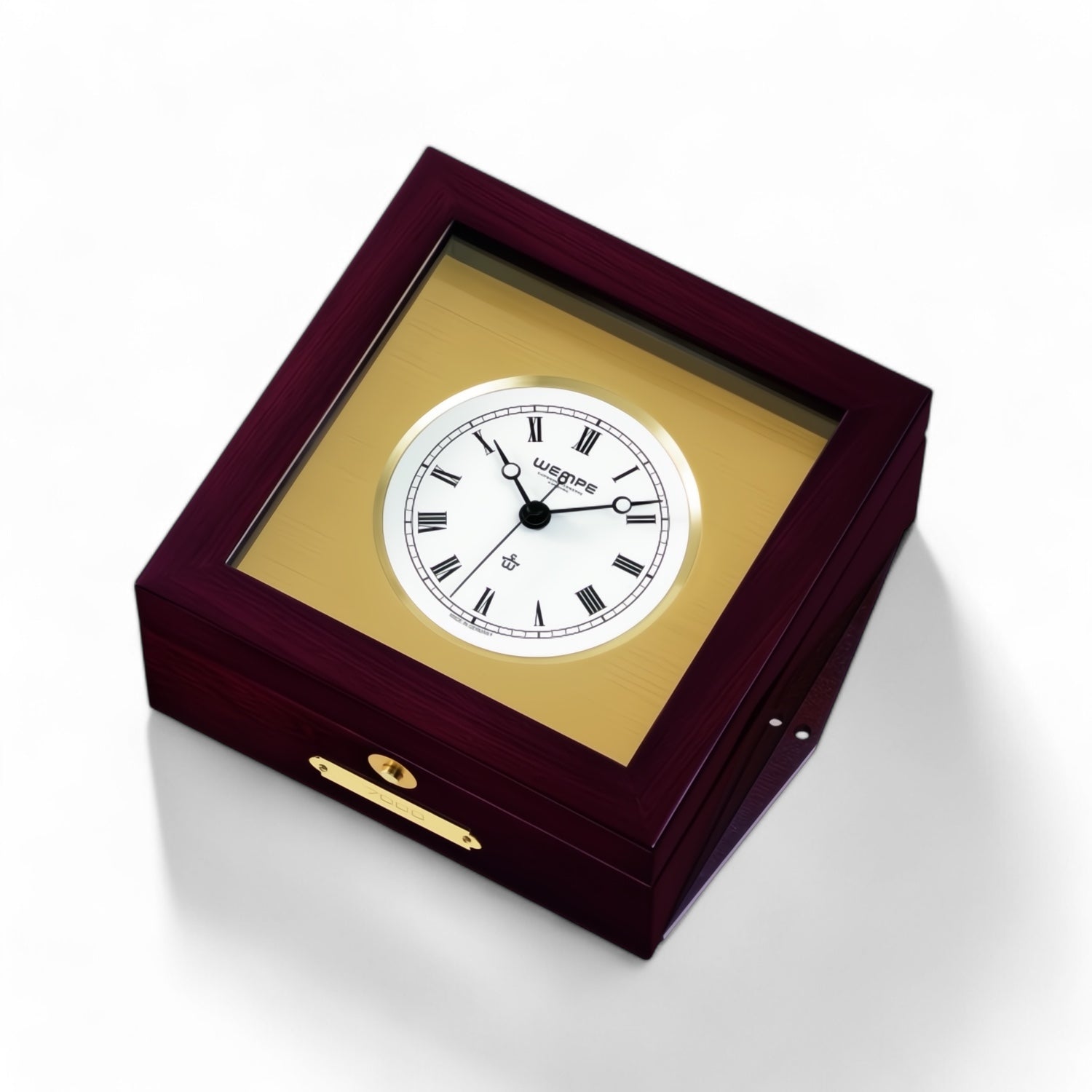
The Wempe Ship's Clock PRO: timeless precision in brass and mahogany. This chronometer combines sophistication and reliability in a stylish, high-gloss polished brass clock, firmly anchored in a mahogany case. With its modest size of 155 x 155 mm and a height of 75 mm, this clock fits perfectly in any premium marine environment. The front, made of polished brass, features an elegant 80 mm white dial with black Roman numerals and clear indices, ensuring a luxurious yet easy-to-read appearance.
Powered by a precise quartz movement, the PRO exudes understated luxury that seamlessly complements life at sea. Weighing 1.1 kg, the Wempe Ship's Clock PRO feels robust and durable—the perfect choice for the boater who appreciates quality and craftsmanship. This certified chronometer is designed to stand the test of time, a tribute to the precision that has made Wempe synonymous with top-quality marine instruments.
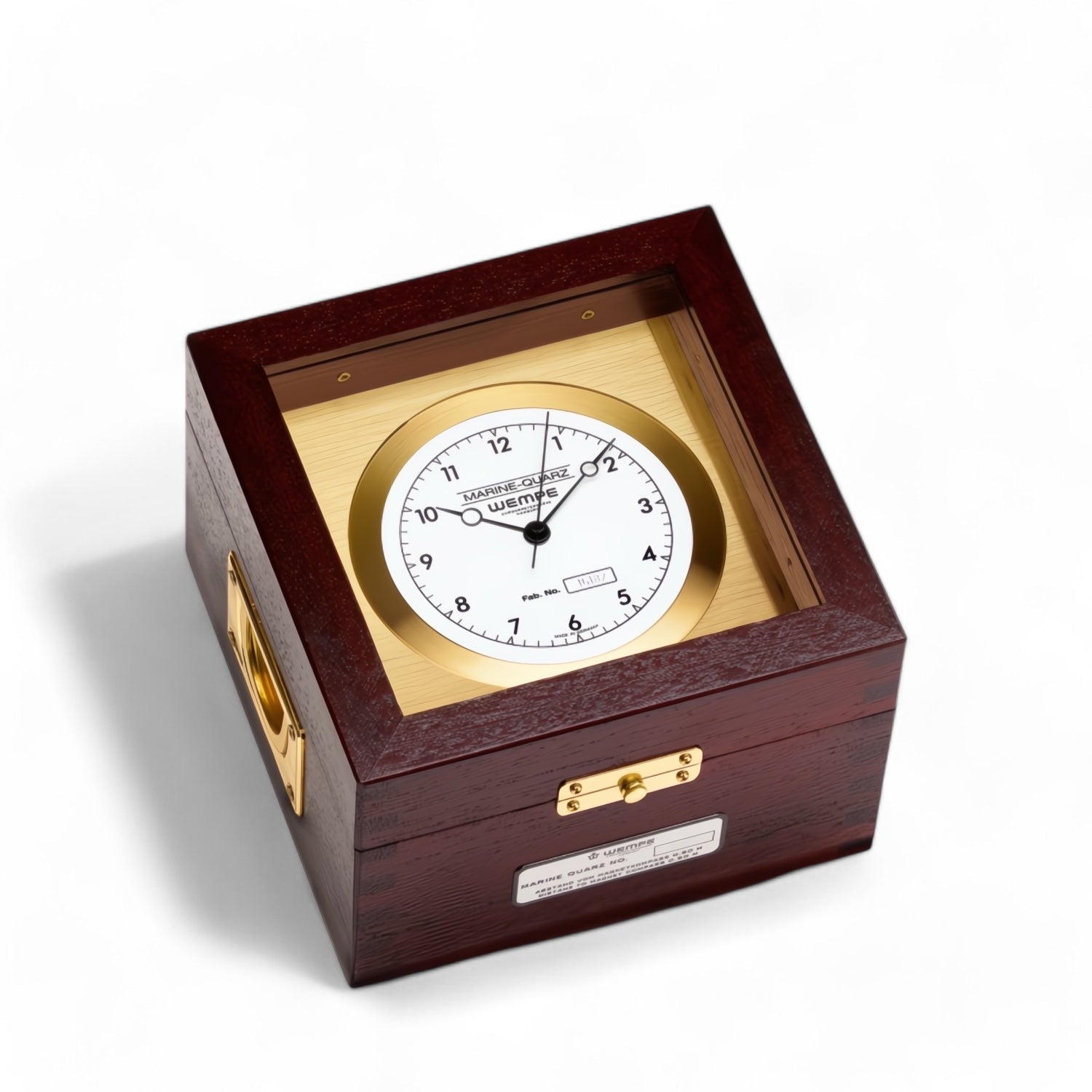
Wempe chronometer model 10057 - brass/mahogany, quartz movement, Arabic numerals
The Wempe Chronometer Model 10057: pure time in brass and mahogany. This chronometer combines craftsmanship and precision in a magnificent brass clock, elegantly embedded in a mahogany case. This nautical masterpiece, with its reliable quartz movement and clean dial with black Arabic numerals, offers accurate timekeeping according to Wempe's highest standards. With a clock diameter of 95 mm and a weight of 3.5 kg, this chronometer meets the inspection standards of the former German Hydrographic Institute (now BSH). The chronometer was used on ships for decades due to its extremely accurate time indication, which was essential for precise navigation at sea. Available on request. This is a timeless beauty, with a sleek and professional appearance, making this chronometer suitable for both professional use and a luxurious gift.


A collection for every course, discover them all


Frequently asked questions
A chronometer is the perfect clock for those who love adventure and precision. A chronometer is a highly accurate clock specifically designed for maritime conditions. They offer reliable timekeeping, essential for navigation and course plotting at sea. Additionally, chronometers have an elegant design, making them a valuable addition to both your boat and your interior. Presented in a beautiful wooden box, often with brass or chrome accents, it is a gift of emotional value, a much-appreciated present.
Maintaining a chronometer is straightforward, but requires some care. Ensure the clock is wound regularly and kept clean. Place the clock on a stable, dry surface to prevent excessive vibrations. Periodic maintenance by a specialist will ensure its accuracy is preserved.
The chronometer was originally developed in the 18th century to accurately measure time during long sea voyages. This instrument was essential for navigation, especially for determining longitude. Thanks to the invention of the chronometer, seafarers could plot their course more accurately and long-distance voyages became possible.
There are different types of mechanisms, two of which we offer at Studio Maritime. A mechanical movement, which operates on a winding system. Typical for classic ship's clocks and traditional clocks. Requires manual winding, usually every 7-8 days. And a quartz movement, which requires batteries, is very accurate, and requires little maintenance.
When purchasing a chronometer, it's important to consider its accuracy, finish, and brand. Choose a model suitable for your intended use (such as on a boat or at home), and pay attention to the casing materials, such as brass or stainless steel, for durability. Ensure the chronometer is also easy to maintain for long-term use.
Follow us on Instagram
@studio_maritime


