

The right course with our compasses
Compasses: first the installation, then the rest. A compass that cannot be properly installed is useless, no matter how good the instrument is otherwise. Therefore, the choice begins with the location where it will be placed.
Flush Mount or Recessed — recessed into the dashboard or binnacle, with only the compass card remaining visible. Sleek and protected, but you need installation depth behind the panel. Measure that first.
Surface Mount — mounted on the panel or console. Easier to install than flush mount and clearly readable from above. Requires vertical space.
Bulkhead — against a vertical wall, such as the cabin bulkhead. The classic solution on sailboats where you have a view of the wall from the helm position.
Deck and Roof — on a horizontal surface or under a canopy, often with a larger compass card so you can read it from a distance.
Bracket — portable, screwed onto a bracket. Useful if you want to take the compass with you or are sailing on an open boat.
What else to look for. The card diameter is indicated in inches, usually 3 to 6 inches. A larger compass card is easier to read from a distance; a smaller one fits where space is tight. Our models are fluid-filled, which keeps the compass card steady instead of overshooting in choppy seas.
Compensation is not a detail. Metal and electronics on board disturb the magnetic field; a steel hull, a loudspeaker, or a placed engine can cause your course to deviate by several degrees. Many compasses have compensating magnets to adjust this. On a steel or aluminum boat, professional compass compensation is not a luxury.
For commercial shipping, we supply certified compasses. Ask for the specifications.
Autonautic Instrumental is a brand we represent, and we have versions for motorboats, sailing yachts, sloops, and RIBs, as well as for large commercial vessels. Are you unsure about the mounting type or size? Send a photo of your helm, and we'll help you figure it out.
Also check out navigation instruments for charts, or binoculars.
12 products
Sort by:
12 products


Autonautic C12 Plus built-in compass 85/100 mm – MED/SOLAS, 12–24V, protective cap
$215.00
The Autonautic C12 Plus is a built-in compass you can rely on: sleekly integrated into the dashboard, easy to read, and designed for the real world, from pleasure boating to professional use. No frills, just reliable, sure-footedness.
Thanks to its flat card, this compass is best mounted close to the steering wheel and a bit lower (ideal for standing steering). For example, on the navigation console or atop a steering column/pedestal. Do you have an older compass that leaves a gap that's just a tad too large? The wide flange of the C12 Plus is a clever problem-solver: it covers existing recesses and even that "sun-faded ring" on your console.
Furthermore, it's built just the way you want it at sea: corrosion-resistant materials, a sealed design to prevent water intrusion, 12–24V lighting, a protective cover, and a 5-year warranty. Plus: 100% repairable and optionally expandable with a compensation kit.
Choose your variant: C12Plus-0020 (85 mm) compact and sharply readable or the C12Plus-0021 (100 mm) extra large and comfortable to read.


Autonautic C12-110 built-in compass 85mm – for angled panels, gimbal and 12-24V
$201.00
The Autonautic C12-110 built-in compass is a crowd-pleaser, and let's be honest: we get it. This compass is designed for boats where you simply want it to be accurate. It's a sleek, built-in design, easy to read, and above all, cleverly designed.
Thanks to the gimbal system, you can also mount it on a slanted dashboard without the compass rose tilting. So even if your dashboard or wall is slanted, your heading will remain perfectly horizontal and easy to read.
On this page you choose your favorite based on:
• Compass color: black/white/gray
• Compass rose shape: flat (sleek and minimalist) or conical (extra depth and readability)
Finished with corrosion-resistant materials, a sealed construction to prevent water intrusion, and 12–24V lighting. This compass complies with Directive 2014/90/EU (Marine Equipment Directive) and is manufactured under an ISO 9001-certified management system, in accordance with ISO 25862:2019. Autonautic Instrumental also offers a 5-year warranty. In short: a reliable heading source that also looks impressive.
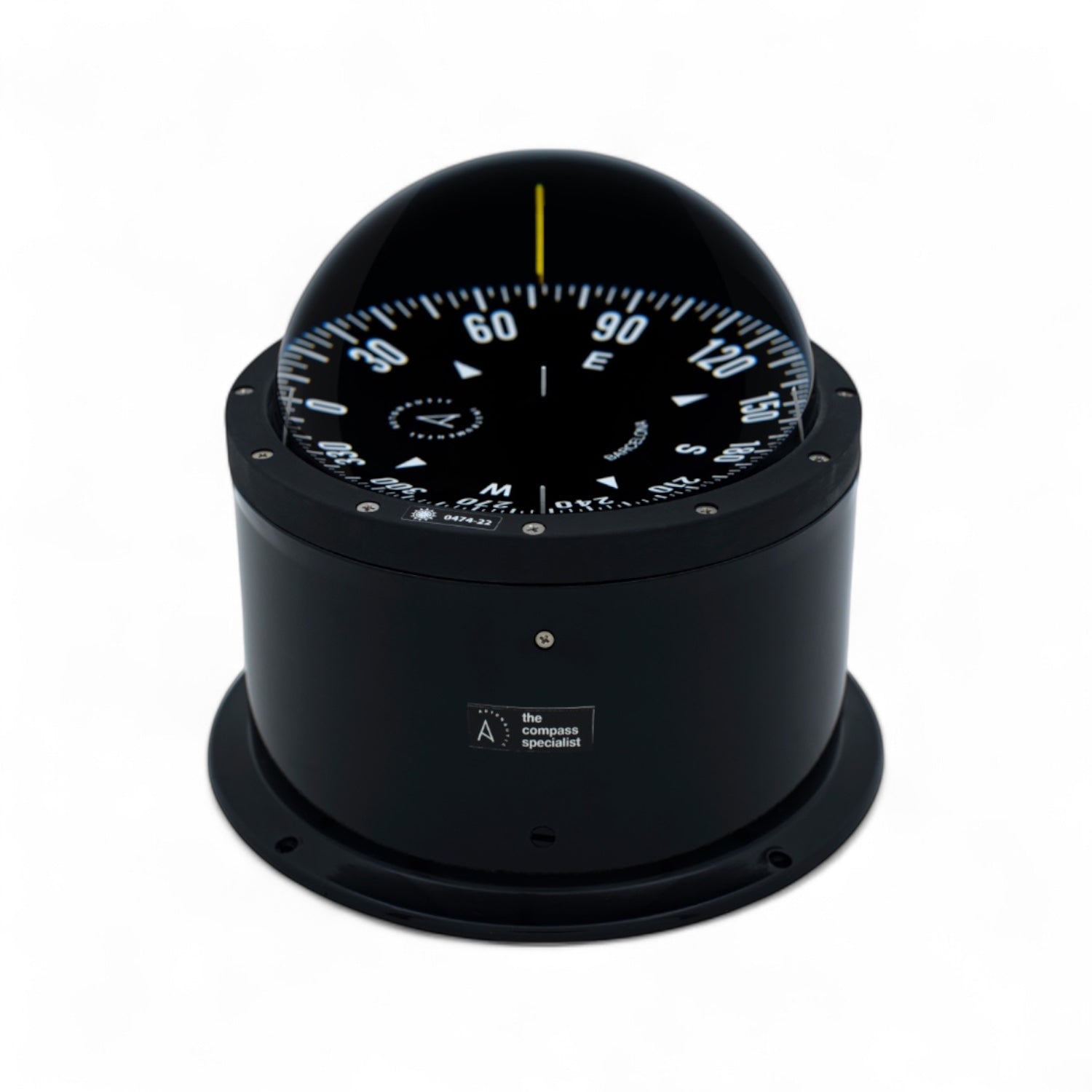

Autonautic CHE surface-mounted compass 140 mm – extra large, professional, black/white housing
$716.00
The Autonautic CHE Deck Mount Compass is one of the largest and most robust in-deck compasses on the market. With a 140mm flat compass rose, this model offers maximum readability, ideal for larger pleasure craft and mid-sized workboats. Combining stylish design with professional performance, the CHE series features corrosion-resistant materials, waterproof construction, and internal lighting for safe navigation in all conditions. Thanks to its universal balance system, the compass is suitable for worldwide use. Available with a white or black housing.
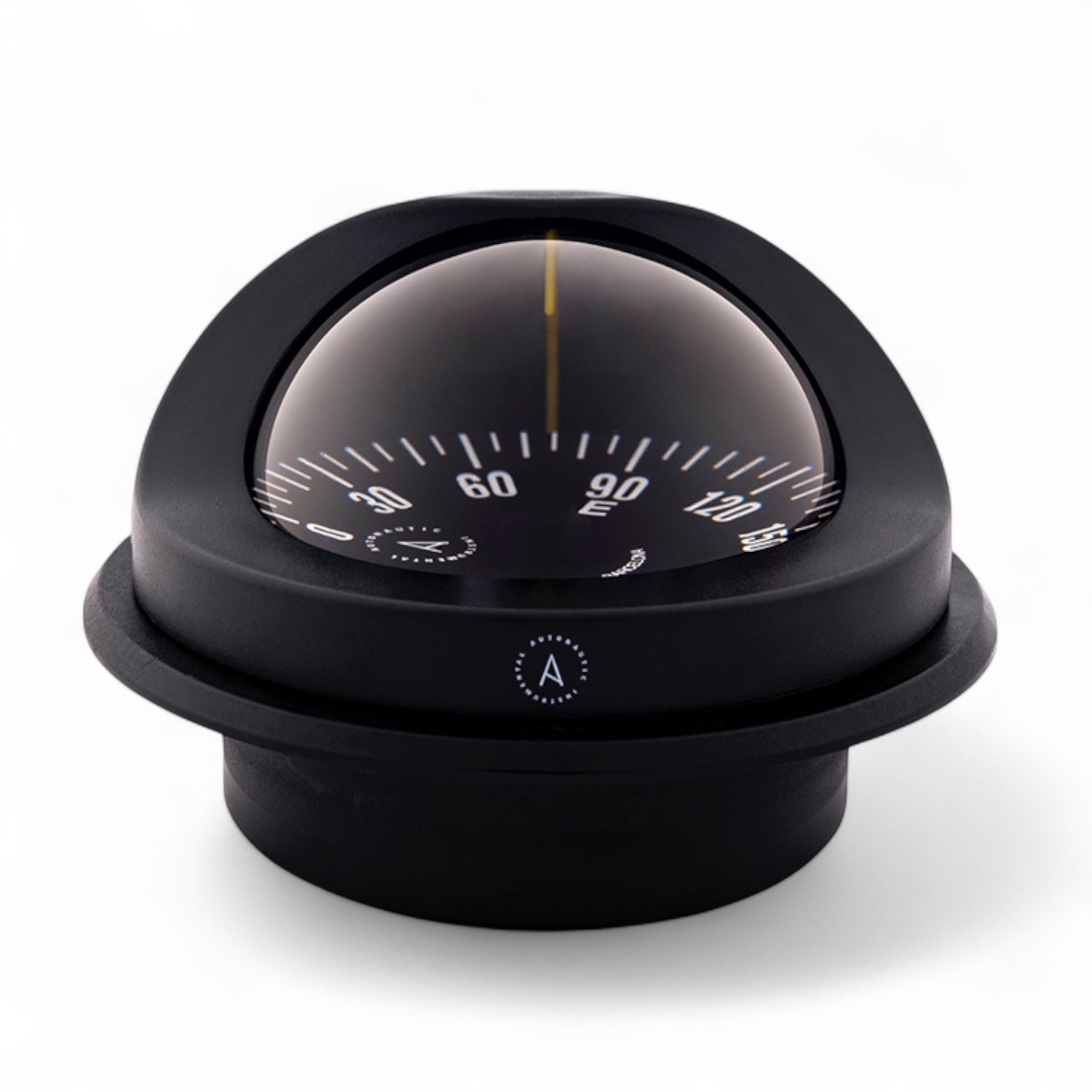

Autonautic C15 built-in compass 100 mm – robust, waterproof, for motor and sailing boats
$296.00
Available with flat or conical card – suitable for motorboats, sailboats and rescue vessels
The Autonautic C15-0015 is one of the most popular models in our range and the ideal choice for both recreational and professional use. Thanks to its flush mount design, the compass can be discreetly integrated into your vessel's dashboard or helm, creating a sleek and professional finish. The combination of stylish design and robust materials makes this model particularly popular with owners of pleasure boats, rescue boats, and workboats.
Thanks to the optional compensation kit and the choice between a flat or conical card , the C15 can be adapted to the specific needs of any skipper. The materials used are corrosion-resistant , and the construction is completely waterproof , guaranteeing long-term reliability – even in the harshest marine conditions.
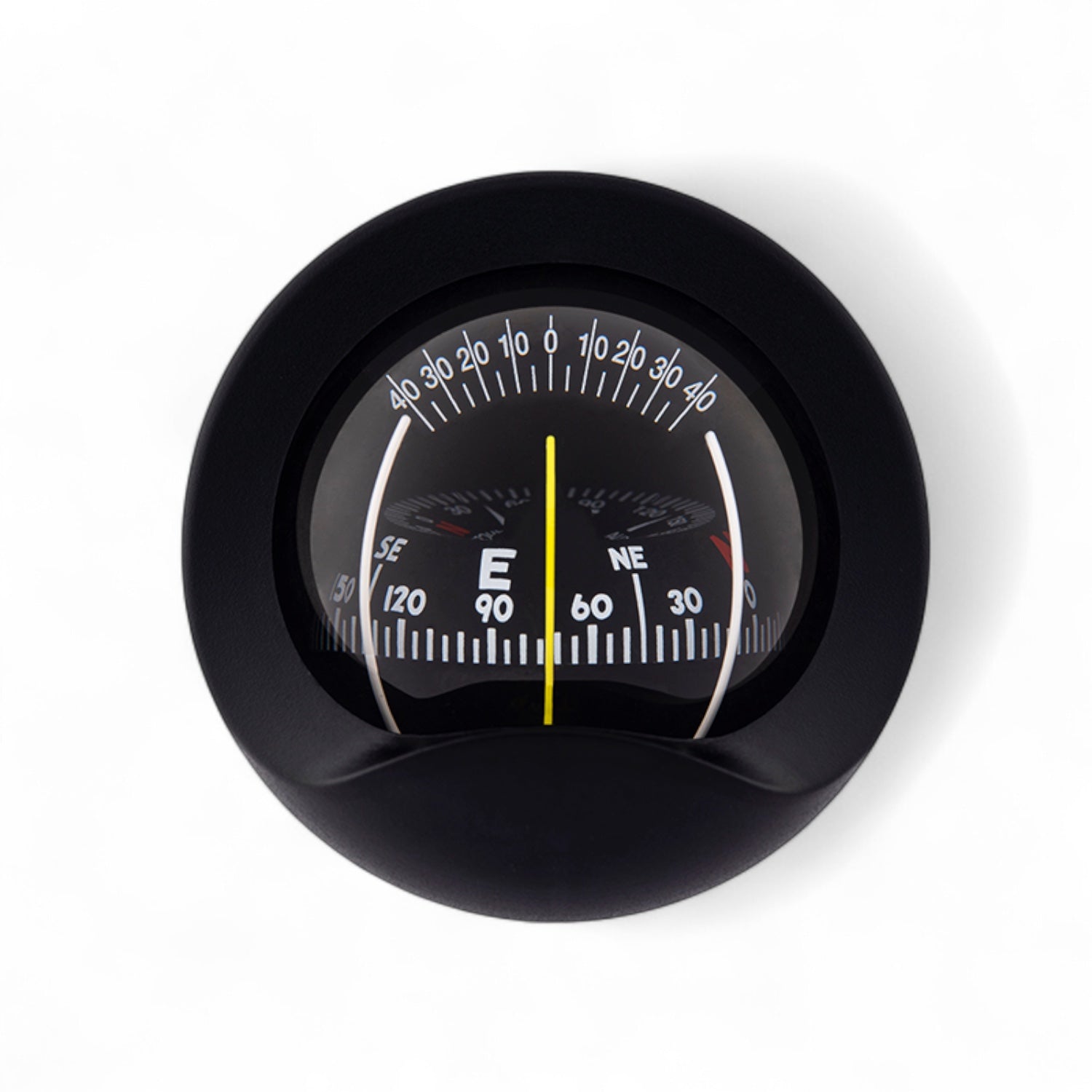

Autonautic C9 bulkhead compass 85 mm – with clinometer, 12–24V lighting, class B
$241.00
Available in black, white or silver – with conical black card (85 mm)
The Autonautic C9 is a modern, stylish, and extremely reliable Class B bulkhead compass , specifically designed for small commercial vessels, rescue boats, fast rescue boats, and recreational craft. Its compact 85mm conical compass rose , integrated clinometer, and dual voltage illumination make this compass particularly popular for sailboats with enclosed or covered helm positions.
With its sleek and timeless design , the C9 fits perfectly into both modern and classic boat interiors. The map remains stable under rough conditions and is clearly readable from various angles , both day and night.
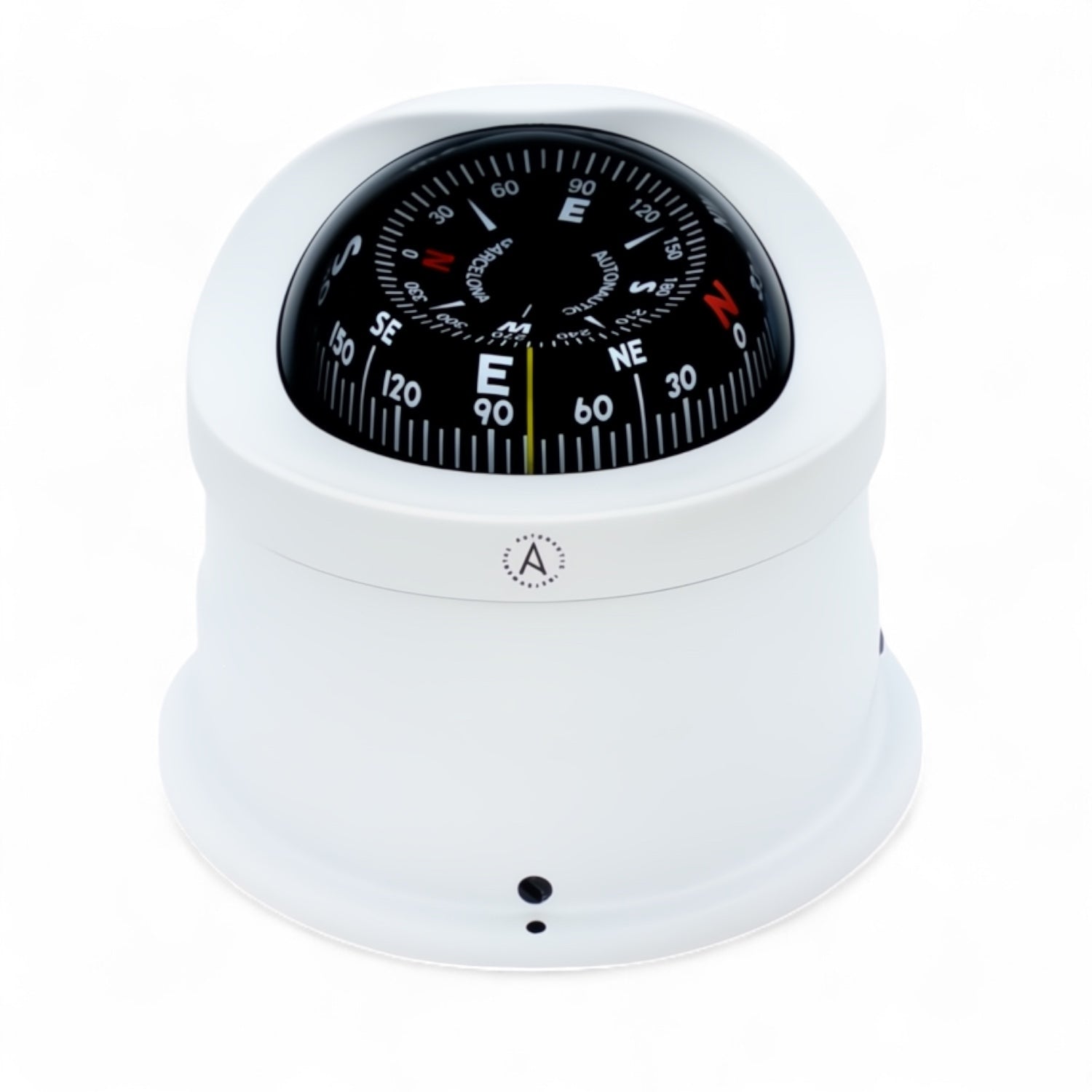

$405.00
Available with black or white housing, and a black or blue compass rose (flat or conical)
The Autonautic C15 is a stylish and robust deck-mounted compass that effortlessly bridges the gap between recreational and professional use. Its combination of high-quality materials, waterproof design, and versatile mounting options make this compass the perfect choice for both powerboats and sailboats.
With a choice of flat or conical compass rose , various color options, and a 100 mm chart diameter, the C15 provides a clear and reliable navigation point in any sailing situation. Its stylish appearance makes it ideal for yachts and pleasure boats, while its robust construction and durable components also make it suitable for commercial vessels.
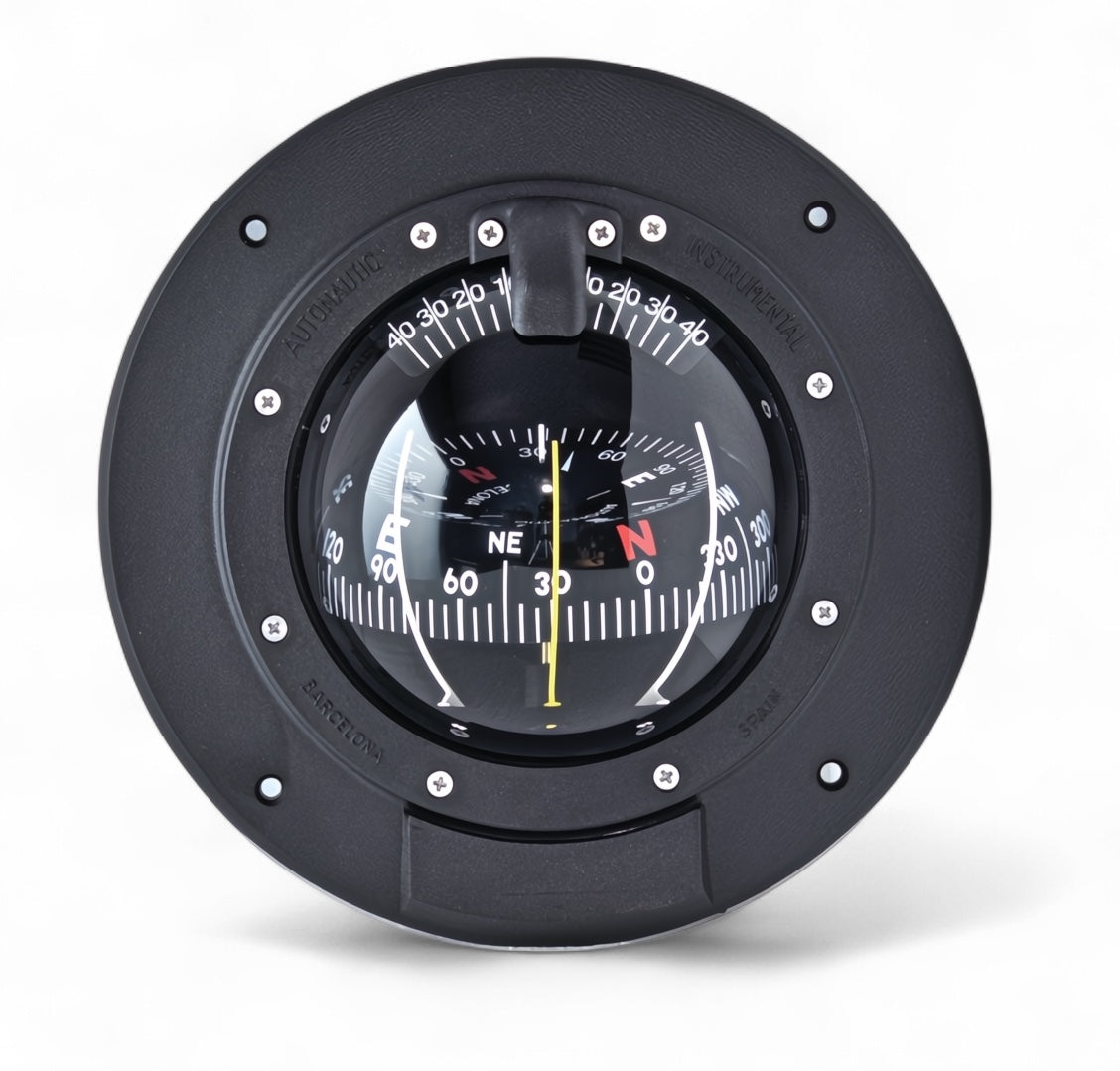

Autonautic C10 bulkhead compass 85/100 mm – conical, MED/SOLAS approved, individually certified
$246.00
The Autonautic C10 series offers a robust, stylish, and extremely reliable solution for sailboats and powerboats requiring a bulkhead-mounted compass . Available in two versions with a card diameter of 85 mm or 100 mm , this compass is perfectly suited for both recreational and professional use.
Versatile & Seaworthy
The conical compass rose is designed for optimal readability from various viewing angles – ideal for sailing vessels where the skipper's position changes frequently. The built-in inclinometer (heel angle meter ) makes it a particularly suitable choice for sailors who want extra control over their vessel's heeling. The wide mounting flange makes the C10 ideal for replacing older compasses or for installation on existing bulkheads where a larger recess was previously made. Furthermore, the flange can neatly conceal any signs of aging or discoloration on the bulkhead.


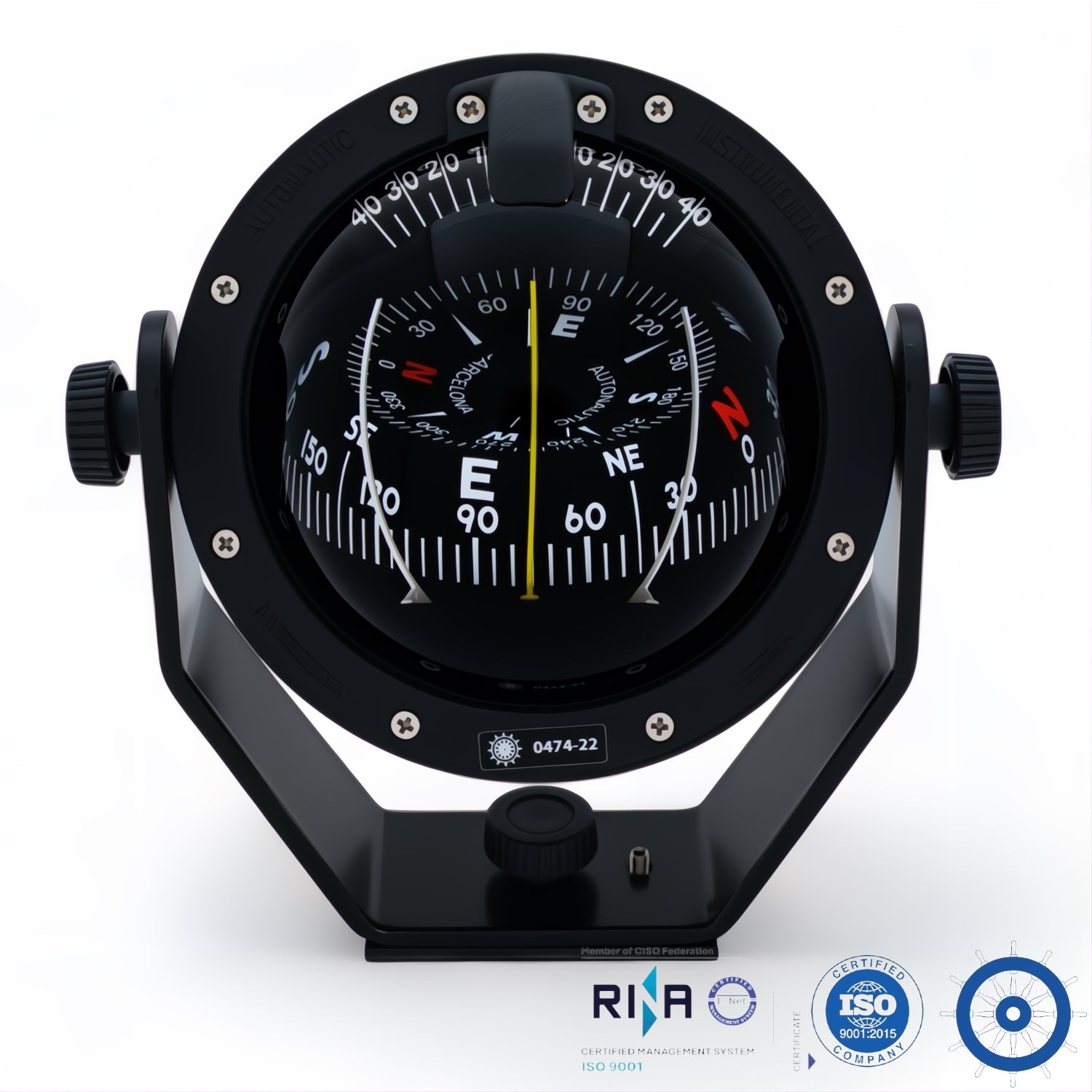

Autonautic C8-0027 bracket-mount compass 100 mm – vertical, conical, MED/SOLAS approved
$567.00
The C8-0027 is one of the most highly regarded and versatile compasses in our range, specifically designed for professional use on workboats, rescue vessels, and other motor vessels. This model offers a reliable and durable solution for demanding maritime environments where accuracy and flexibility are essential.
What sets this compass apart is its vertical mounting style , which provides an exceptionally wide viewing angle. Thanks to this design, the compass dial remains perfectly readable, whether you're sitting, standing, or looking at it from an angle. This makes the compass ideal for mounting above eye level —for example, on the ceiling of a wheelhouse, against the eaves, or on a side wall. Ideal in situations where dashboard space is limited or where magnetic interference prevents the use of a standard console mount.
The 100 mm diameter conical compass card not only provides a clear 5-degree scale but is also easy to read from a distance. This makes the compass particularly suitable for a wide range of wheelhouse configurations on small to medium-sized vessels.
Furthermore, the C8-0027 is equipped with 12V lighting , making it suitable for use in dark conditions. The robust, corrosion-resistant polymer housing and impact-resistant transparent dome ensure long-lasting performance, even in harsh weather conditions.
This compass complies with all major maritime standards, including the Marine Equipment Directive 2014/90/EC and ISO 25862:2019 , and comes with a generous 5-year warranty .
For commercial shipping, rescue services, or professional navigation on inland and coastal waters, the C8-0027 is a reliable and versatile choice for safe navigation anywhere in the world.
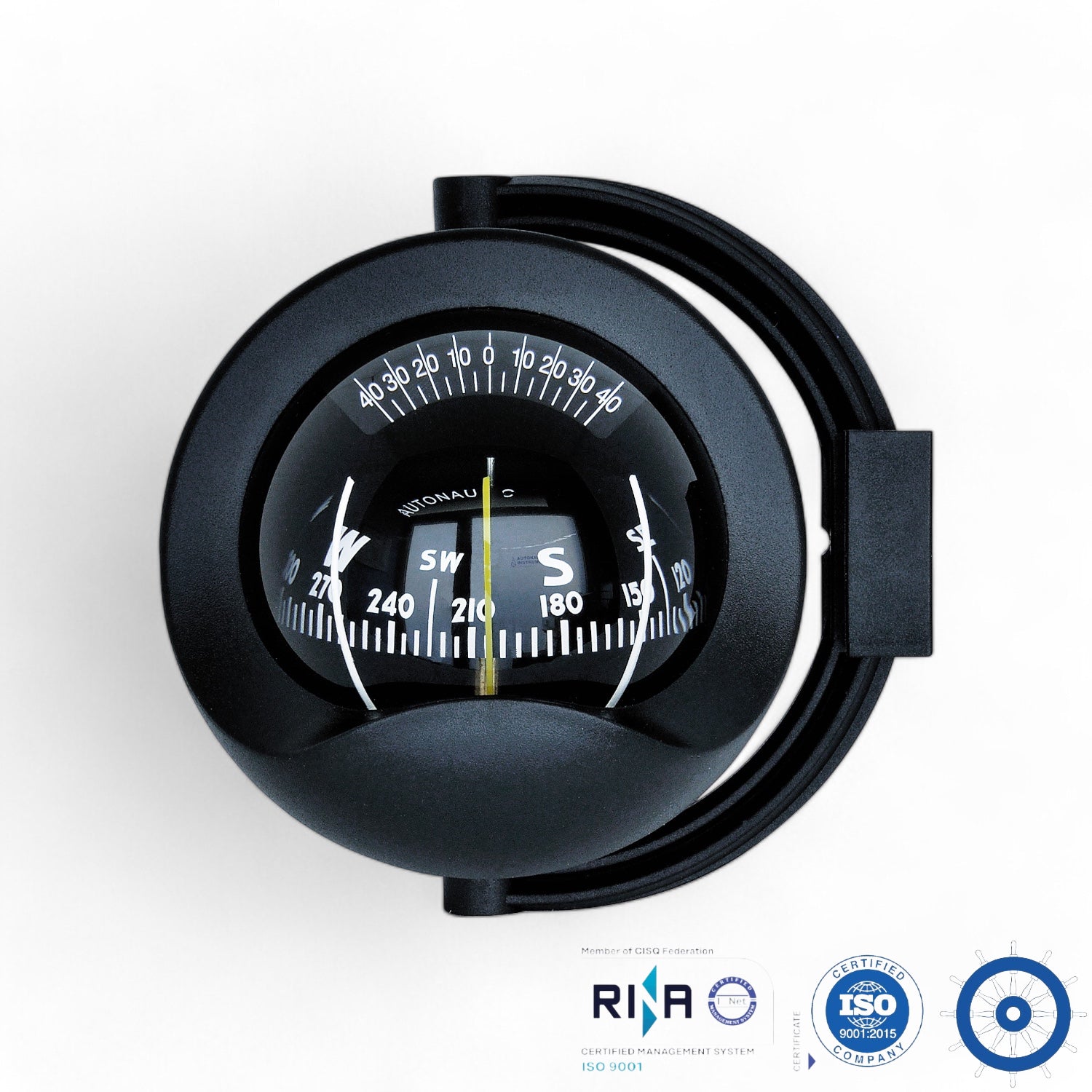

Autonautic C8 bracket-mount compass 85 mm – conical, multidirectional, MED/SOLAS approved
$259.00
The Autonautic C8 is a multi-directional bracket-mount compass , specifically designed for mounting on vertical surfaces or above eye level. This makes it ideal for situations where space is limited or where magnetic interference makes dashboard mounting unsuitable.
Whether you mount the compass on the wheelhouse ceiling , the side wall , or the top of a console , the highly visible 85mm conical card provides a clear and reliable reference point while sailing.
Choose from:
-
C8-0025 : Black version
-
C8-0026 : White version
The robust design meets the highest maritime standards and combines reliability with a stylish appearance – suitable for both pleasure craft and commercial applications.
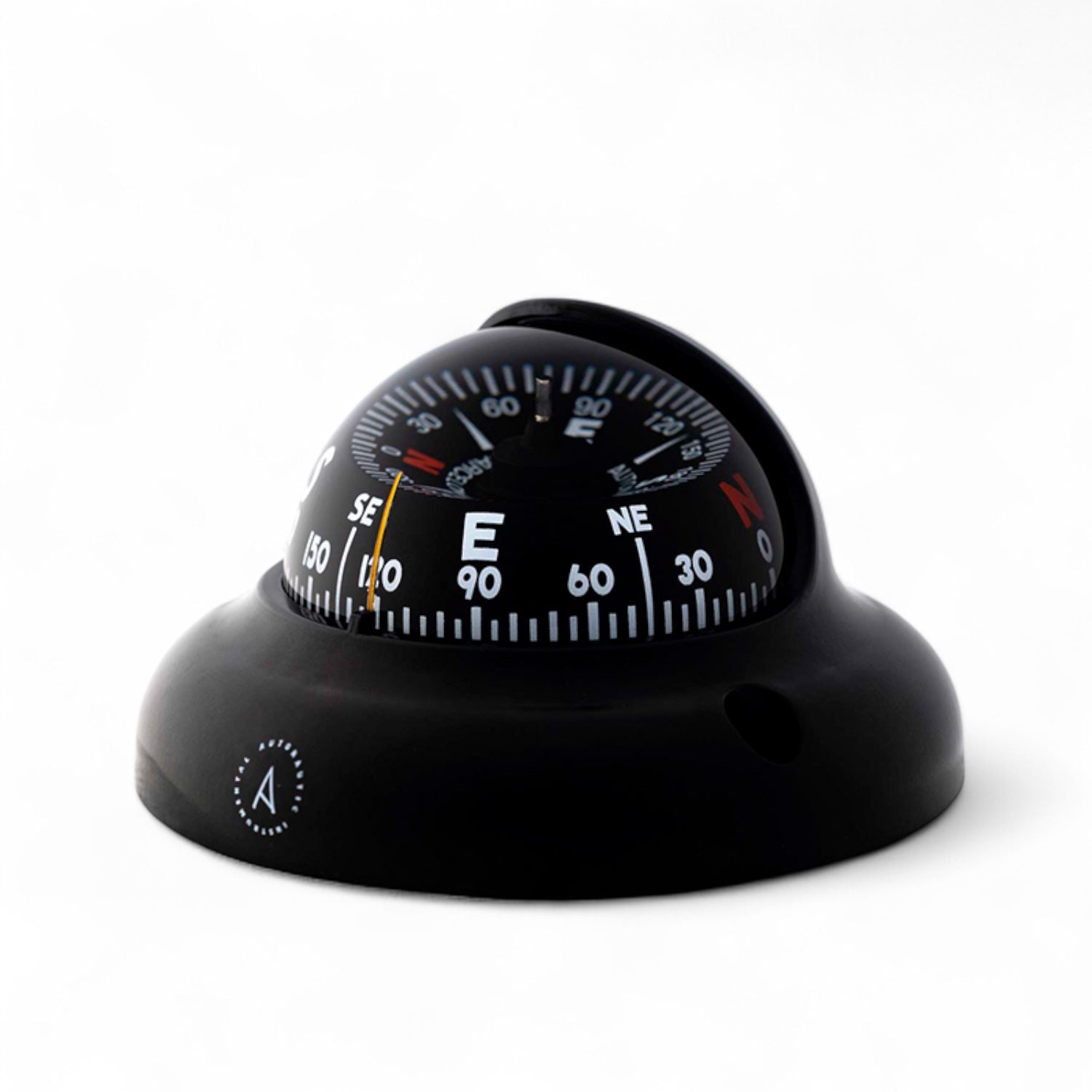

Autonautic C3 surface-mounted compass 65 mm – compact, black/white, easy installation
$96.00
The Autonautic C3002 is a stylish and compact surface-mounted compass, available in two versions: a black or white housing – both featuring a classic black compass rose . Ideal for smaller boats such as RIBs, dinghies, or traditional open sailboats. Thanks to its easy mounting on a flat surface, there's no need to drill large holes: just three small screws are all it takes.
The 65mm spherical map is clearly visible from various angles, whether sitting or standing. The map is also exceptionally damped, ensuring the compass functions well even in choppy water or at higher speeds.
Choose your style: sleek black or fresh white , without compromising on performance or durability.
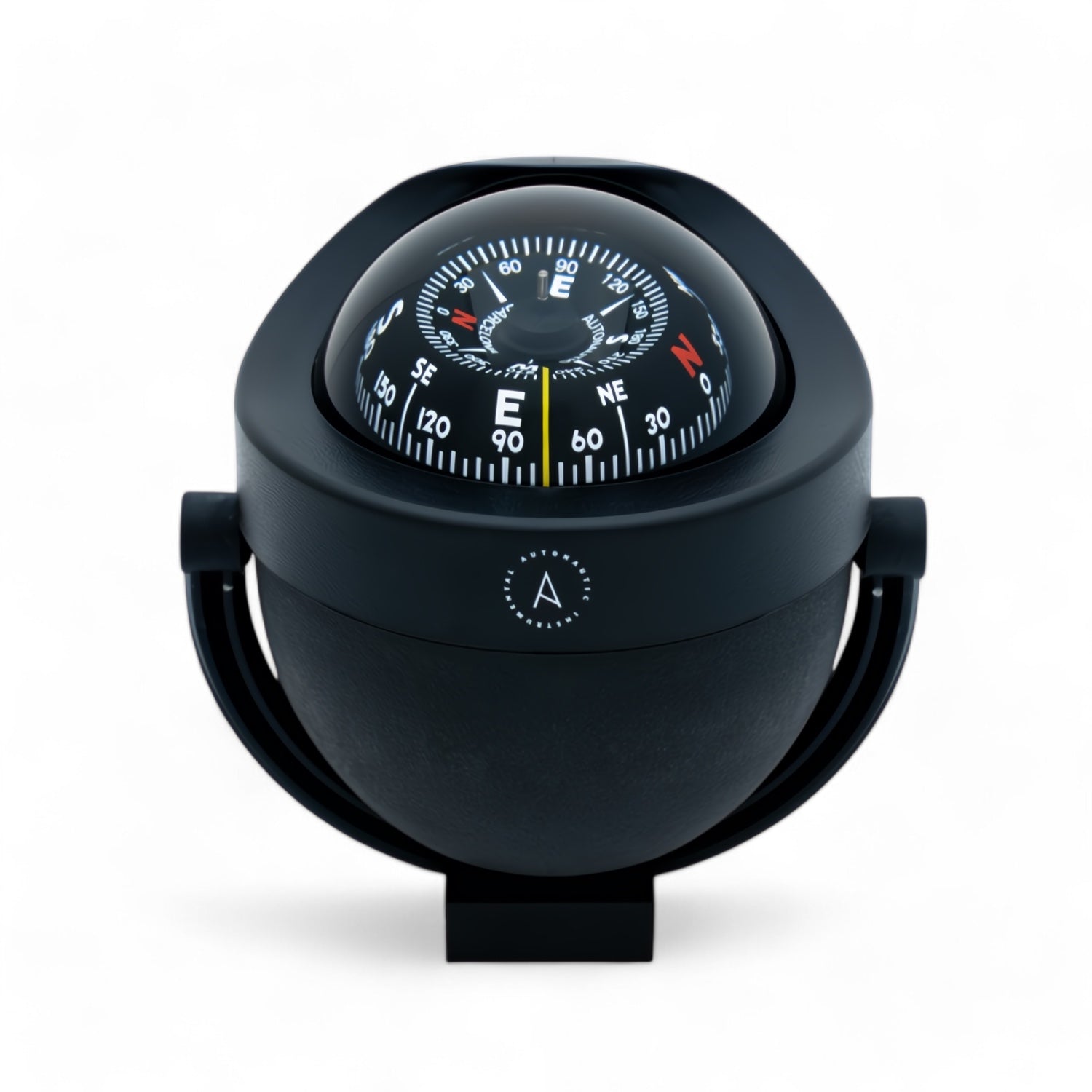

Autonautic C12 85mm bracket compass - MED/Solas approved, reliable, adjustable bracket
$228.00
The Autonautic Instrumental C12 bracket-mount compass combines stylish design with rugged reliability, making it the ideal compass for lifeboats and lifeboats, essential for keeping course during active rescues or evacuations. With an 85 mm chart scale, clear 5-degree graduations, corrosion-resistant materials, and waterproof construction, this compass is a safe choice for marine navigation, including pleasure boats. The compass offers versatile mounting options thanks to its adjustable bracket, while optional adjustments ensure maximum accuracy.
Choose from a black or white case, a flat or conical map style, and a black or blue dial to suit your preference. Weighing 1.2 kg and measuring 28 × 22 × 20 cm, it fits seamlessly into both recreational and professional applications. This compass is ISO 9001 certified and carries an individual MED/SOLAS certificate, guaranteeing quality and safety.
A bracket-mounted compass is flexible and portable, making it ideal for smaller boats. A must-have for any sailor or watersports enthusiast seeking precision, reliability, and durability.
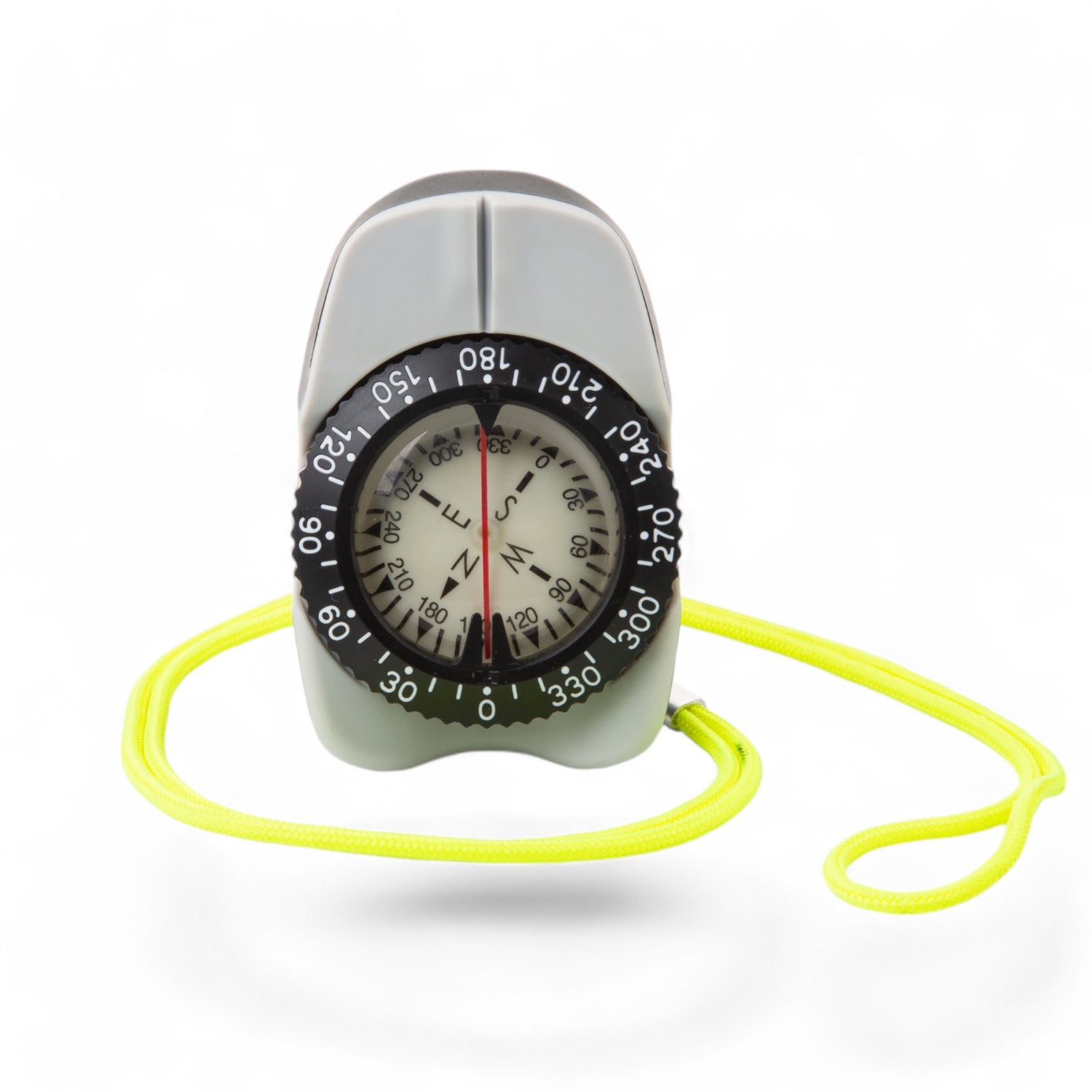

Autonautic V-Finder hand bearing compass – lightweight, shockproof, water/sandproof & luminous
$83.00
The versatile V-Finder handheld bearing compass is an essential investment for watersports and adventure. This ergonomic compass is lightweight, shockproof, and resistant to water and sand, perfect for adventures in challenging conditions. Its photoluminescent dial makes it easy to read bearings in low light, while its fluid-damped stability ensures accurate readings, even in rough seas. The ideal tool for watersports enthusiasts, it's designed for precision and durability, suitable for both right- and left-handed users. And its smooth finish won't slip, even when wet. With features like a memory ring, hardened spindle, and double cup stone, the V-FINDER offers reliability and longevity. With this V-Finder handheld compass from Autonautic Instrumental, you can confidently navigate any course.
Dive into our other collections


Frequently asked questions
A compass works with a freely rotating magnetic needle, which aligns itself with the north-south lines of the Earth's magnetic field. This allows you to determine your direction relative to the north. The side of the needle that points north is often red.
Place the compass on the map and rotate the map until the compass needle is parallel with the north-south lines, with the red tip pointing north (the top of the map). The map is now oriented north, and every direction on the map corresponds to the actual direction.
The difference between cone-shaped and conical lies in the form: cone-shaped refers to a completely cone-shaped object, such as a cone-shaped housing or a rotating card in a compass.
Cone-shaped: This refers to the rotating card with a cone shape or a housing with a cone-shaped design.
Conical: This refers to components such as a pointer balancing on a conical axis or a conical housing that provides stability, as with a gimballing mechanism.
At Studio Maritime, we offer compasses designed for nautical adventures or an outdoor life.
Baseplate Compass: Specifically designed for direct use on maps for route planning and navigation. Often equipped with a ruler for measuring distances and determining course directions. Ideal for sailors and adventurers who want to accurately plot their route.
Marine Compass for Navigation: These robust compasses are designed for use at sea and on boats. They are resistant to harsh elements, such as saltwater and extreme weather conditions, and provide reliable navigation information, even in the most challenging circumstances.
Handheld Compass: Compact and portable, a handheld compass is ideal for navigation during hikes or while on the go on a boat. It is convenient and versatile, making it a must-have for both at sea and on land.
Each of these compasses has been carefully selected to help you always stay on course, whether you are sailing the ocean or embarking on a land adventure.
The best places to mount a compass on your boat:
Dashboard: The most popular location, close to the steering for easy access and visibility. Ensure the dashboard is free from magnetic interference from electronic equipment.
Steering Wheel: A logical choice for direct use when navigating, allowing for easy compass reading while steering.
Centrally on the deck: Mounting a compass in a prominent spot on the deck ensures good visibility from different parts of the boat, ideal when multiple people need to see it.
Cabin or Wheelhouse: An ideal spot if you want to install the compass for general use and navigation on board, but without it getting in the way of other instruments.
Above the waterline, free from magnetic interference: Ensure the compass is far away from engines, electrical equipment, and other strong magnetic sources to avoid disturbing your compass's accuracy.
Follow us on Instagram
@studio_maritime


